

Kirkmayer® HOCl (hypochlorous acid) generators are used in poultry
production primarily as an onsite, non‑toxic disinfectant for water, air,
and surfaces, helping to improve biosecurity and flock performance.
Drinking Water Treatment
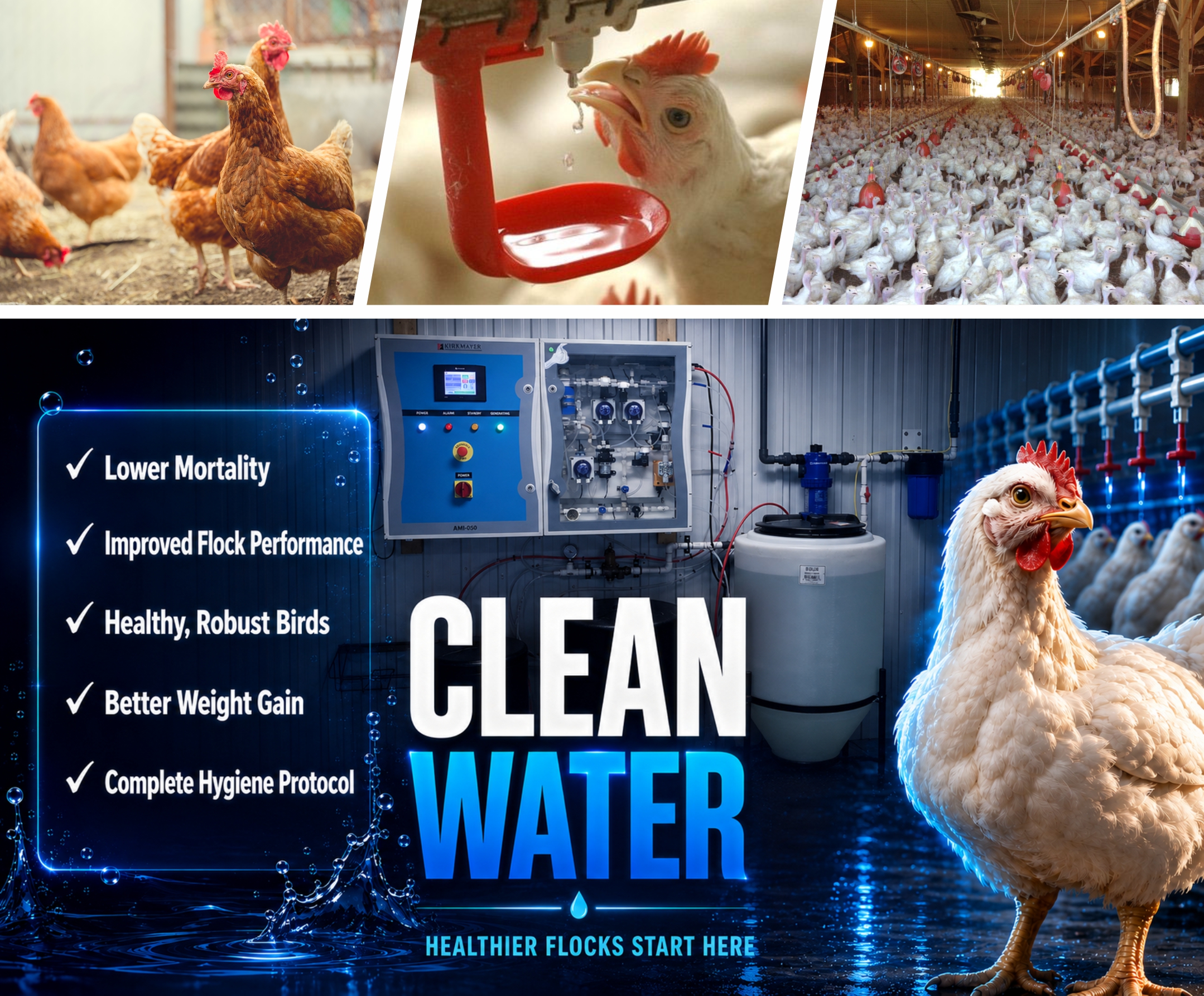
Kirkmayer’s Anolyte made from ECA HOCl Generator systems are dosed into the poultry drinking‑water lines (typically at low ppm levels) to keep the water microbiologically clean and to break down biofilm in pipes and drinkers. This reduces bacteria such as E. coli, Salmonella, and Campylobacter, lowers mortality, and can improve feed conversion and growth by ensuring birds always have access to clean, pathogen‑reduced water.
Kirkmayer’s HOCl Anolyte‑treated water reduces bacteria, viruses, and biofilm in lines, which lowers the load of pathogens entering the gut and is associated with lower mortality, improved feed conversion, and better daily‑gain in field reports.
Campylobactyer Biofilms in Watering Systems
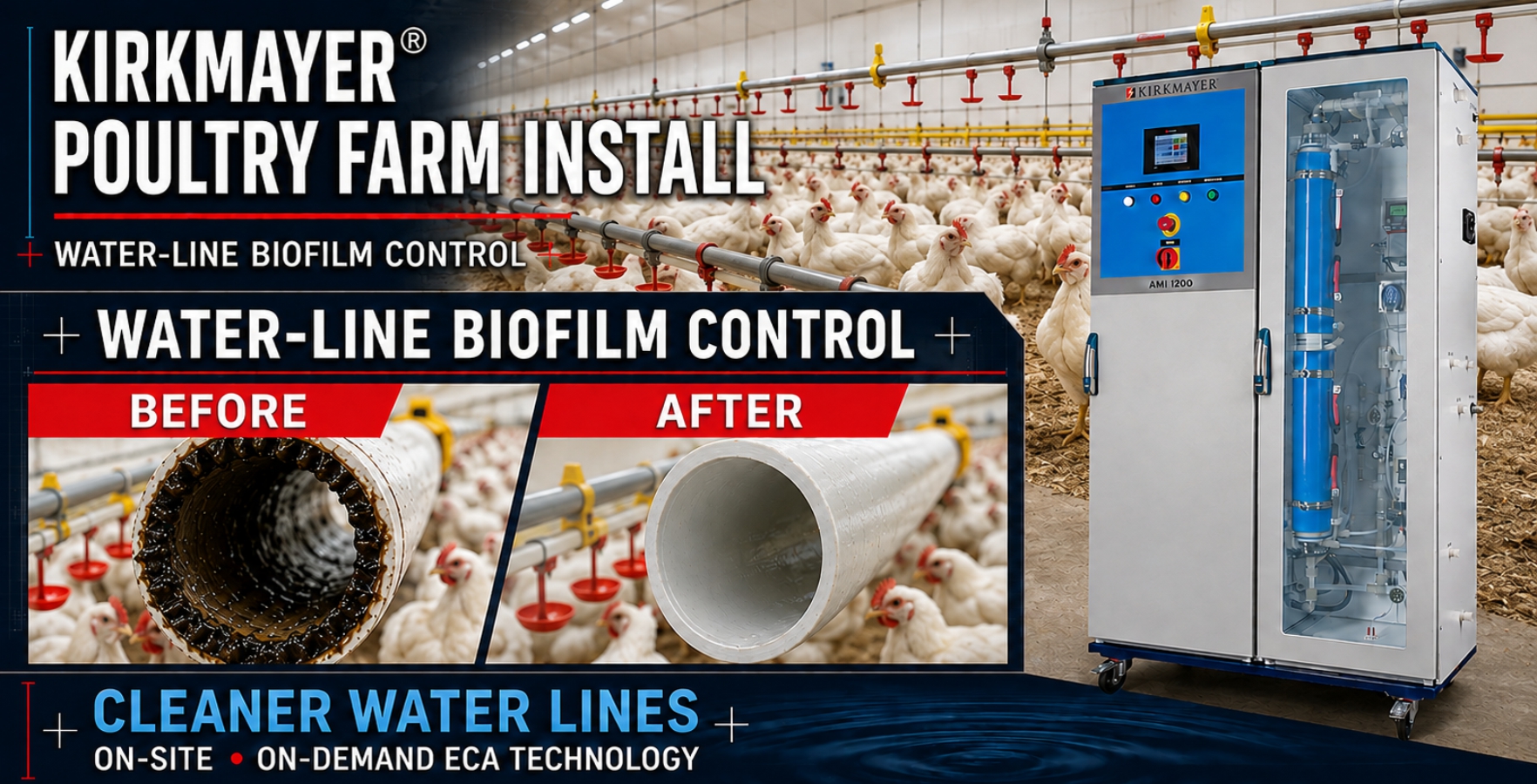
Environmental disinfection of Campylobacter and other pathogens is often complicated by their rapid re-emergence after disinfection despite good hygiene measures in place. This is principally because the bacteria form chemical resistant biofilms particularly in hard-to-reach areas from where they can rapidly reinfect. Bacteria growing in biofilms can become up to 1000-fold more resistant to antibiotics and biocides as compared to their planktonic counterparts.
Fog Disinfection for Egg, Processing and Incubation Rooms
Kirkmayer’s HOCl Anolyte solution can be fogged or misted into poultry houses to disinfect the air, reduce dust, ammonia, and airborne pathogens, and improve breathing conditions. This helps lower respiratory‑related problems and stress and can reduce feather‑pecking and general disease pressure in broiler and layer barns.
Surface and Equipment Sanitation
Kirkmayer’s HOCl Anolyte solution is applied to disinfect drinkers, feeders, belt systems, egg trays, and barn surfaces without the need for harsh chemicals such as sodium hydroxide. It is also used for cleaning and sanitizing cooling pads, humidification systems, and transport crates, supporting all‑in‑all‑out biosecurity between flocks.
Kirkmayer® ECA Anolyte Generators –
A Better, More Cost-efficient Alternative
Kirkmayer’s HOCl generators (producing hypochlorous acid on‑site) outperform traditional chlorine‑based disinfectants (like sodium hypochlorite) for biofilm removal because HOCl penetrates the biofilm matrix more effectively and has higher antimicrobial activity at similar “free chlorine” levels, while being safer and less corrosive.

Kirkmayer’s HOCl Hypochlorous acid generated, anolyte solution in on‑site generator systems, is extremely effective against avian influenza virus (bird flu).
Key areas to deploy the generated anolyte solution in poultry operations is in spraying barns, crates, conveyors, and air spaces, and for fogging to reduce viral load where bird‑flu‑contaminated dust and droplets accumulate.




70% Poultry Eligibility
Funding Now Available
ECA Technology
for the Poultry Industry

Kirkmayer® ECA Anolyte Generators -
Produces High Quality Super-oxidized Water (SOW)
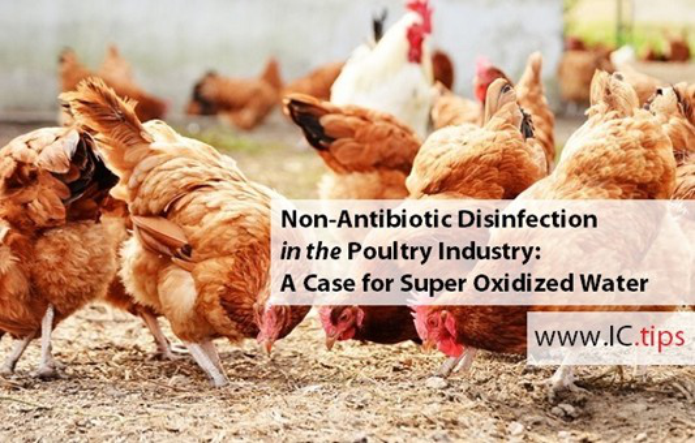
Kirkmayer’s HOCl Hypochlorous acid Super-Oxidized water (SOW) contains a variety of highly oxidizing species in very low stable concentrations (e.g. hypochlorous acid, ozone, superoxide, peroxide). These oxidative species first disrupt the bacterial cell wall, following which the solution ruptures the cell through osmolarity as it is very hypotonic at 13 mOsmol/L. The mode of cell kill is physicochemical rather than cytotoxic and thus, not prone to resistance. This is compared to a 0.5% bleach solution with an osmolarity of ~200 mOsmol/L.
Additional Poultry-specific Uses
Poultry Biosecurity
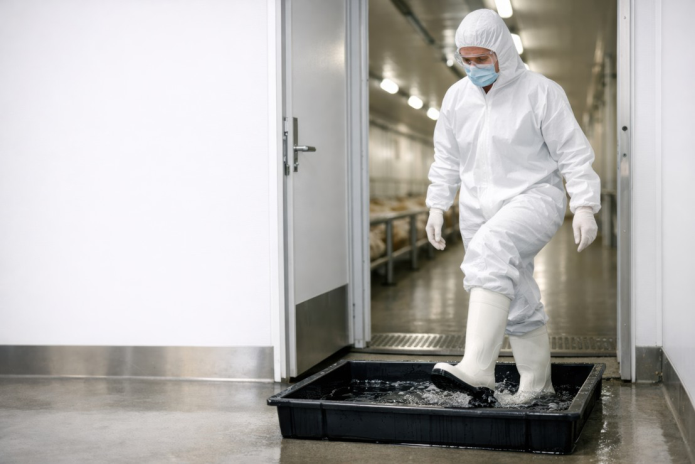
Poultry foot baths using Kirkmayer’s HOCl (HOCl‑based neutral anolyte) is very effective as a biosecurity measure. Producers using on‑site anolyte generators commonly: Fill a shallow basin or tray at the barn entrance with diluted anolyte to disinfect boots and footwear of personnel before entry. Use anolyte as a rinse or soak for boots and wheels, taking advantage of its rapid bactericidal and virucidal action without harsh residues or rinsing requirements.

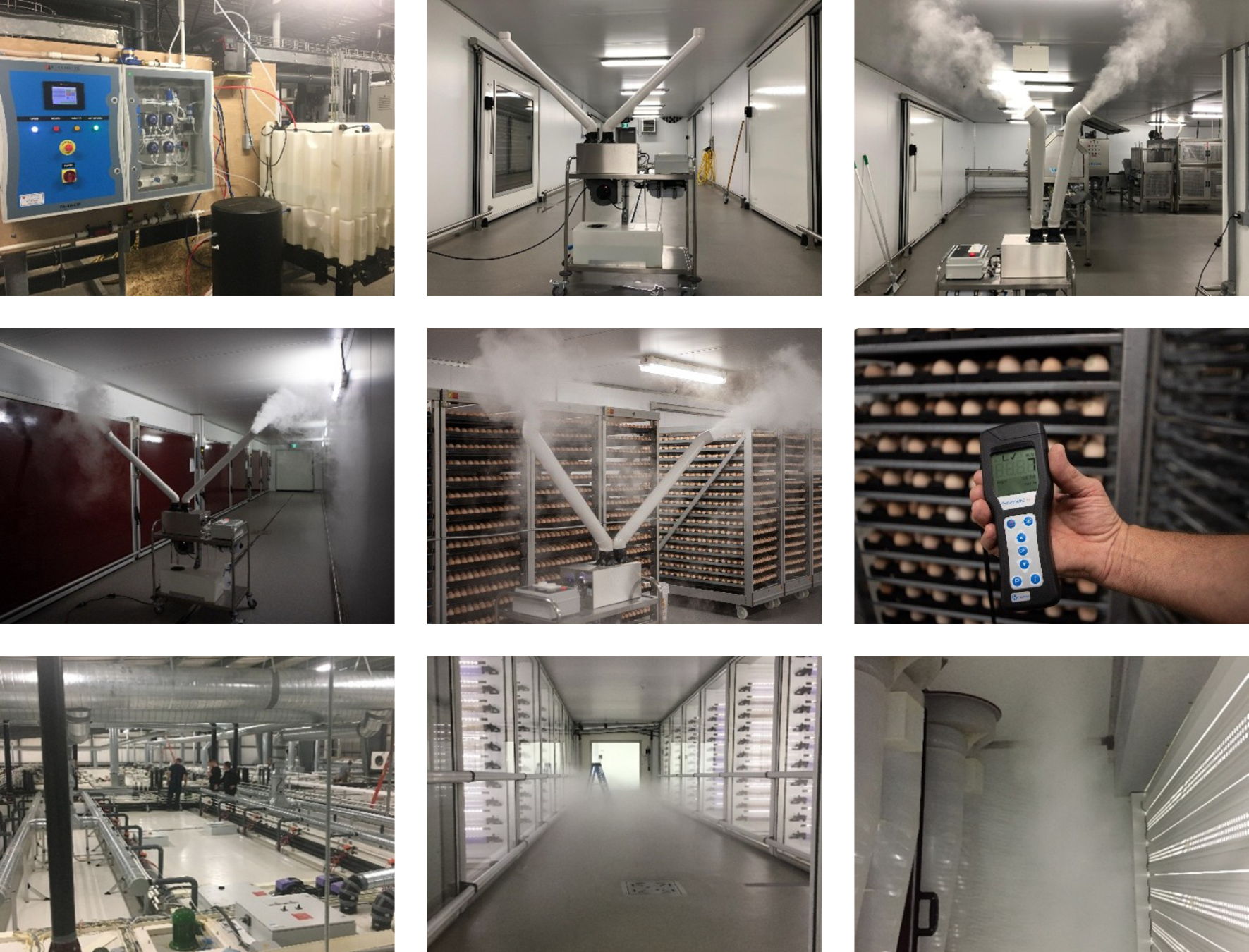
Sample Kirkmayer® ECA Generator Poultry Installations
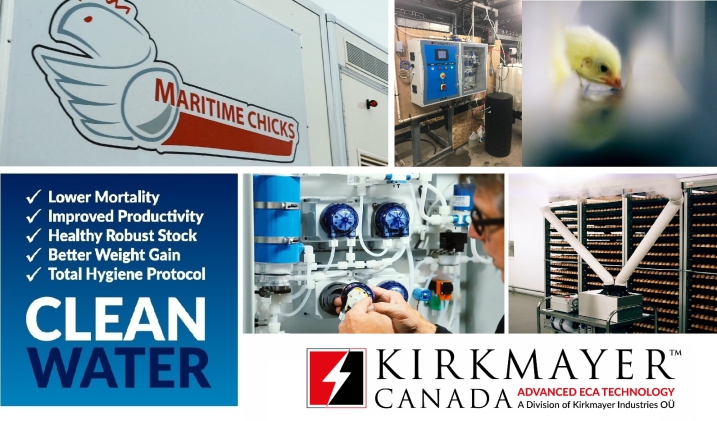
Hatchery - Nova Scotia
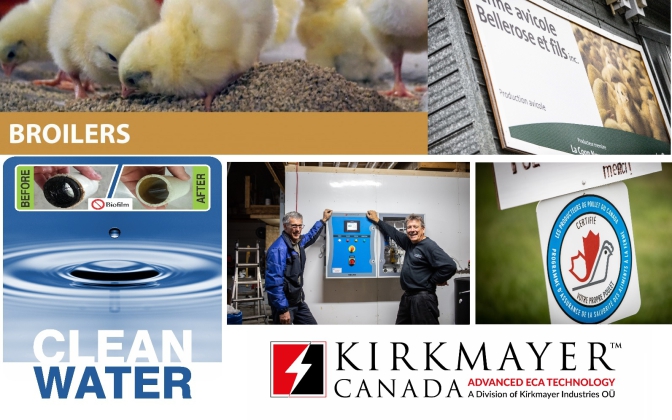
Broiler Poultry Farm – Quebec
Super-oxidized Water (SOW) for Egg Decontamination
In a 2009 study published in Poultry Science, a total of 2,160 breeder flock eggs were randomly split into a control group and a group to be sprayed with Super Oxidized Water (SOW). Hatched chickens were grown out today 39. The results showed that the Super Oxidized Water (SOW) group chickens had significantly less contamination compared to the control group. Spraying Super Oxidized Water (SOW) on eggshell surfaces resulted in the complete elimination of E. coli, Listeria monocytogenes, Salmonella enterica serovar Typhimurium, and Staphylococcus aureus. Spraying hatching eggs with Super Oxidized Water (SOW) did not negatively affect embryonic development or survival, nor broiler growth, and yet total aerobic bacteria counts were significantly lower on eggs that were sprayed with Super Oxidized Water (SOW) compared with eggs left untreated. This result may have contributed to the reduction in broiler mortality during the first 2 weeks of production, by reducing the bacteria present in the young broilers
Super-oxidized Water (SOW) as Broiler Drinking Water Additive
In a 2014 study, two broiler farms were studied during 3 rearing periods. Houses and equipment were identical on each farm. “The use of Super Oxidized Water (SOW) as a supplementary measure can be considered to permanently achieve a better drinking water quality and had no negative effects on bird health and performance. Furthermore, the use of Super Oxidized Water (SOW) contributes to current European Union requirements regarding the reduction of using antibiotic substances.

A 3-week experiment published in the International Journal of Food Microbiology in 2002 used 144 Ross 308 broilers, aged 21 days. Super Oxidized Water (SOW) treatment had no negative effects on average weight gain, feed conversion rate or other routine measures of poultry meat quality. In a second study where broilers were watered with 3% Super Oxidized Water (SOW) in their drinking water and slaughtered on day 34 the chicken meat quality was normal as measured by pH and color.
Decontamination of Campylobacter on Chicken Meat
During slaughtering, chicken carcasses are often contaminated with faecal matter. In a study published in 2013, chicken pieces with and without skin were sprayed with 5% Super Oxidized Water (SOW) prior to packaging and storage at 4o C. After 10 days of storage, Super Oxidized Water (SOW) decreased the level of logarithmic CFU/mL by 0.78-1.48 for meat with skin and by 0.8-1.05 for meat with no skin. Super Oxidized Water (SOW) was shown to be superior to chlorinated water for inactivating Campylobacter during poultry washing.
Super Oxidized Water (SOW) Summary
Super Oxidized Water (SOW) is proven to be a superior option to antibiotics and standard disinfectants at all stages of poultry production, including egg decontamination, growth promoter, antibiofilm, decontamination of hen houses, slaughterhouses and raw meat. Super Oxidized Water (SOW) exerts its powerful antimicrobial effect principally by osmotic shock and is therefore not prone to resistance. It is safe to breathe, inexpensive and leaves but a few micrograms of plain salt as a residue. Super Oxidized Water (SOW) is an attractive alternative to our reliance on antibiotics in the poultry industry and therefore in our public health efforts to prevent the advance of antibiotic resistance in humans.
Guidelines for Choosing the Right
Kirkmayer® Generator and Size
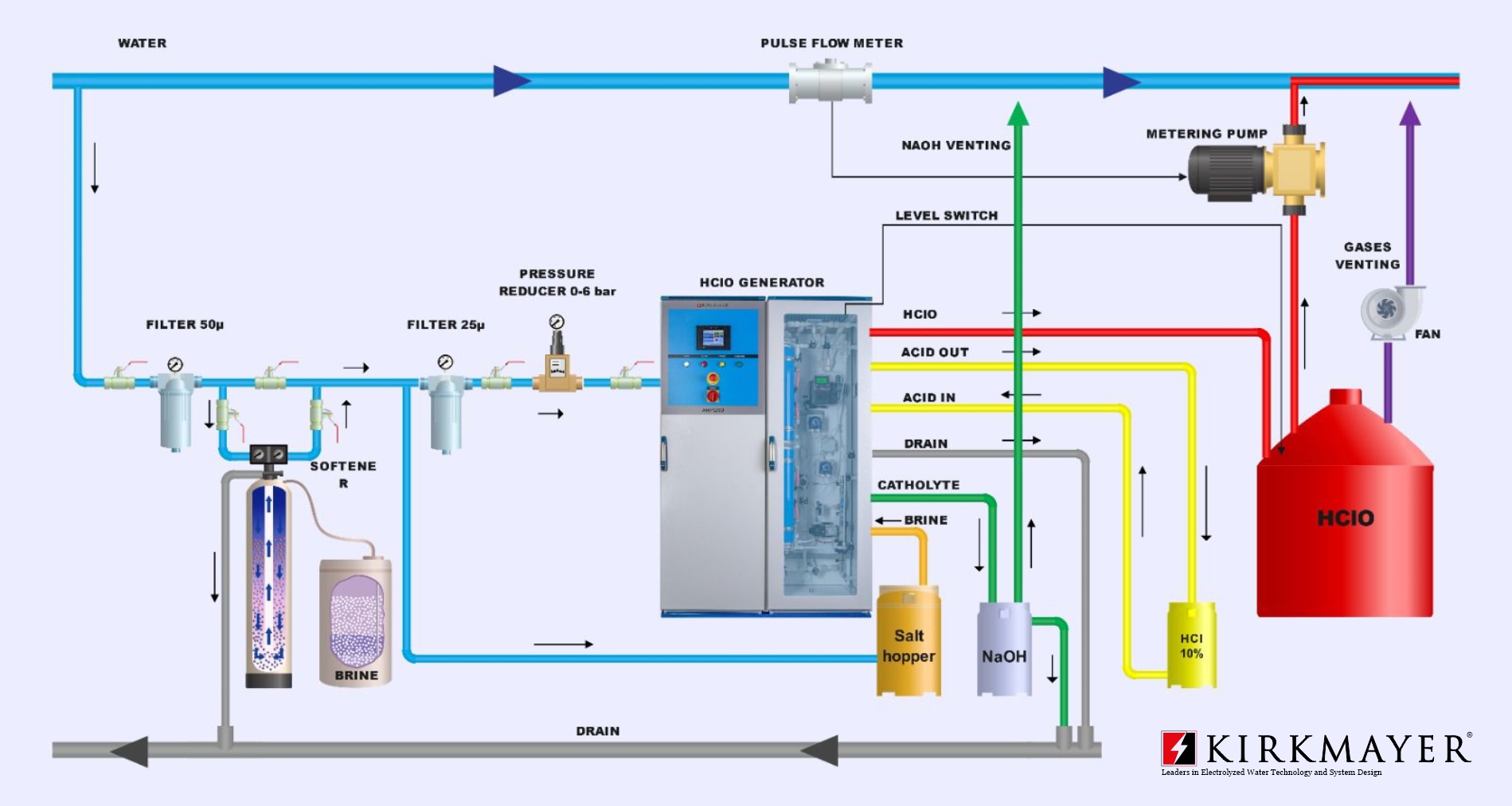
- CHOOSE THE RIGHT KIRKMAYER® ECA HOCl HYPOCHLOROUS ACID GENERATOR SIZE
- Select a model based on total daily water volume and required active chlorine (FAC) residual. Kirkmayer gives production-rate data (liters/hour of anolyte) in its datasheets.
- Confirm the unit can handle your water volume needed, hardness and pH; softened, filtered feed water is usually recommended.
- LOCATION
- Choose a location that is accessible to incoming water, a drain and ample electricity.
- The unit will require ventilation so it is important to install the unit in an open area which can be accessible to proper ventilation using an exhaust fan to vent to the outside is the ideal ventilation setup.
- WATER TREATMENT
You should test the water (both raw and finished, if possible) before installing ourKirkmayer’s ECA HOCl Generator system, especially for poultry drinking-water or livestock applications. Proper pre-install testing helps ensure the generator works effectively and does not create unintended issues.We recommend using chemically resistant materials (e.g., PTFE, PVDF, or equivalent) for the anolyte-dosing line from the generator to the injection point. Metal or unsuitable plastics can corrode or degrade.What you should test for:- pH, alkalinity, hardness, iron, manganese, organic matter (e.g., COD or TOC), and total dissolved solids (TDS), because these affect cell life and HOCl stability.
- Microbiological indicators (total coliforms, E. coli) and baseline pathogen load so you can verify the generator’s impact afterward.
- If source water is very hard or rich in scaling elements, it can shorten the generator’s life and reduce HOCl output, leading to inconsistent dosing in drinking-water lines.
- High organic load or iron/manganese can scavenge HOCl, increasing effective chlorine demand and potentially reducing biofilm and pathogen control in poultry barns if not accounted for during dosing.



Ready to Upgrade Your Disinfection?
SYSTEM GENERATORS
SYSTEM CAPACITIES
SYSTEM DATA SHEETS
BROCHURES
GENERAL INQUIRY
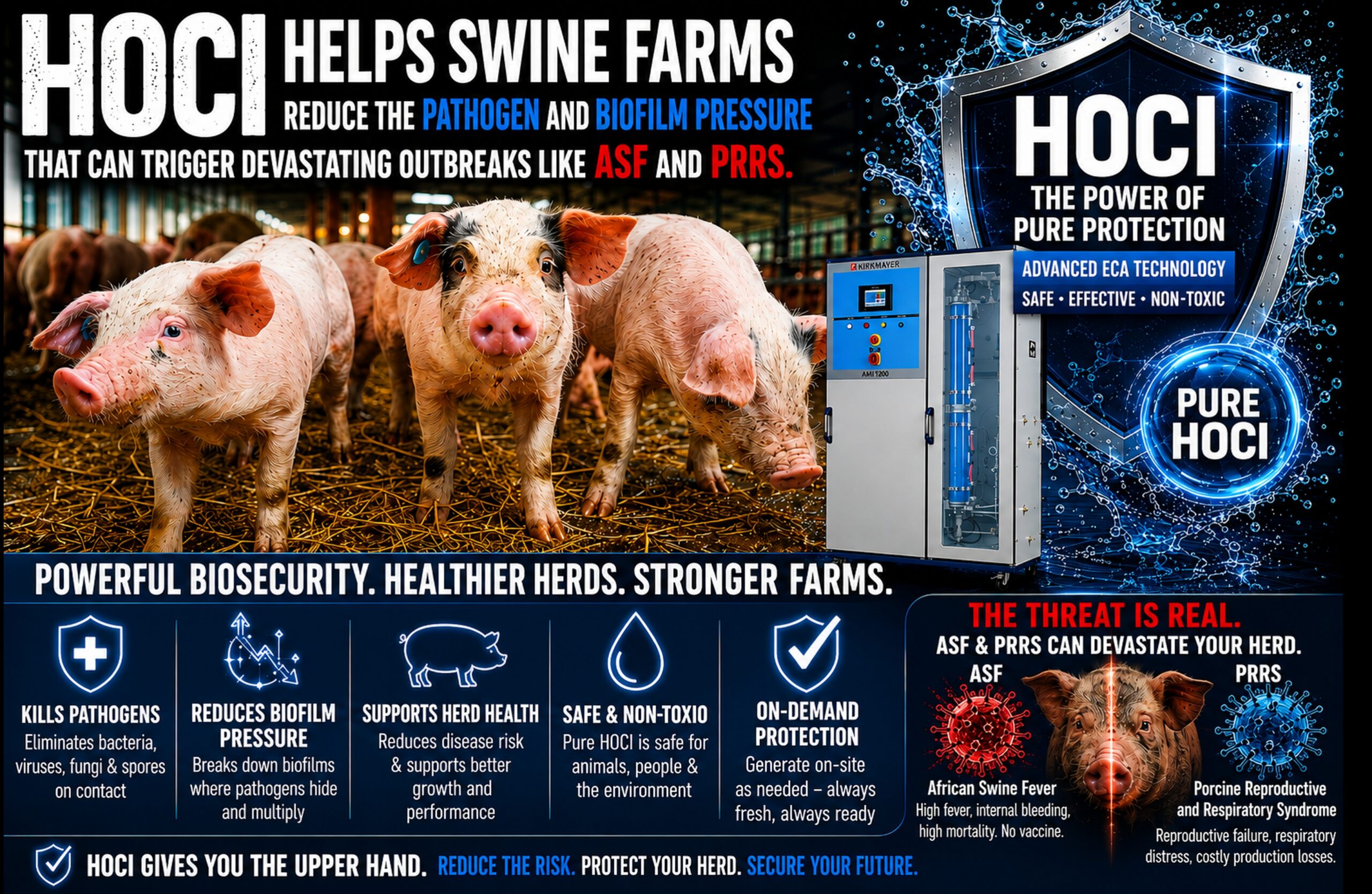


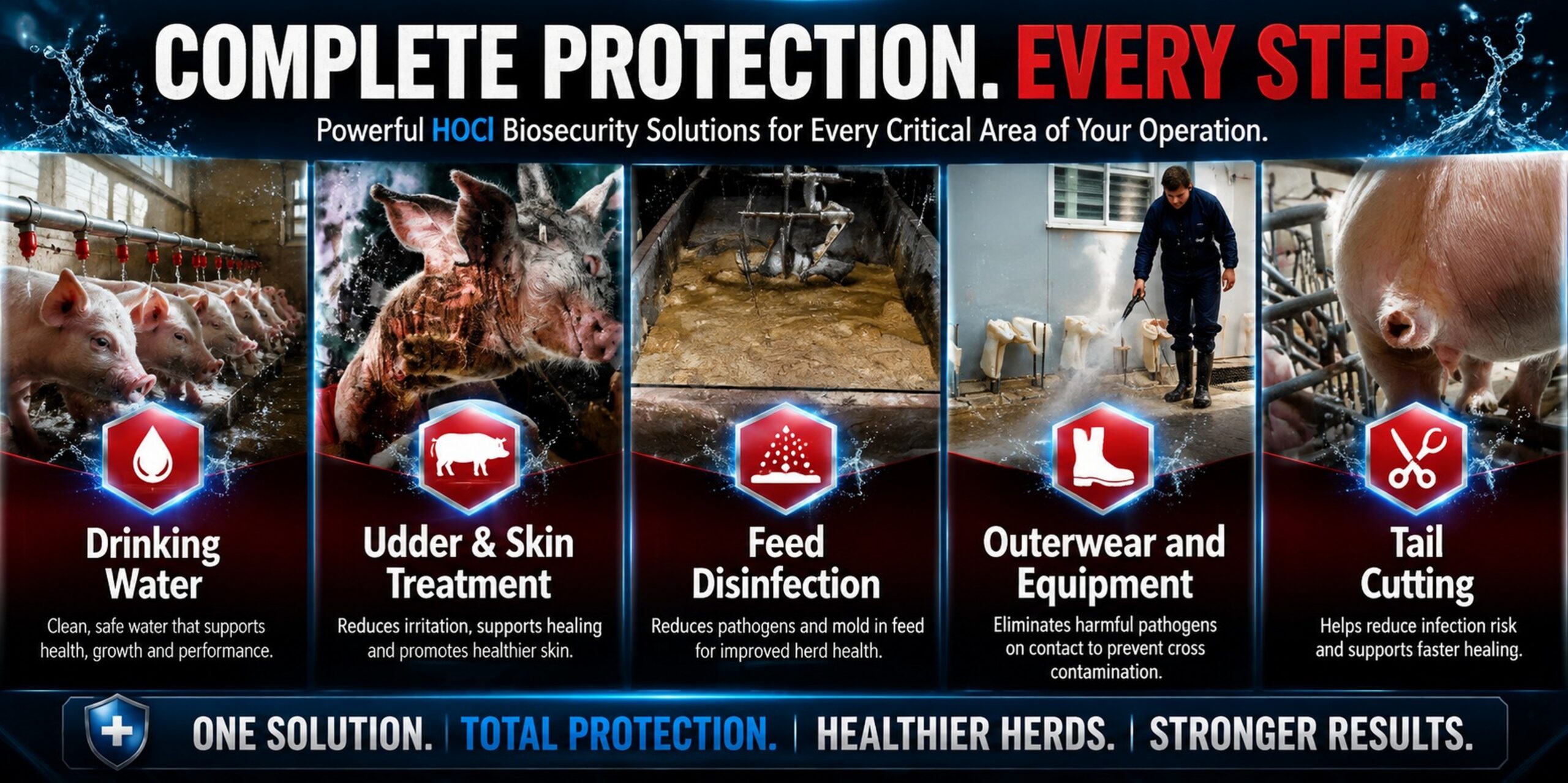
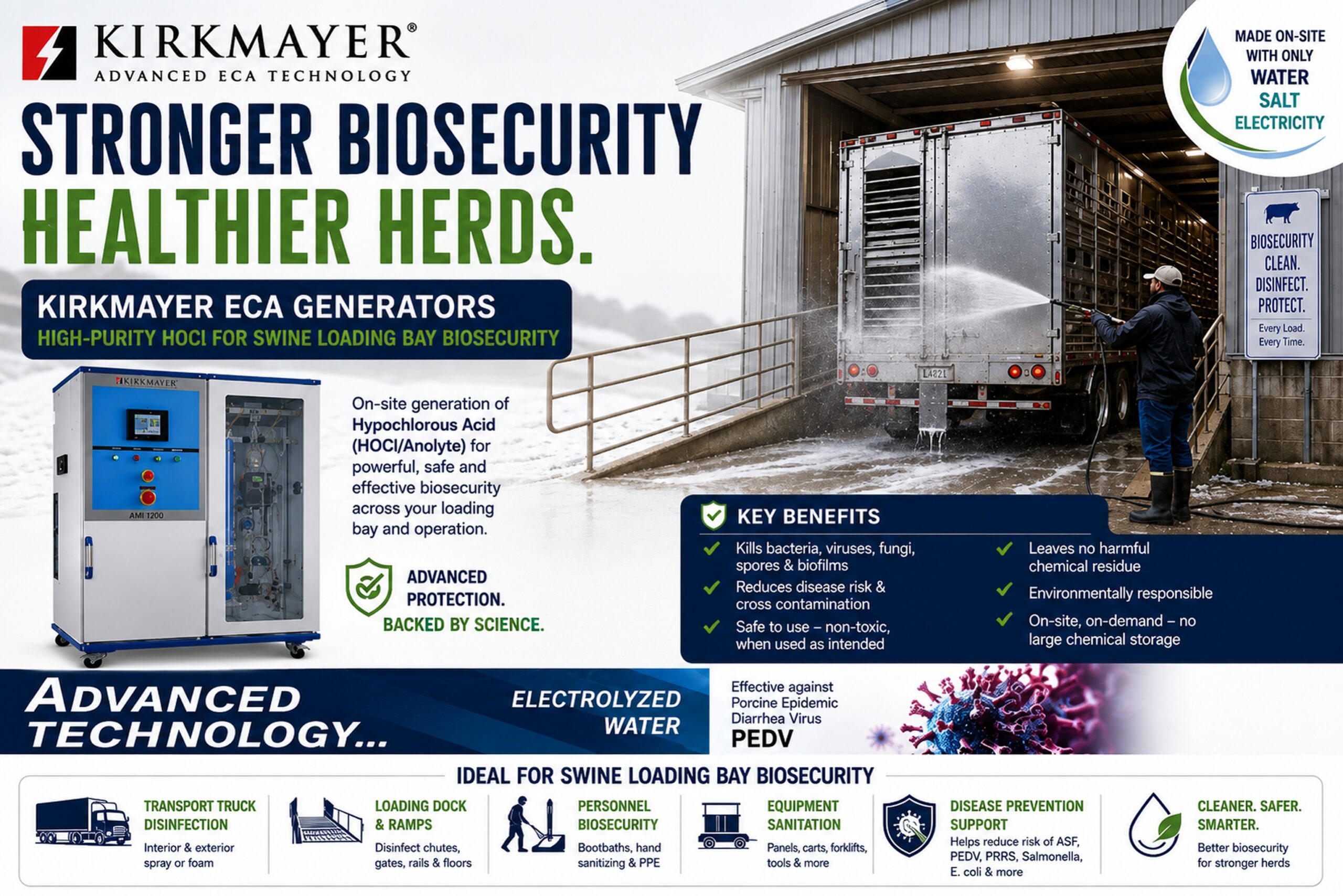

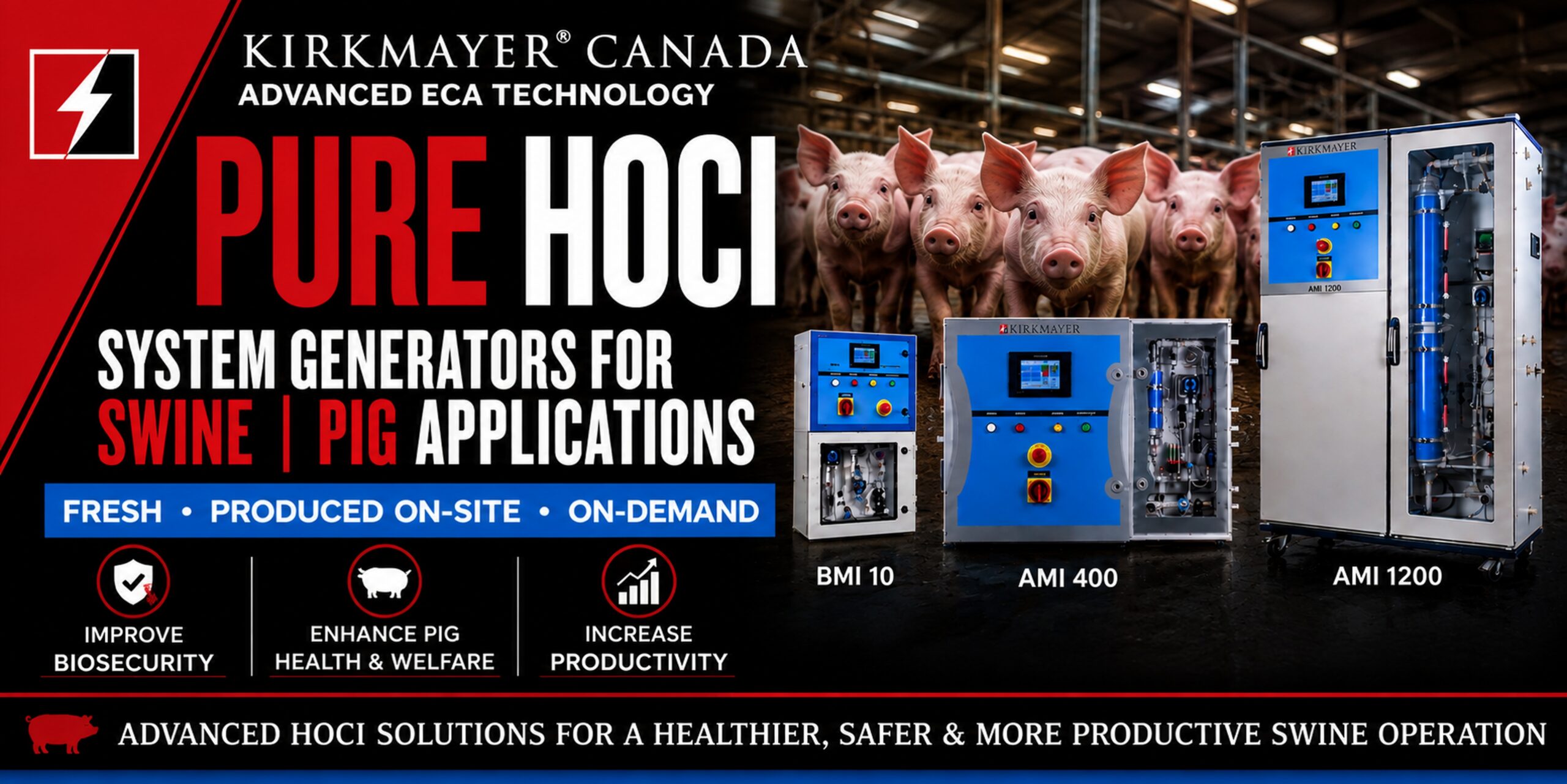
- Kirkmayer® HOCl GENERATOR systems can dose HOCI into pig drinking lines via a dosing pump to help control bacteria and keep water lines cleaner. A commonly cited target for livestock drinking water is about 3–5 ppm, and one swine-production source notes no drop in water consumption when electrolyzed water was used in finishing farms.
- Barn room disinfection between groups (all-in/all-out) – after removing manure/bedding and washing with detergent, apply HOCl to floors, walls, feeders, and equipment surfaces before restocking, following the farm’s health plan.
- Footbaths, boot dips, and wheel dips at entry points – use HOCl in footbaths and wheel dips at perimeter and room entrances to reduce pathogen carry-in on boots and tires as part of the “clean/dirty” separation.
- Personnel hygiene and hand disinfection – spray or hand-wash with HOCl at entry/exit of barns and after handling pigs, culls, or mortalities to reduce hand-to-pig and hand-to-surface transmission.
- Equipment and tool sanitation – disinfect shared tools, sorting boards, syringes, scales, and transport crates with HOCl between pens or rooms to limit mechanical spread of pathogens.
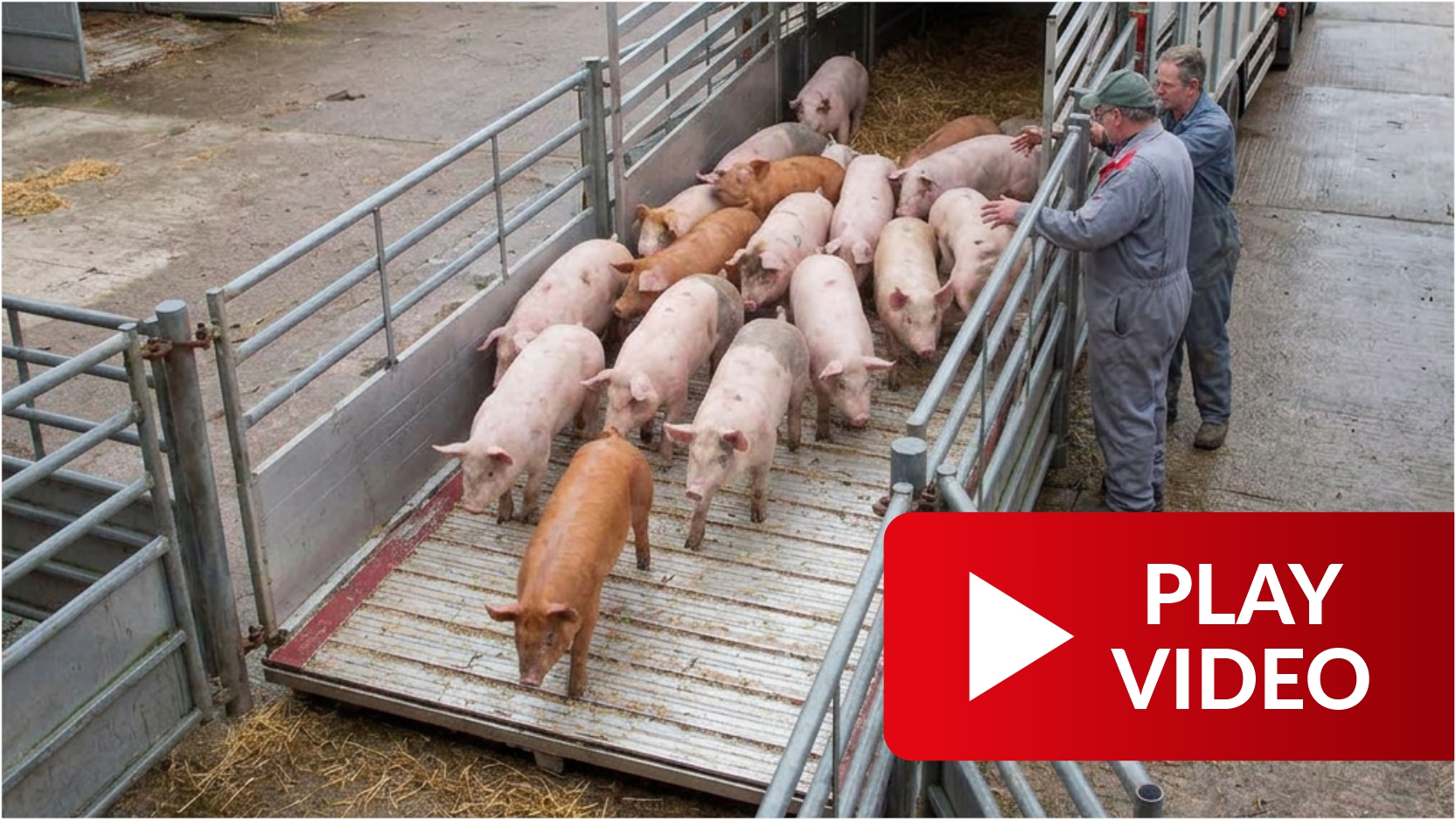
- Loading/unloading dock and transport biosecurity – apply HOCl to the loading chute, dock floor, and contact surfaces after each load-out, and treat vehicle tires/wheels where possible to reduce pathogen introduction from trucks.
- ODOR and MANURE-AREA CONTROL use Kirkmayer® generated HOCl solution around manure channels, fan outlets, and odor-prone areas to oxidize odor compounds and help with deodorization. This makes it useful as part of a sanitation and air-quality program rather than as a stand-alone cure.
- Mortality and cull handling areas – sanitize floors, carts, and containers used for dead or sick pigs with HOCl to reduce contamination of pathways and equipment.
- Feed and water system maintenance – clean and then disinfect water tanks, pumps, and accessible feed-contact surfaces with HOCl as part of routine maintenance to control biofilm and bacterial reservoirs.
- Quarantine and isolation rooms – use HOCl for routine surface and footbath disinfection in isolation areas to contain pathogens from new or sick animals and prevent spillover to the main herd.
- General facility cleaning integration – incorporate HOCl as the approved disinfectant step in written SOPs for each zone (weaning, nursery, finisher, gestation, farrowing) to standardize contact time, concentration, and application method.

Why Biofilm is Such a Serious Problem
- Biofilm can harbor millions of bacteria per square centimeter of pipe surface.
- Pathogens living inside biofilms are up to 1,000 times more resistant to disinfectants than free-floating bacteria.
- Biofilms continuously release bacteria into the drinking water, creating constant recontamination.
- Organic slime also reduces the effectiveness of sanitizers and provides an ideal environment for pathogens to multiply.
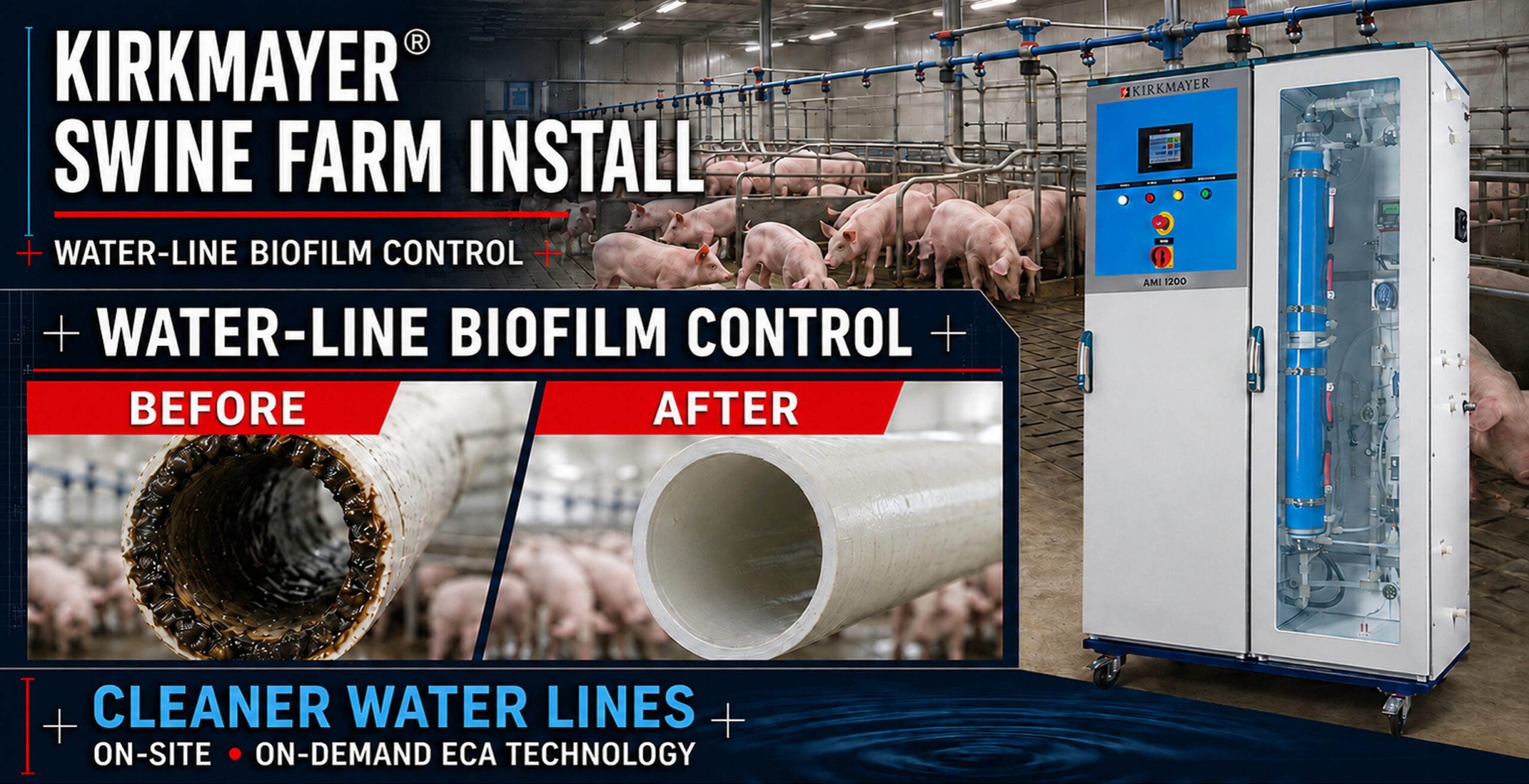
How HOCI Fights and Controls Biofilm
- Breaks down biofilm that protects harmful bacteria inside water lines.
- Penetrates the biofilm matrix, reaching pathogens that conventional disinfectants often cannot.
- Reduces bacterial load, including Salmonella, E. coli, Pseudomonas, and other waterborne pathogens.
- Improves drinking water quality, providing cleaner, safer water to livestock.
- Prevents biofilm from reforming with continuous or routine treatment.
- Reduces disease pressure, lowering the risk of pathogen transmission throughout the herd.
- Improves water flow by preventing slime and organic buildup inside pipelines.
- Enhances animal performance by promoting consistent water intake and reducing microbial exposure.
- Increases effectiveness of medications and vaccines by minimizing interference from contaminated water systems.
- Minimizes maintenance costs by reducing the need for aggressive line cleaning and chemical flushing.
- Non-toxic and residue-free, breaking down into water and salt after use.
- Safe for continuous use in livestock water systems when applied at recommended concentrations.
- Generated on-site, providing a fresh, highly active disinfectant without transporting hazardous chemicals.
- Supports stronger biosecurity, reducing the risk of disease outbreaks entering through contaminated drinking systems.
- Environmentally responsible, requiring only water, salt, and electricity to produce.

Main Benefits of HOCI in Swine/Pig Farming
Biosecurity:
Loading Bays
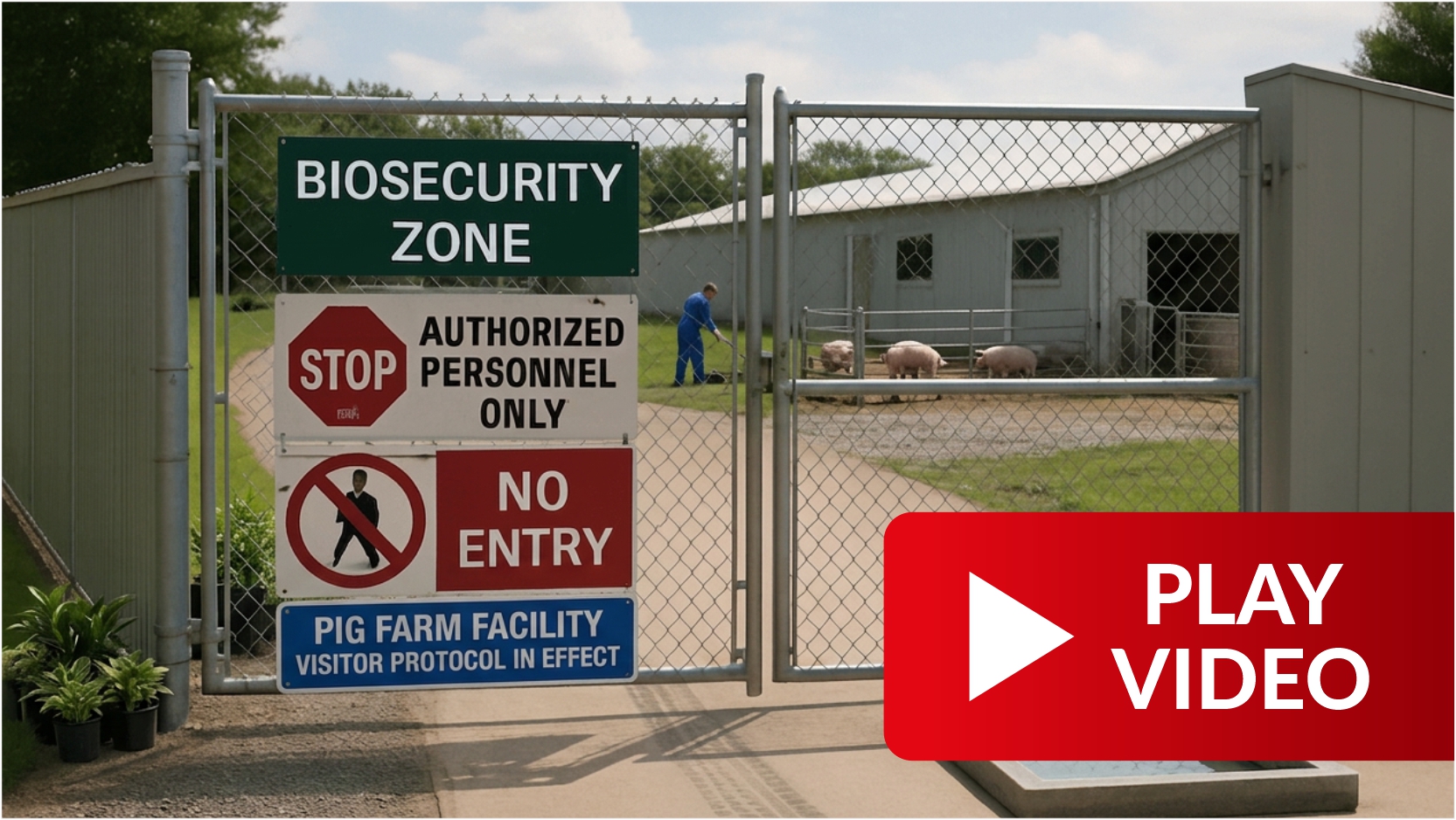
Biosecurity:
Farm Entry
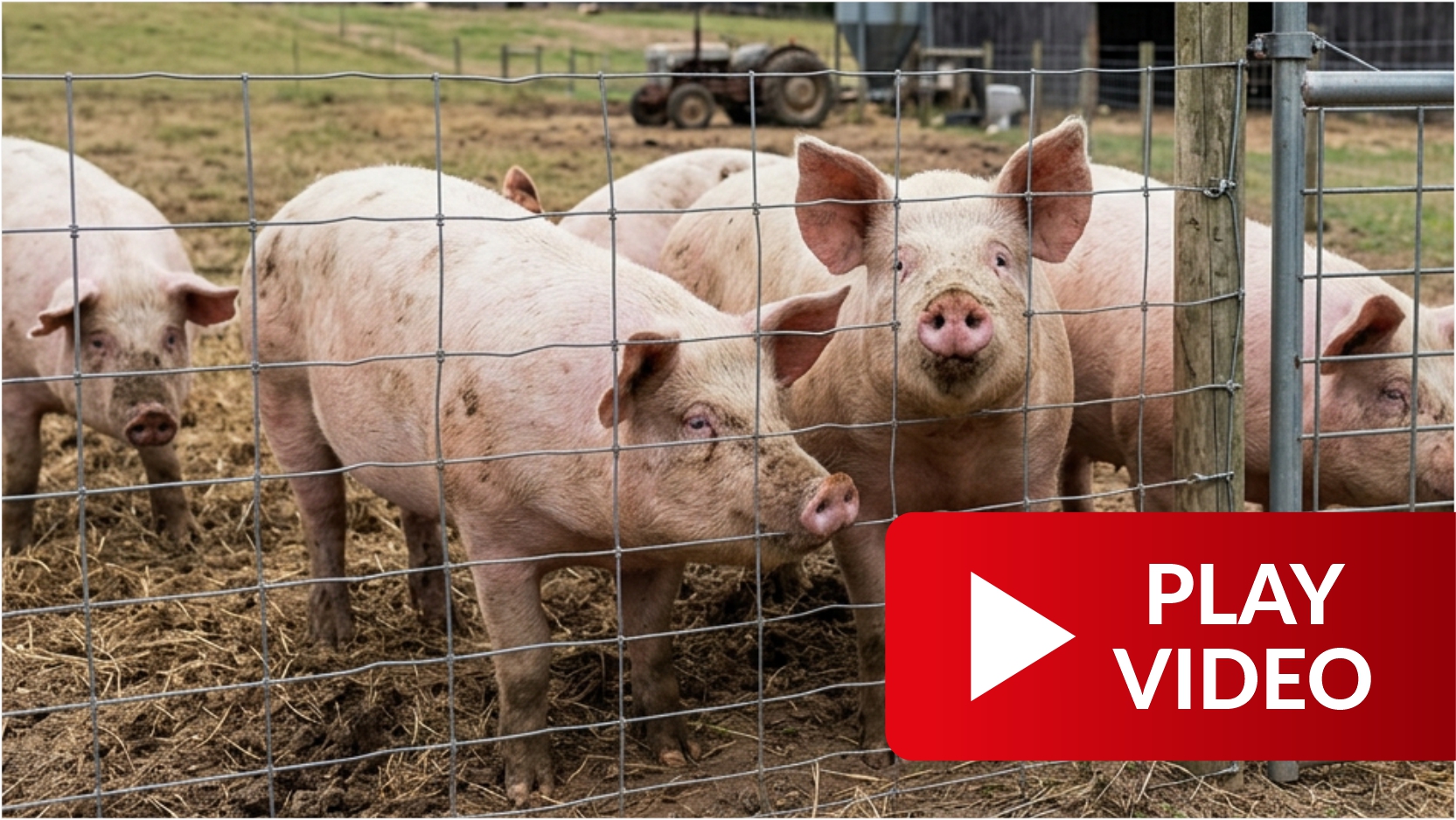
Biosecurity:
Farm Perimeter Fence
The main benefits of HOCl in pig farming are better water and barn hygiene, fewer digestive and infectious problems, and improved survival in high-pressure disease situations. Those effects can translate into reduced mortality, especially when HOCl is part of a broader biosecurity and sanitation program rather than used alone.
- Reduced mortality in some systems, because cleaner water and lower pathogen load can improve pig health and resilience.
- Less diarrhea in piglets and weaners, which is one of the biggest drivers of poor growth and early losses.
- Better growth performance and feed efficiency, likely because pigs stay healthier and maintain water intake.
- Lower bacterial contamination in drinking water, lines, and barn surfaces.
- Improved control of pathogens such as Salmonella and E. coli in sanitation programs.
- Better biosecurity, since HOCl can be used for disinfection of equipment, boots, and farm surfaces

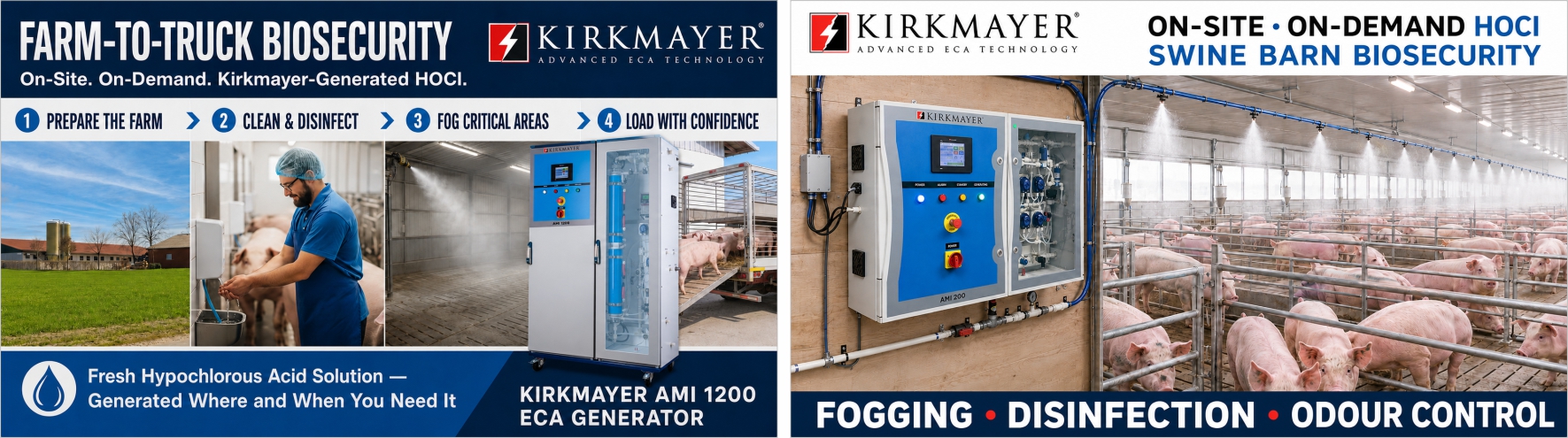
Kirkmayer® ECA Anolyte Generators -
Produces High Quality HOCI aka Super-oxidized Water (SOW)
Kirkmayer’s HOCl Hypochlorous acid aka Super-Oxidized water (SOW) contains a variety of highly oxidizing species in very low stable concentrations (e.g. hypochlorous acid, ozone, superoxide, peroxide). These oxidative species first disrupt the bacterial cell wall, following which the solution ruptures the cell through osmolarity as it is very hypotonic at 13 mOsmol/L.
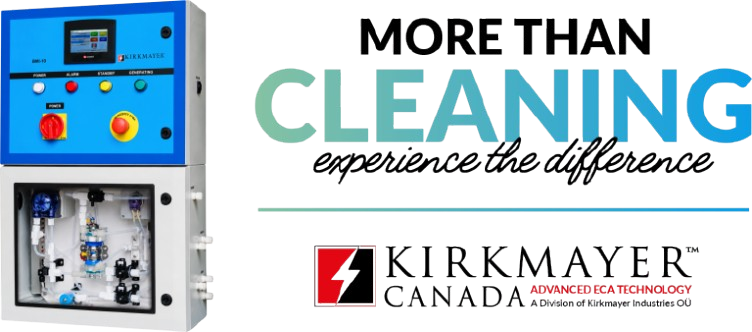
Kirkmayer® ECA Anolyte Generators -
A Better, More Cost-efficient Alternative
Kirkmayer’s HOCl generators (producing hypochlorous acid on‑site) outperform traditional chlorine‑based disinfectants (like sodium hypochlorite) for biofilm removal because HOCl penetrates the biofilm matrix more effectively and has higher antimicrobial activity at similar “free chlorine” levels, while being safer and less corrosive.
Benefits
Kirkmayer’s HOCl Hypochlorous acid aka Super-Oxidized water (SOW) is proven to be a superior option to antibiotics and standard disinfectants at all stages of poultry production, including egg decontamination, growth promoter, antibiofilm, decontamination of hen houses, slaughterhouses and raw meat. Super Oxidized Water (SOW) exerts its powerful antimicrobial effect principally by osmotic shock and is therefore not prone to resistance. It is safe to breathe, inexpensive and leaves but a few micrograms of plain salt as a residue. Super Oxidized Water (SOW) is an attractive alternative to our reliance on antibiotics in the poultry industry and therefore in our public health efforts to prevent the advance of antibiotic resistance in humans.

HOCl effectively inactivates PEDV (Porcine Epidemic Diarrhea Virus) at concentrations of 200-500 ppm with a minimum contact time of 10-30 minutes on pre-cleaned surfaces. This range accounts for fecal contamination common in pig barns, where lower doses or shorter times may fail due to organic interference.
Kirkmayer’s HOCl Hypochlorous acid generated, anolyte solution in on‑site generator systems, is extremely effective against PEDV (Porcine Epidemic Diarrhea Virus). Key areas to deploy the generated anolyte solution in pig farming operations is in spraying barns, pens, equipment, tools, loaders, gates, and feeders to reduce viral load. Add HOCI directly to the drinking water. Increase dosage at first signs then drop to regular dosing after 2-3 days for most effective results.


Spraying HOCl directly on sows and piglets is generally safe only at low concentrations (under 50-100 ppm) and in misted/fogged form for short exposures, but it’s not standard practice for routine or PEDV control due to irritation risks at higher effective doses. Pig farm protocols prioritize environmental application over direct animal contact to avoid stress, eye/skin reactions, or inhalation issues.
SAFETY LEVELS
- Low-dose mist (20-50 ppm): Safe for brief fogging in occupied barns; reduces airborne pathogens without harming pigs, per livestock guides.
- Higher doses (200+ ppm): Unsafe directly on animals—can irritate skin, eyes, or respiratory tract; reserve for empty barns or equipment.
- No direct evidence of harm: Studies on calves and poultry show no toxicity at diluted levels, but swine-specific data stresses ventilation and avoidance of saturation.

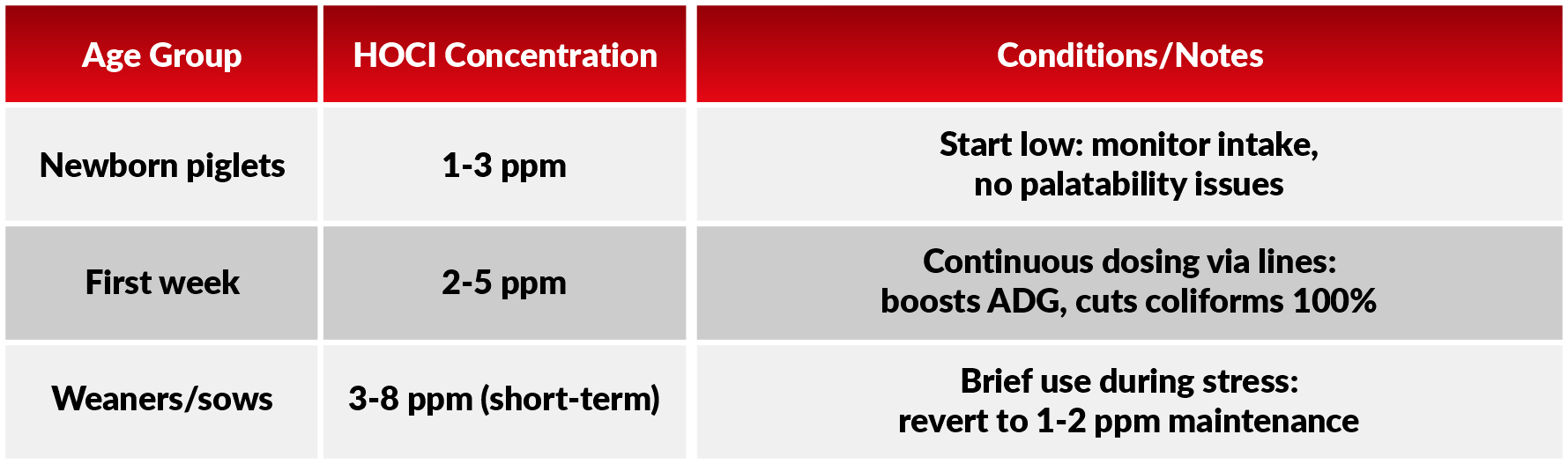
For newborn pigs/sows, stick to 2-5 ppm HOCI in water lines—proven safe and beneficial. Avoid direct high-ppm sprays (>100 ppm) on neonates due to untested irritation risks; use them on empty barns instead. Monitor for stress if misting occupied farrowing areas.
Safety Levels for Drinking Water

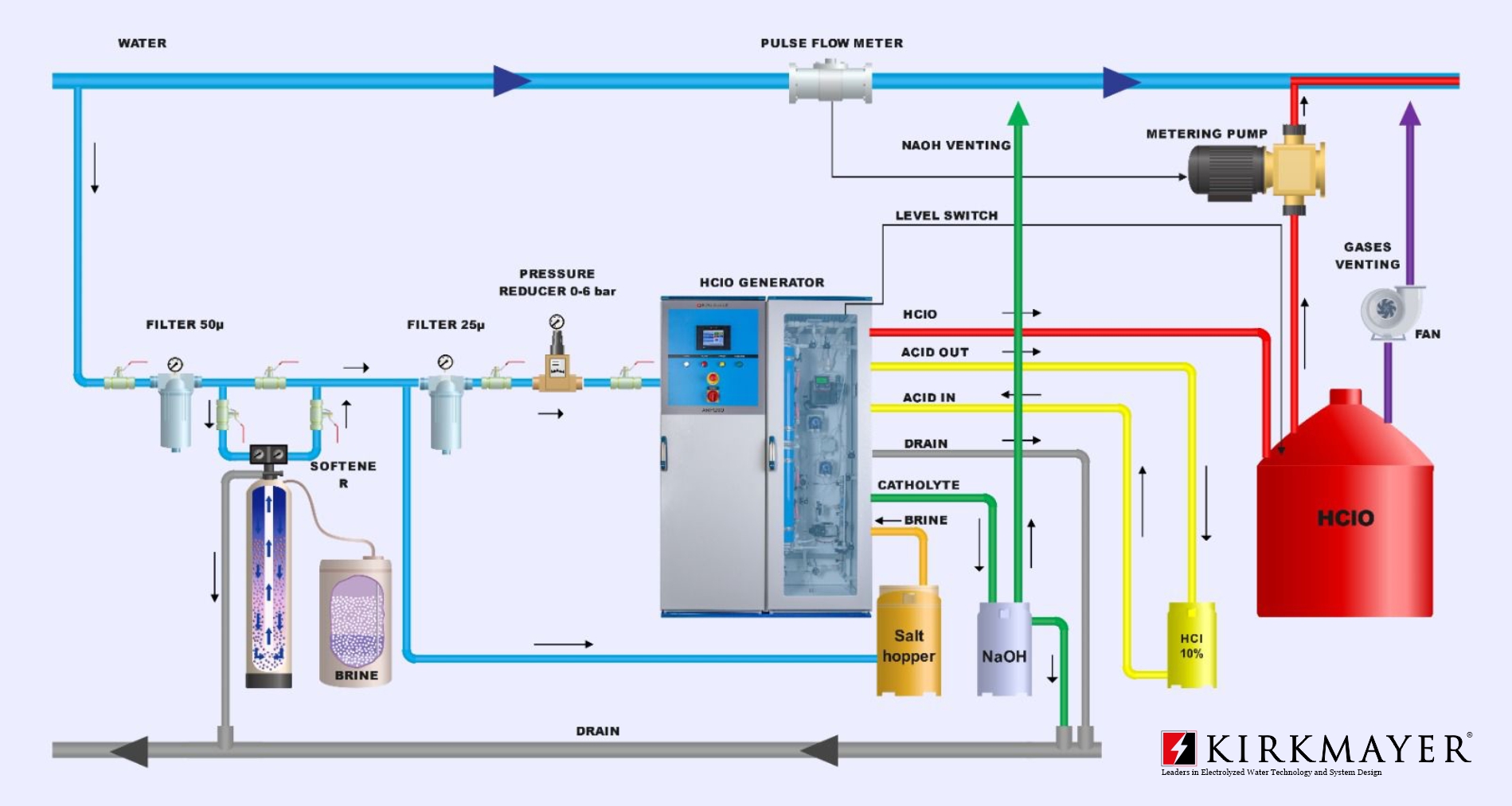
- CHOOSE THE RIGHT KIRKMAYER® ECA HOCI HYPOCHLOROUS ACID GENERATOR SIZE
- Select a model based on total daily water volume and required active chlorine (FAC) residual. Kirkmayer® gives production-rate data (liters/hour of anolyte) in its datasheets.
- Confirm the unit can handle your water volume needed, hardness and pH; softened, filtered feed water is usually recommended.
- LOCATION
- Choose a location that is accessible to incoming water, a drain and ample electricity.
- The unit will require ventilation so it is important to install the unit in an open area which can be accessible to proper ventilation using an exhaust fan to vent to the outside is the ideal ventilation setup.
- WATER TREATMENT
You should test the water (both raw and finished, if possible) before installing our Kirkmayer’s ECA HOCl Generator system, especially for poultry drinking-water or livestock applications. Proper preinstall testing helps ensure the generator works effectively and does not create unintended issues. We recommend using chemically resistant materials (e.g., PTFE, PVDF, or equivalent) for the anolyte-dosing line from the generator to the injection point. Metal or unsuitable plastics can corrode or degrade.
What you should test for:
Typical useful parameters before installing an anolyte system include:
- pH, alkalinity, hardness, iron, manganese, organic matter (e.g., COD or TOC), and total dissolved solids (TDS), because these affect cell life and HOCl stability.
- Microbiological indicators (total coliforms, E. coli) and baseline pathogen load so you can verify the generator’s impact afterward.
Why it matters for livestock:
- If source water is very hard or rich in scaling elements, it can shorten the generator’s life and reduce HOCl output, leading to inconsistent dosing in drinking-water lines.
- High organic load or iron/manganese can scavenge HOCl, increasing effective chlorine demand and potentially reducing biofilm and pathogen control in poultry barns if not accounted for dosing.
Practical recommendation:
As your Kirkmayer® supplier we can assist you in this area or alternatively we suggest that you reach out to a water-testing lab to run a farm-specific package test (physical, chemical, and microbial) on the source water, then design the system (size, pre-treatment, and dosing setpoints) around that data. That way, you verify suitability up front and can later compare post-install water quality to prove the anolyte system is delivering the benefits you expect.

Ready to Upgrade Your Disinfection?
SYSTEM GENERATORS
SYSTEM CAPACITIES
SYSTEM DATA SHEETS
BROCHURES
GENERAL INQUIRY
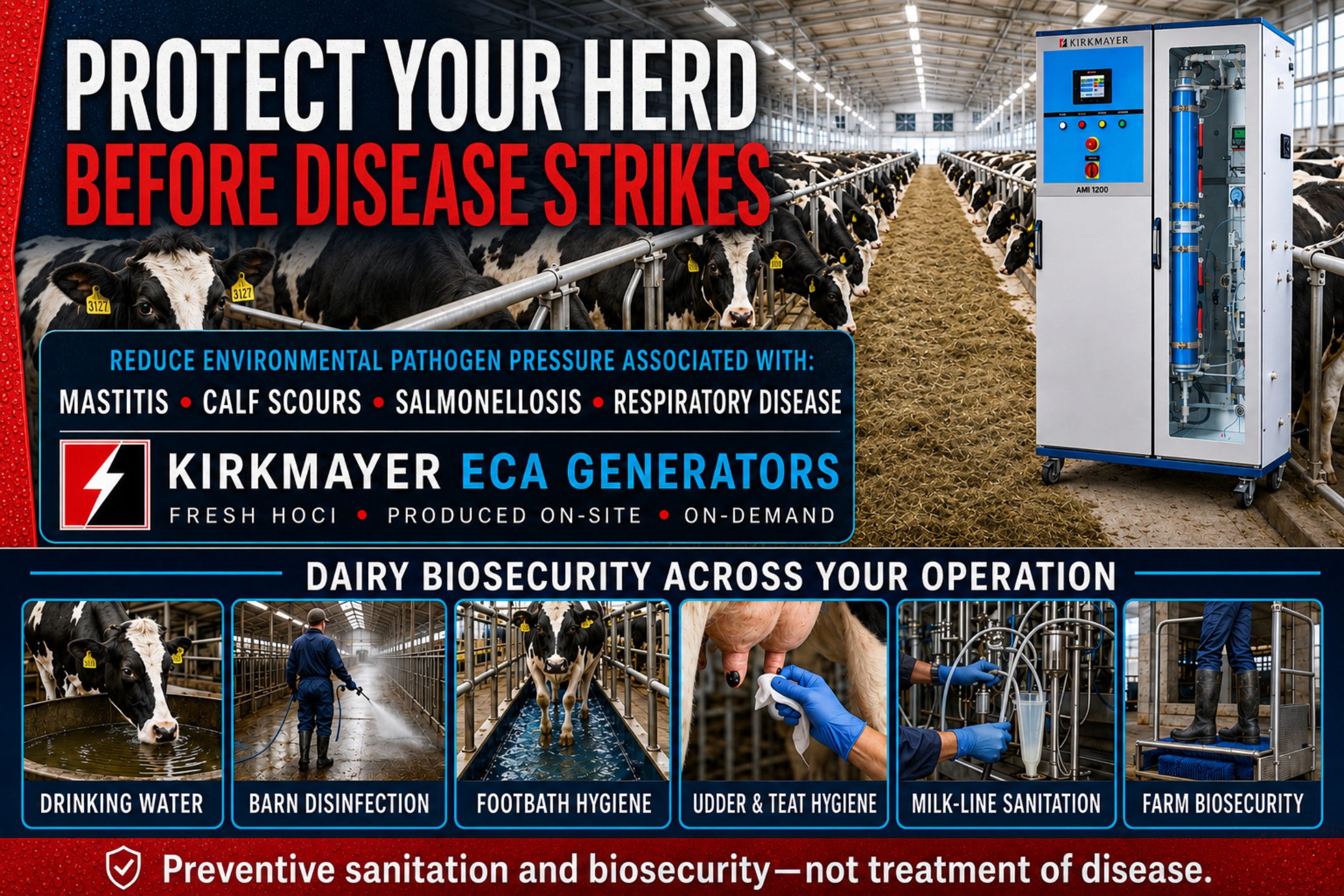

Enhanced Disease Control
HOCl (hypochlorous acid) Benefits
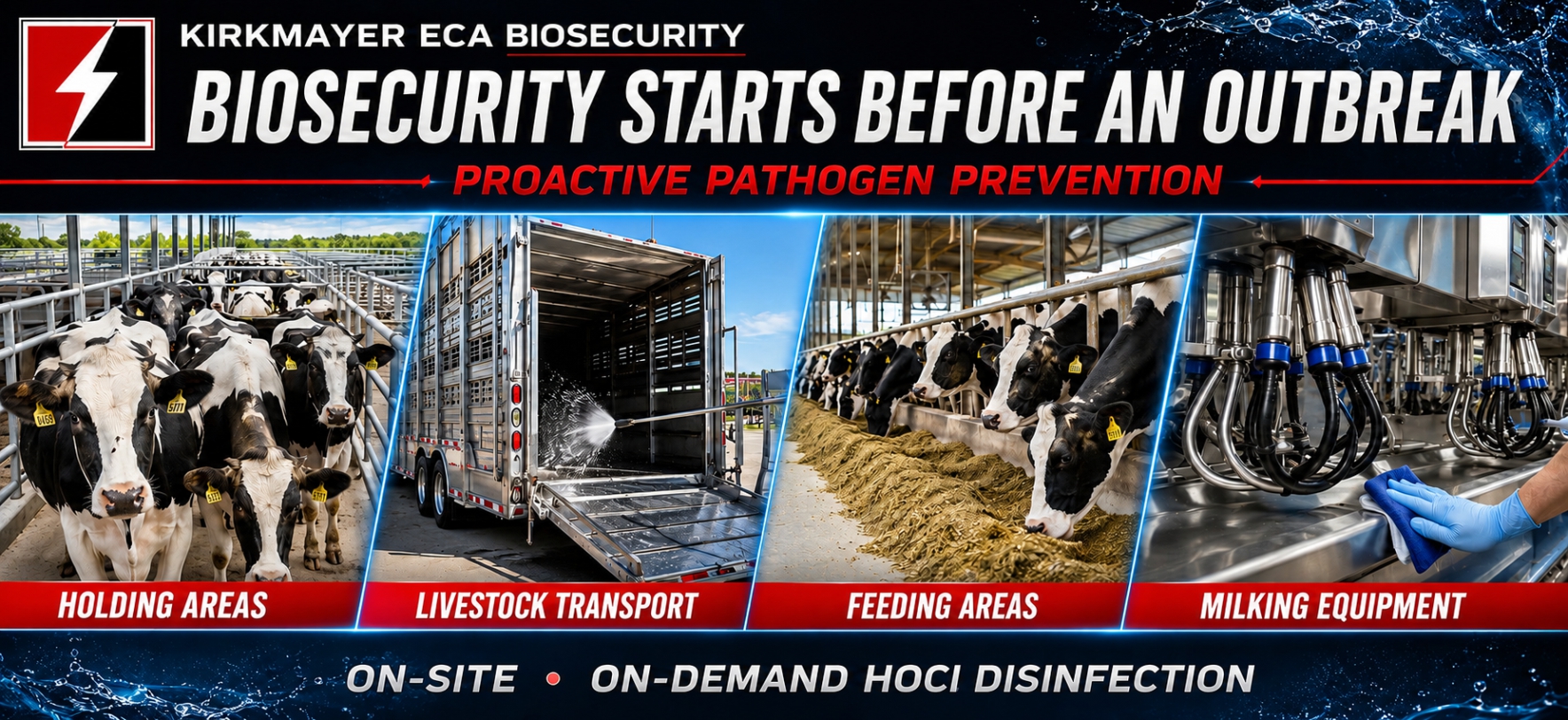
Drinking Water
HOCl (hypochlorous acid) Benefits
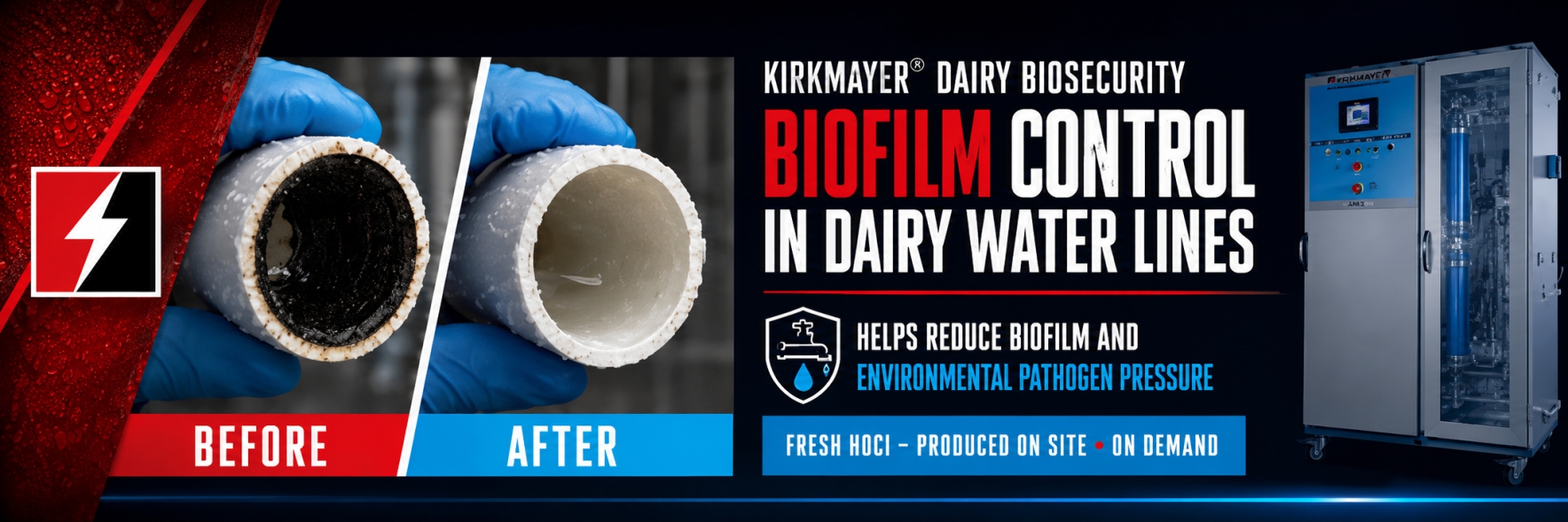
HOCl (Hypochlorous acid) Water-Line Hygiene: Cleaner Drinking Water, Reduced Biofilm Pressure and Stronger Herd Biosecurity
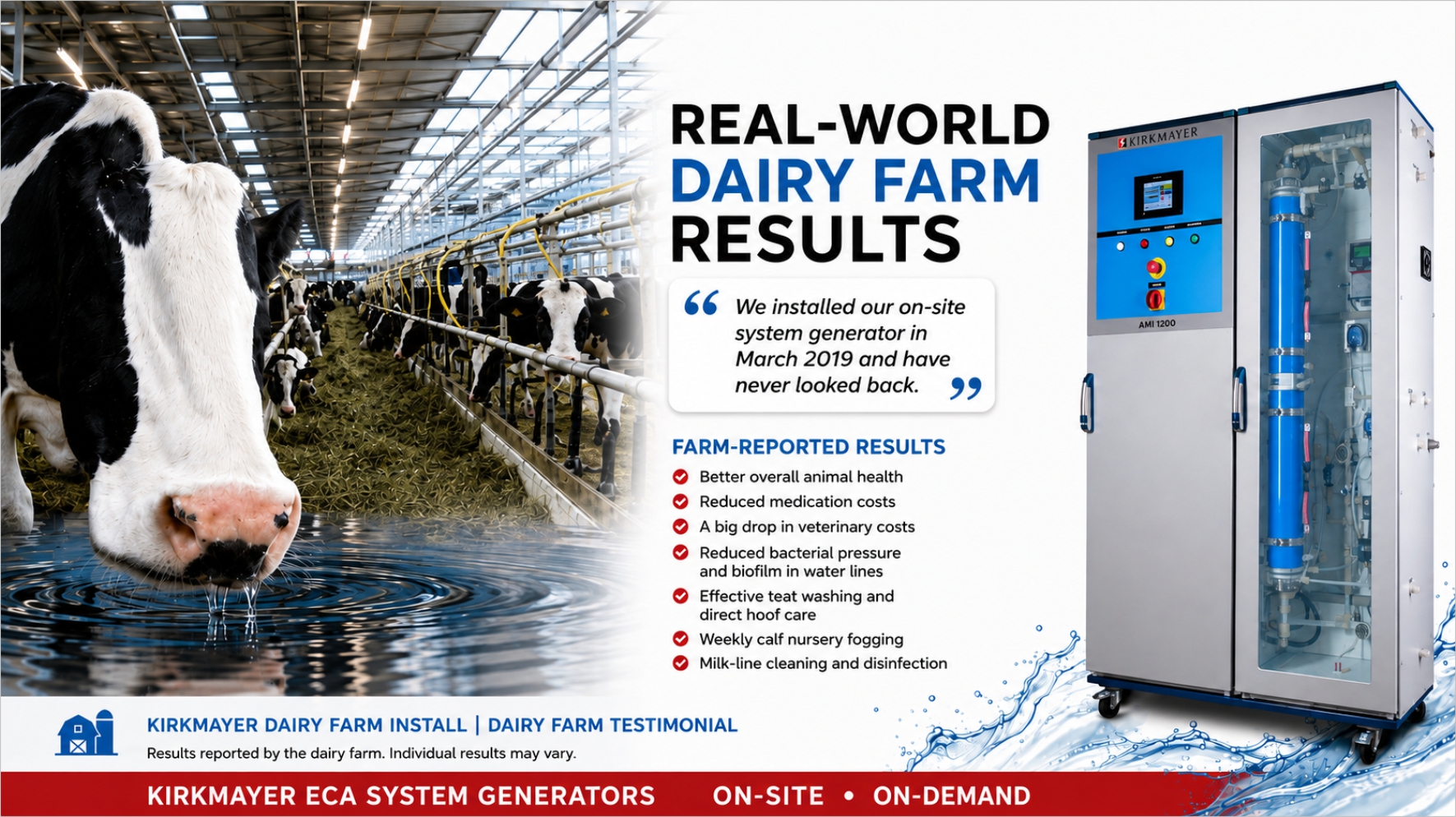
HOCl (Hypochlorous acid) treats drinking water to kill bacteria, viruses, and slime-forming microbes, keeping troughs clean longer and cutting cleaning labor. This boosts feed conversion, milk yield, and herd productivity while minimizing antibiotic use and disease losses.
Dosing HOCl (Hypochlorous acid) in dairy cattle drinking water provides pathogen-free hydration, reducing waterborne diseases and improving health.
Biofilm
HOCl (hypochlorous acid) Benefits
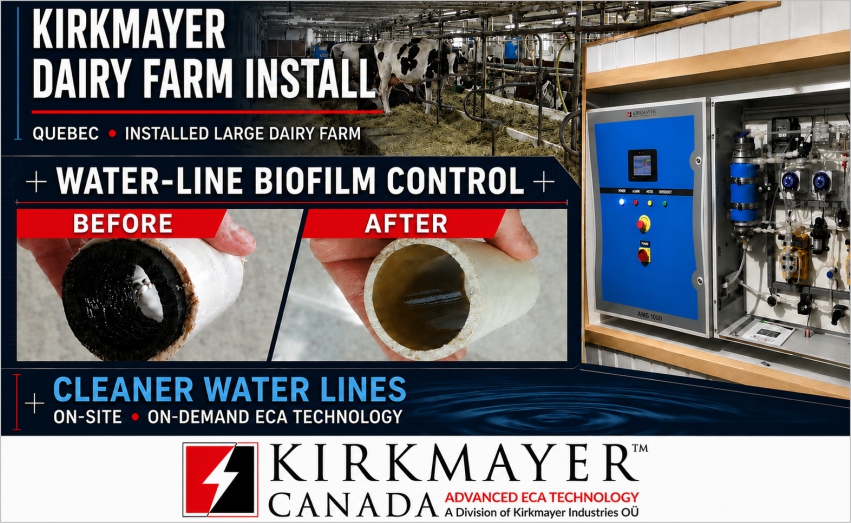
HOCl (Hypochlorous acid) helps break down biofilm and reduce microbial pressure in water lines.
HOCl (Hypochlorous acid) diffuses through slime layers in water pipes, destroying bacteria like E. coli and Pseudomonas at 50-200ppm, even under low flow where biofilms thrive. HOCl (Hypochlorous acid) effectively eliminates biofilm in dairy drinking lines by penetrating and lysing bacterial matrices, outperforming chlorine which gets inactivated by organics.
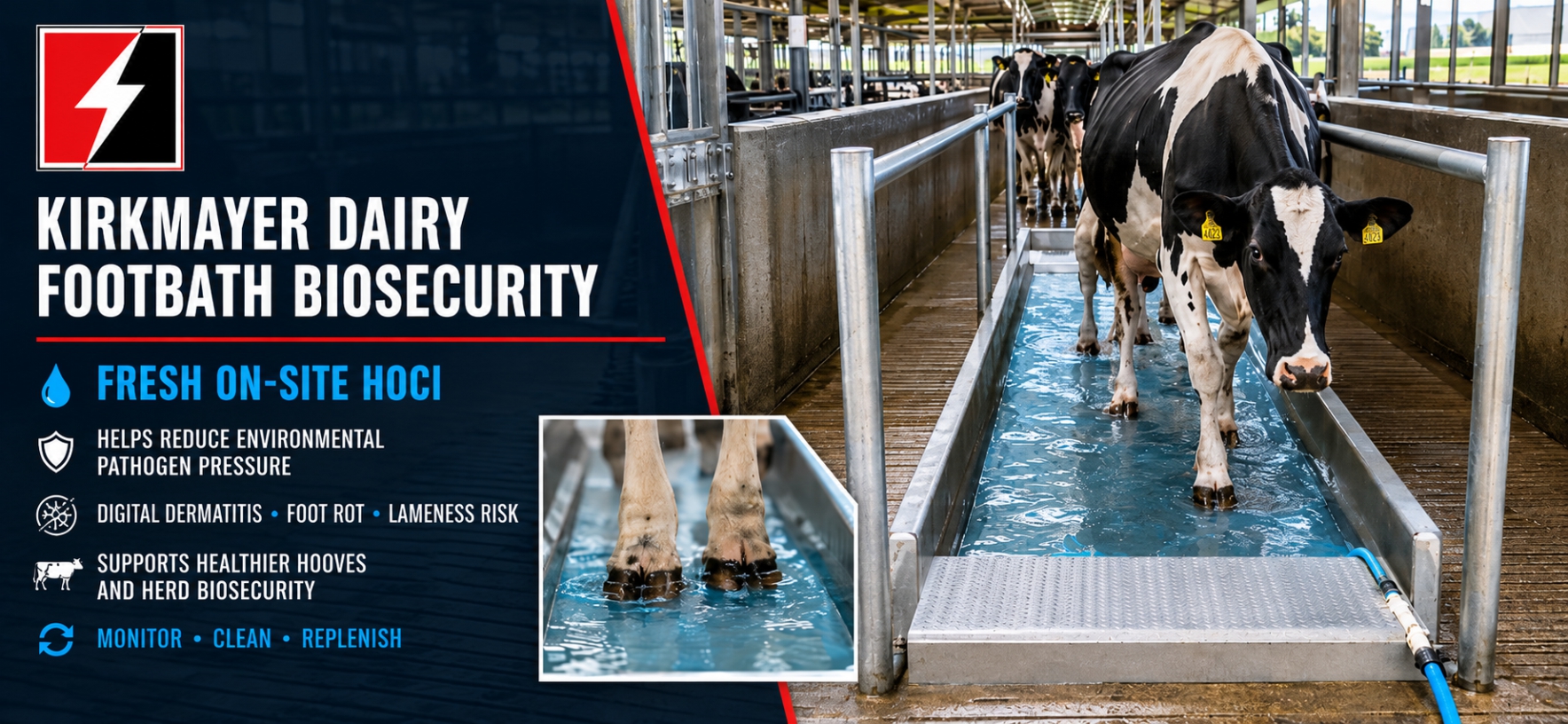
Foot Baths
HOCl (hypochlorous acid) Benefits
HOCl (Hypochlorous acid) is a safer approach to dairy footbath hygiene. It delivers effective hygiene without relying on harsh traditional disinfectants.
HOCl (Hypochlorous acid) is non-toxic, non-corrosive to skin or hooves, and breaks down into salt and water, unlike harsh chemicals that cause irritation, burns, or heavy metal accumulation in manure. Traditional options like formaldehyde emit fumes harmful to cows and workers, while HOCl (Hypochlorous acid) works safely even with organic load and requires no PPE.
HOCl (Hypochlorous acid) outperforms traditional foot bath disinfectants like copper sulfate, formaldehyde, or glutaraldehyde in both safety and cost for dairy cattle. It provides equivalent or better pathogen control with no toxicity risks or environmental concerns.
Teat Dips
HOCl (hypochlorous acid) Benefits
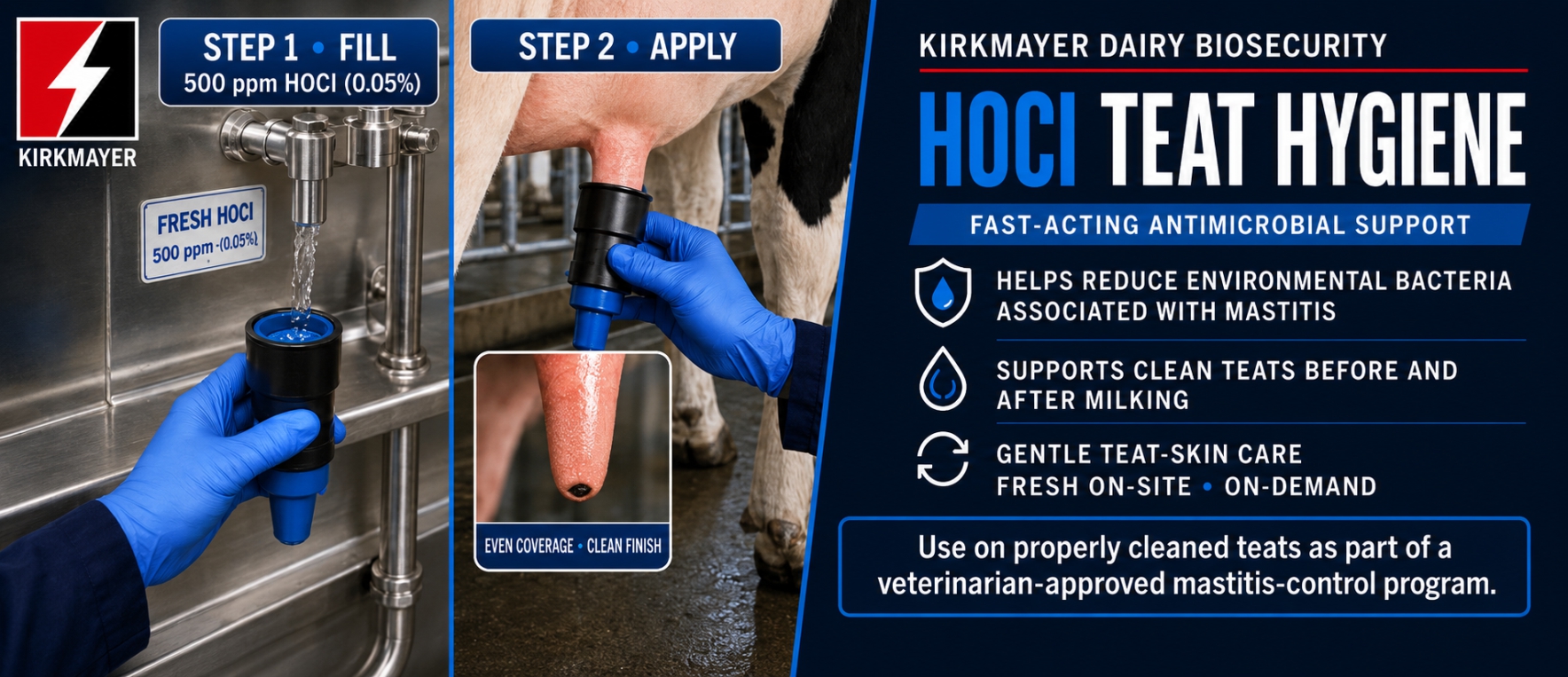
HOCl (Hypochlorous acid) supports teat hygiene by helping reduce bacteria associated with mastitis.
HOCl (Hypochlorous acid) provides fast-acting antimicrobial support for pre-and post-milking teat hygiene, helping reduce environmental bacteria associated with mastitis while supporting clean, well-conditioned teat skin.
HOCl (Hypochlorous acid) supports gentle teat hygiene by helping maintain clean, well-conditioned teat skin when used according to a validated pre- and post-milking protocol. Its rapid antimicrobial action makes it a practical addition to programs supporting udder health, animal comfort, and milk-quality management.
Mastitis
HOCl (hypochlorous acid) Benefits
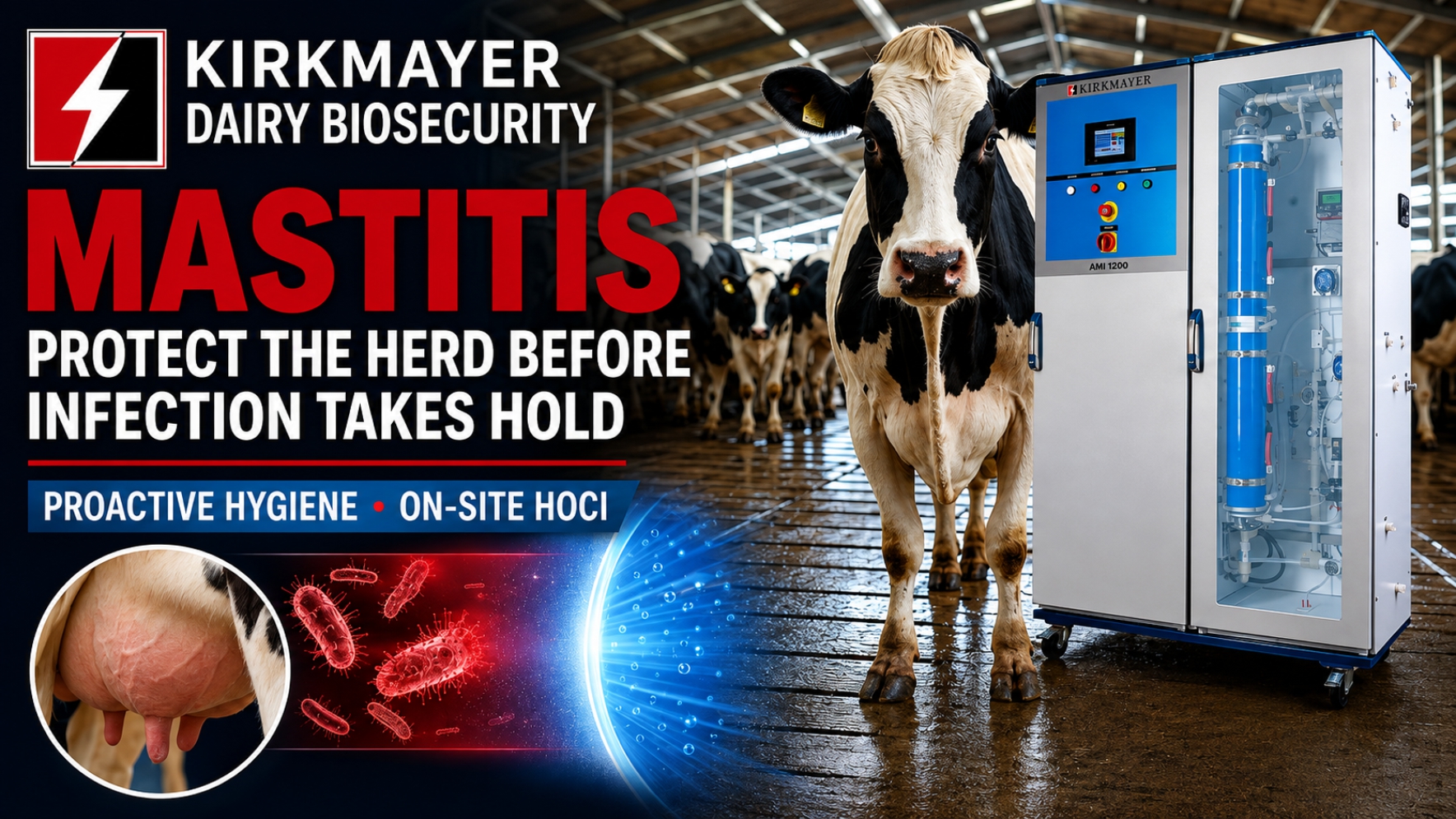
HOCl (Hypochlorous acid) supports mastitis control by rapidly reducing environmental bacteria on teats, milking equipment, and dairy surfaces.
HOCl (Hypochlorous acid) exerts a broad‑spectrum, rapid antimicrobial effect by oxidizing microbial cell membranes and proteins, killing bacteria (including common mastitis‑causing strains) without leaving prohibitive residues in milk.
HOCl (Hypochlorous acid) can be a valuable adjunct for subclinical mastitis protocols (intramammary administration at validated doses) and for hygiene (teat sanitizers, stall/equipment disinfection), but it should be used under veterinary guidance and in compliance with local regulations and residue‑testing schemes.
Biosecurity
HOCl (hypochlorous acid) Benefits
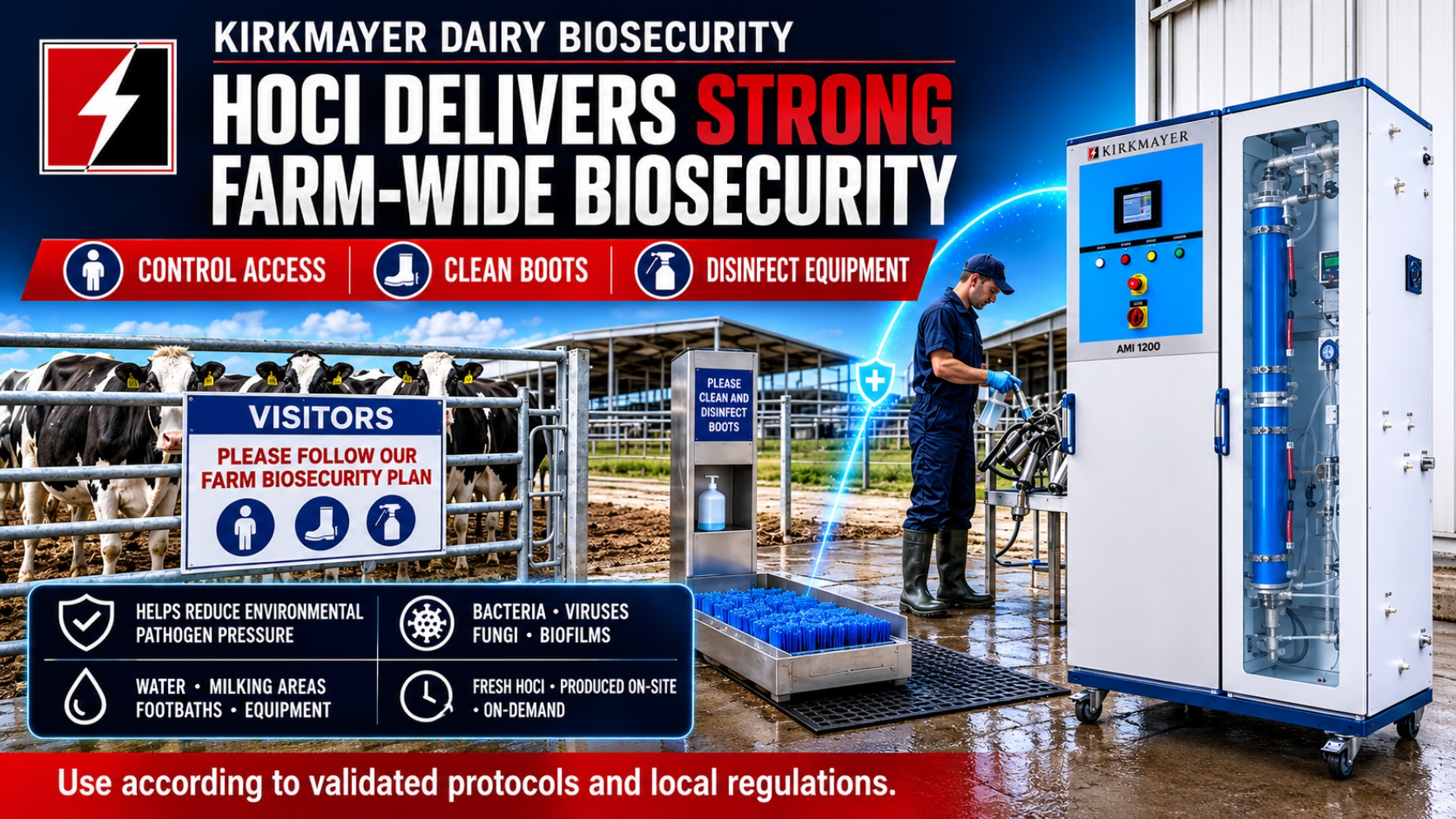
Deploying HOCl (hypochlorous acid) throughout your farm supports cleaner environments and stronger biosecurity—helping create conditions for improved herd health and productivity.
HOCl (hypochlorous acid) strengthens dairy biosecurity by rapidly reducing environmental pathogen pressure across water systems, surfaces, equipment and facilities—supporting mastitis and lameness-control programs, healthier herds and responsible antibiotic stewardship.
Calf Hutches
HOCl (hypochlorous acid) Benefits
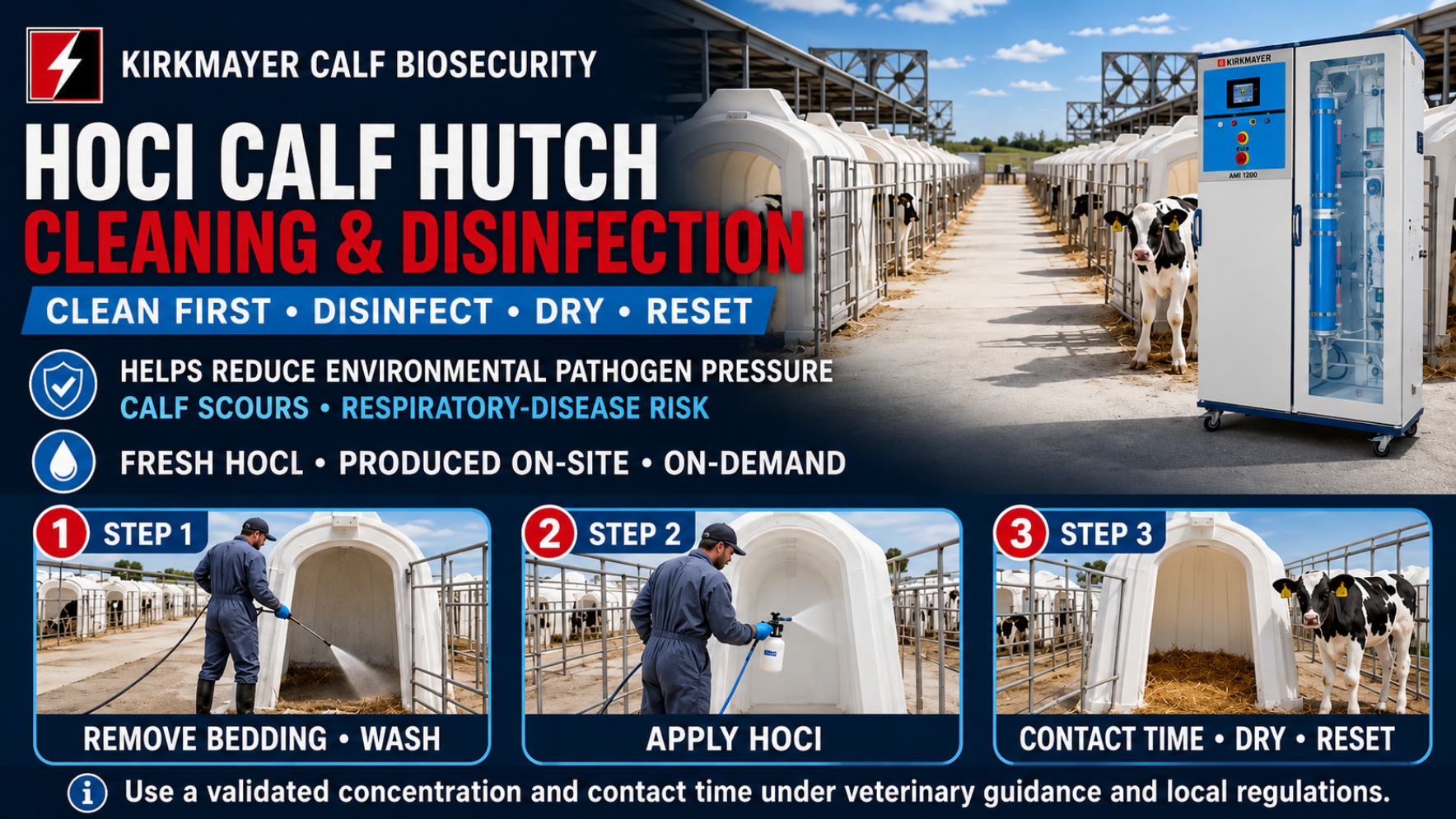
HOCl (hypochlorous acid) is widely used in calf hutches.
Following thorough cleaning, HOCl (Hypochlorous acid) provides fast-acting sanitation for calf hutches by reducing environmental pathogen pressure associated with calf scours and respiratory disease—supporting cleaner housing and stronger newborn-calf biosecurity.
Dairy Cow Birthing (Calving)
HOCl (hypochlorous acid) Benefits
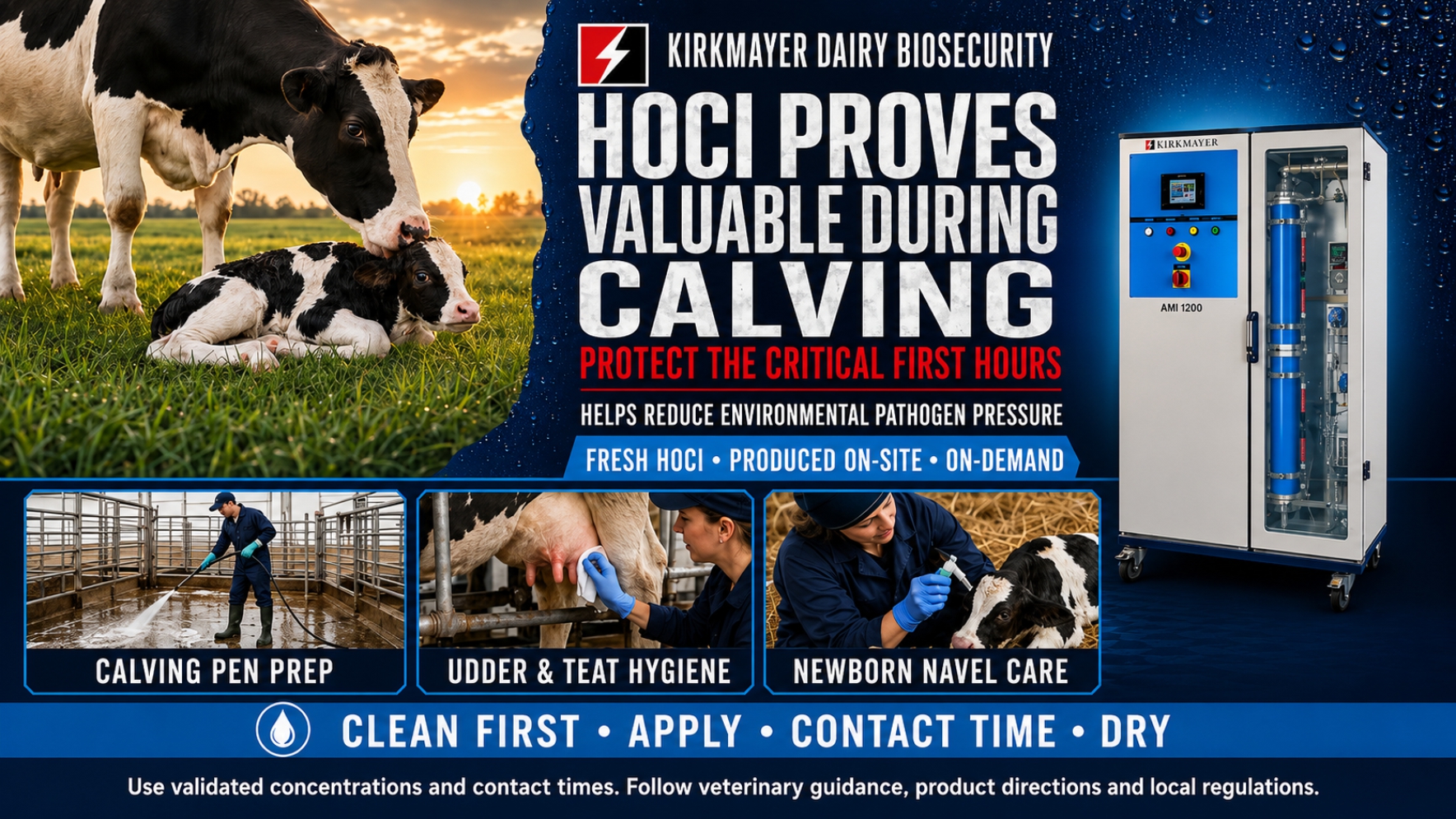
HOCl (hypochlorous acid) supports calving-area biosecurity by sanitizing cleaned maternity pens, equipment, and external udder and teat surfaces—helping reduce environmental bacterial pressure during the newborn calf’s critical first hours. Apply 50-200 ppm by spray, wipe or controlled mist at a validated concentration and contact time, following product directions, veterinary guidance and local regulations.
Key Applications
Calving-Pen Preparation: Following thorough cleaning and removal of organic material, HOCl (Hypochlorous acid) can be applied to maternity pens, stalls and equipment to help reduce environmental bacteria associated with calf scours and other infections.
Udder and Teat Hygiene: Applying HOCl (Hypochlorous acid) to properly cleaned external udder and teat surfaces supports pre- and post-calving hygiene, helping reduce bacterial exposure around the first milkings.
Newborn Navel Care: When specifically validated and veterinarian approved, HOCl (Hypochlorous acid) may support newborn navel-hygiene protocols by helping reduce microbial contamination during the calf’s vulnerable first hours.
Safety and Handling: HOCl (Hypochlorous acid) offers a practical alternative to harsher disinfectants for calving-area sanitation. Use only at validated concentrations and contact times, following product directions, veterinary guidance and local regulations. Allow treated areas to dry as directed before animal contact.
CIP Cleaning & Disinfection)
HOCl (hypochlorous acid) Benefits
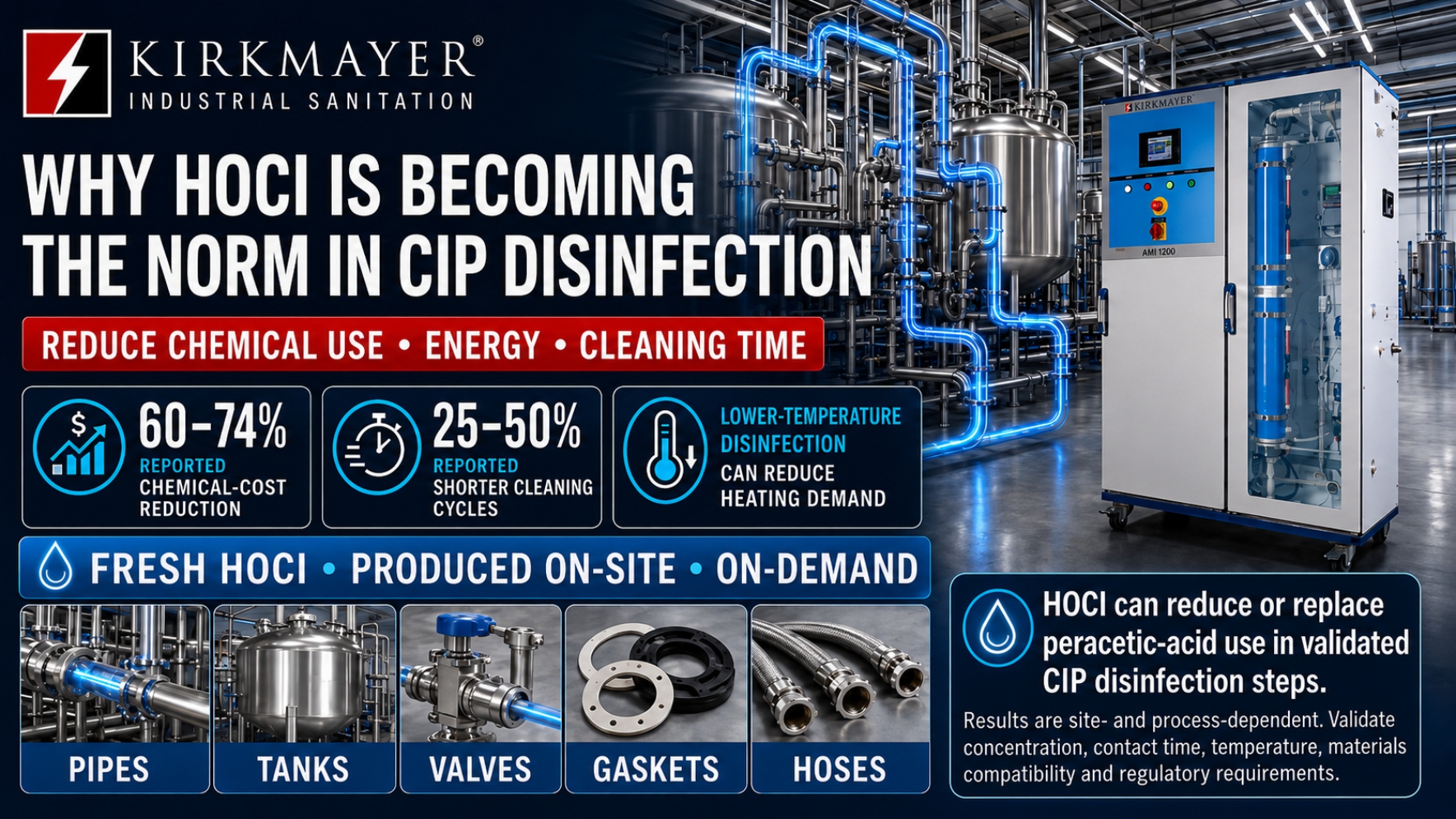
HOCl (hypochlorous acid) can reduce or replace peracetic-acid use in validated CIP disinfection steps, helping lower chemical consumption, heating demand, water use and cleaning time. Its rapid antimicrobial action helps control bacteria, viruses, fungi and biofilm pressure throughout pipes, tanks, valves, gaskets and hoses—supporting cleaner, more efficient CIP cycles.
Validated HOCl (Hypochlorous acid) CIP programs have reported chemical-cost reductions of 60–74% and cleaning-cycle reductions of 25–50%, while lower-temperature disinfection can reduce heating demand and overall production expenses. Results depend on the facility, process, soils, equipment and validated operating protocol.



1. CHOOSE THE RIGHT KIRKMAYER® ECA HOCl HYPOCHLOROUS ACID GENERATOR SIZE
• Select a model based on total daily water volume and required active chlorine (FAC) residual. Kirkmayer® gives production-rate data (liters/hour of anolyte) in its datasheets.• Confirm the unit can handle your water volume needed, hardness and pH; softened, filtered feed water is usually recommended.
2. LOCATION
• Choose a location that is accessible to incoming water, a drain and ample electricity.• The unit will require ventilation so it is important to install the unit in an open area which can be accessible to proper ventilation using an exhaust fan to vent to the outside is the ideal ventilation setup.
3. WATER TREATMENT
You should test the water (both raw and finished, if possible) before installing our Kirkmayer’s ECA HOCl Generator system, especially for dairy drinking-water or livestock applications. Proper preinstall testing helps ensure the generator works effectively and does not create unintended issues. We recommend using chemically resistant materials (e.g., PTFE, PVDF, or equivalent) for the anolyte-dosing line from the generator to the injection point. Metal or unsuitable plastics can corrode or degrade.What you should test for:
Typical useful parameters before installing an anolyte system include:
• pH, alkalinity, hardness, iron, manganese, organic matter (e.g., COD or TOC), and total dissolved solids (TDS), because these affect cell life and HOCl (Hypochlorous acid) stability.
• Microbiological indicators (total coliforms, E. coli) and baseline pathogen load so you can verify the generator’s impact afterward.
Why it matters for livestock:
• If source water is very hard or rich in scaling elements, it can shorten the generator’s life and reduce HOCl (Hypochlorous acid) output, leading to inconsistent dosing in drinking-water lines.
• High organic load or iron/manganese can scavenge HOCl (Hypochlorous acid), increasing effective chlorine demand and potentially reducing biofilm and pathogen control in poultry barns if not accounted for dosing.
Practical recommendation:
As your Kirkmayer® supplier we can assist you in this area or alternatively we suggest that you reach out to a water-testing lab to run a farm-specific package test (physical, chemical, and microbial) on the source water, then design the system (size, pre-treatment, and dosing setpoints) around that data. That way, you verify suitability up front and can later compare post-install water quality to prove the anolyte system is delivering the benefits you expect.

At Kirkmayer®, we will partner with you from start to finish. We’ll guide your HOCl (Hypochlorous acid) generator selection, oversee seamless installation, and provide hands-on technical support to ensure everything runs perfectly for your private-label production. No unanswered questions, no loose ends — just reliable assistance and ongoing expertise to help you save costs, control quality, and scale your brand confidently. Contact us today to get started



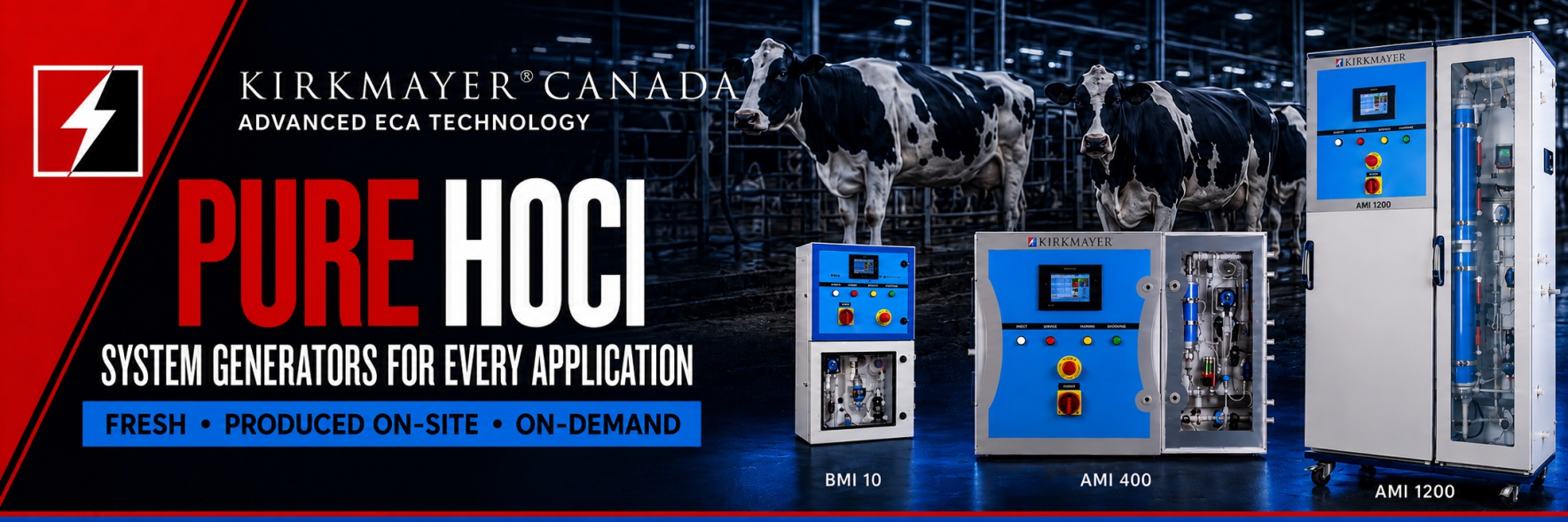
Ready to Upgrade Your Disinfection?
SYSTEM GENERATORS
SYSTEM CAPACITIES
SYSTEM DATA SHEETS
BROCHURES
GENERAL INQUIRY
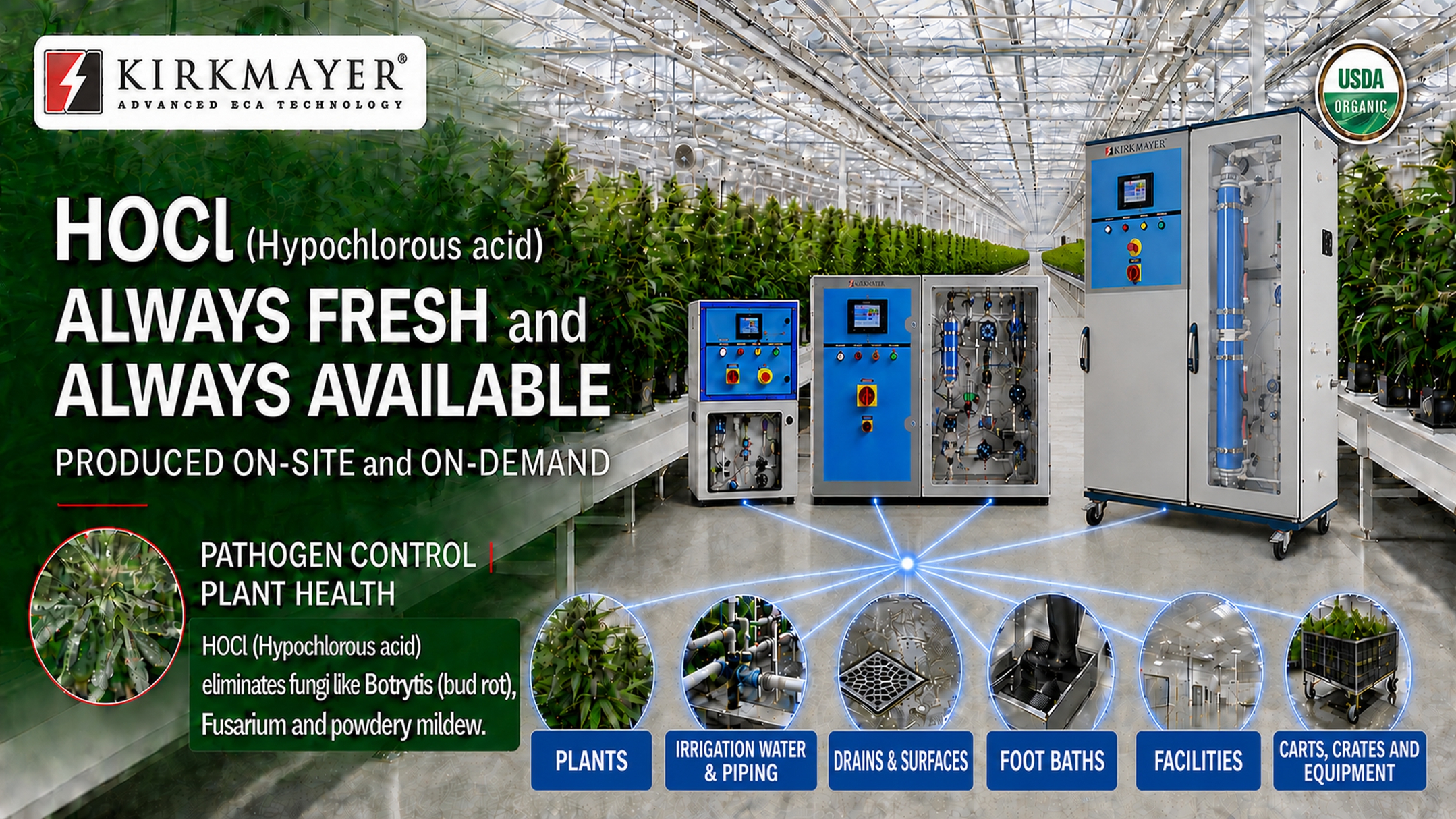
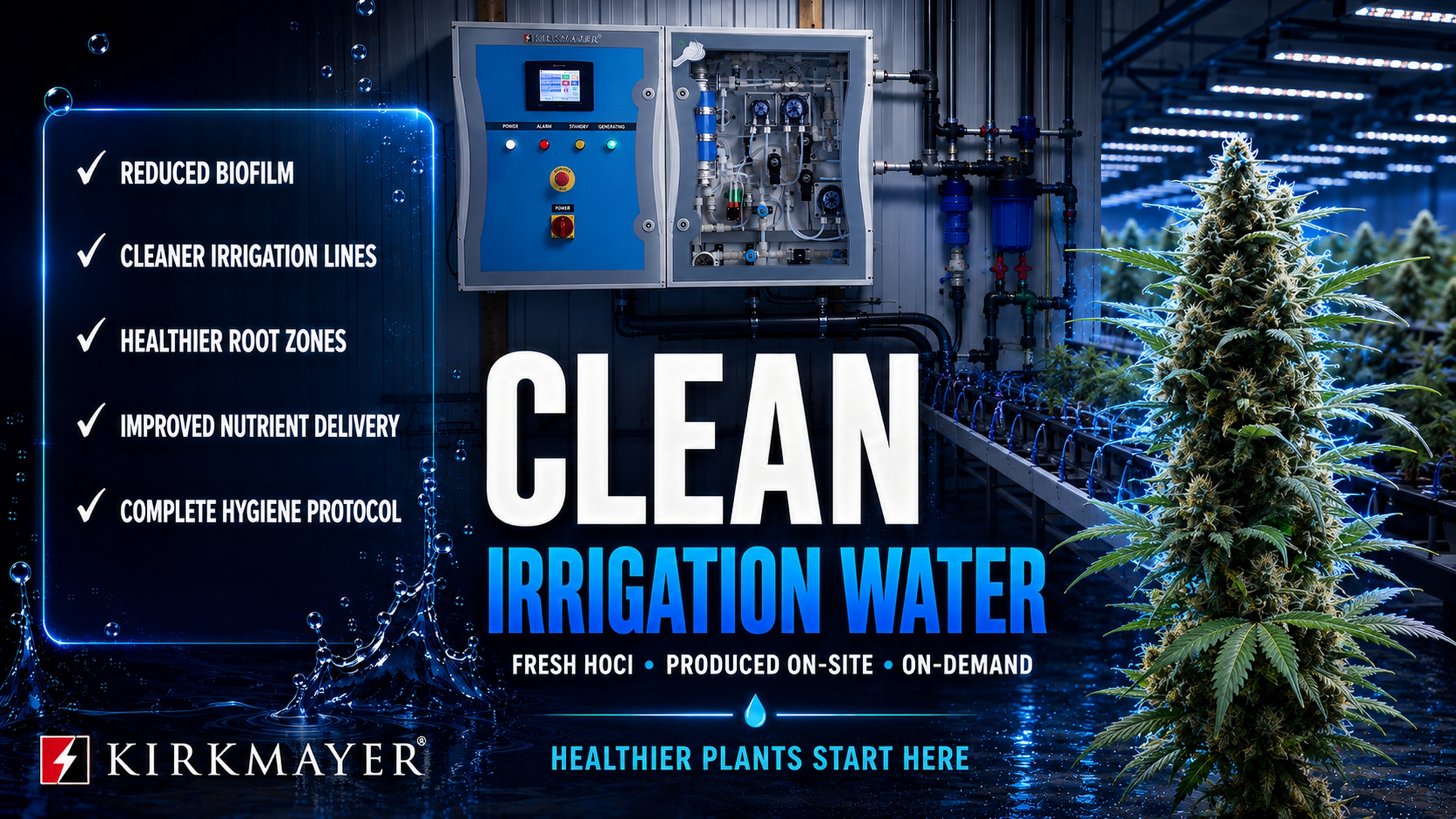

Save Thousands!
Invest in a Kirkmayer® Hypochlorous acid Generator.
Produce on-site HOCl with unmatched efficiency, purity, and scalability.
ALWAYS FRESH | ALWAYS AVAILABLE

Great Fit for the Cannabis Industry
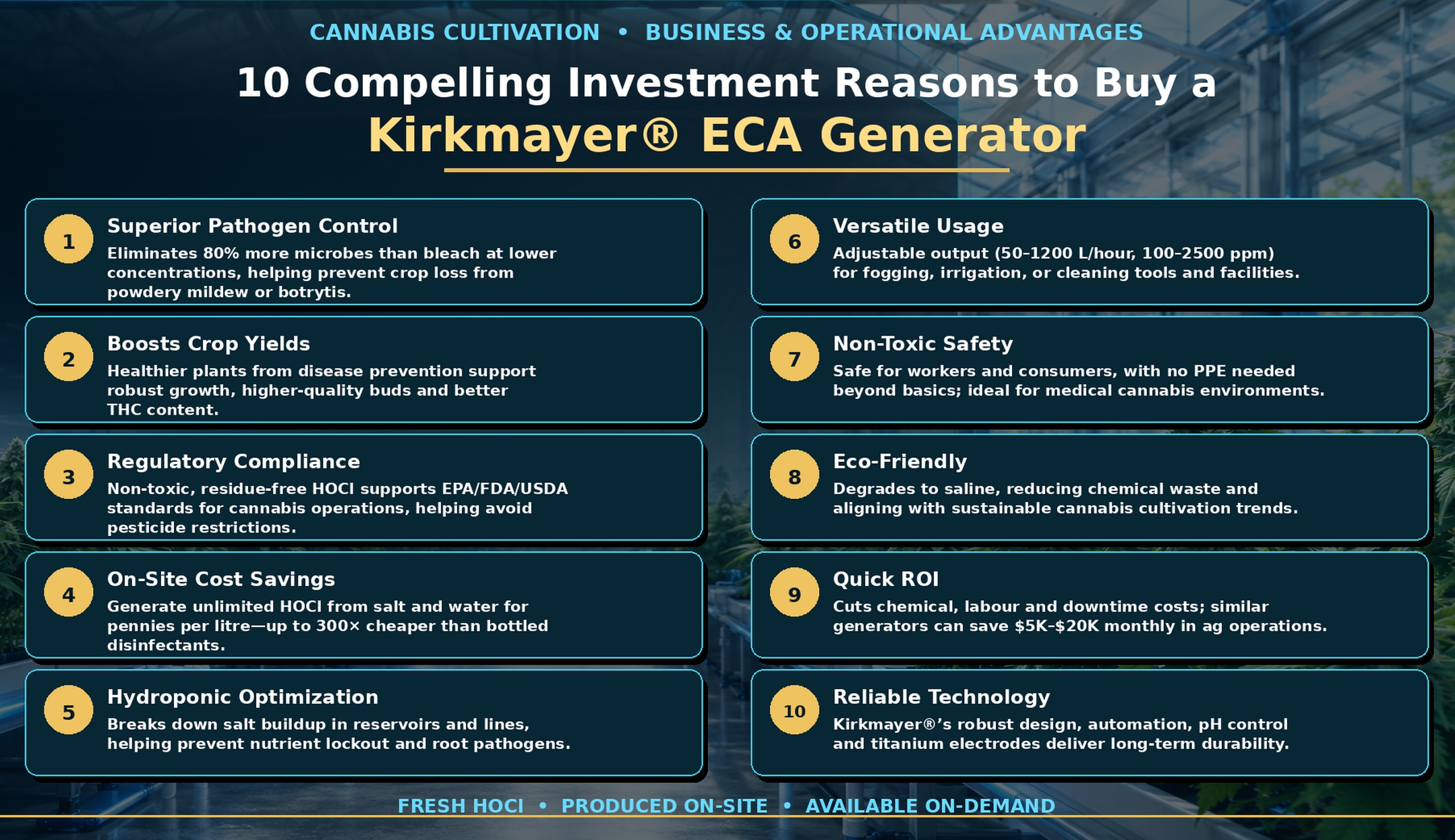

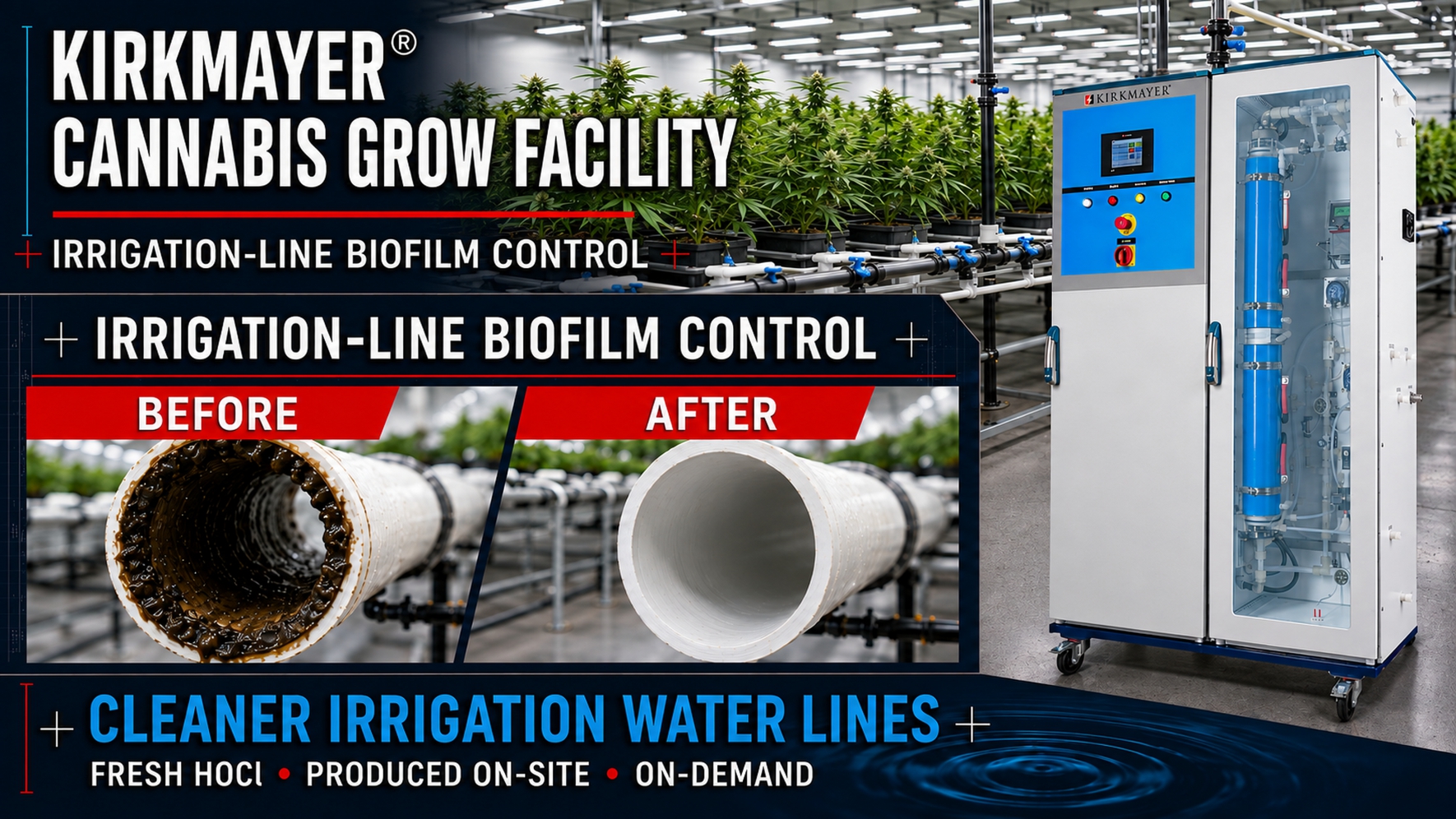
Biofilm in irrigation lines is a major issue in cannabis grow operations. It forms rapidly in the warm, nutrient-rich, moist conditions of these systems, leading to clogs, pathogen spread, and yield losses.
NOT ANYMORE!
Key Problems Biofilms Cause
Biofilm clogs drip emitters and lines, causing uneven watering that stresses plants and reduces nutrient delivery. It harbors pathogens like Fusarium, Pythium, and Botrytis, increasing root rot and disease risks in cannabis. Additional issues include lower oxygen levels in water, filter blockages, and higher maintenance costs from frequent cleaning or replacements.
Biofilm Prevention Ties to HOCl (Hypochlorous acid)
Kirkmayer® HOCI generators producing pure hypochlorous acid excels here: the generated HOCI penetrates and disrupts biofilm matrices safely in lines without plant harm, unlike bleach, preventing downtime and boosting ROI in fertigation systems. Regular low-dose HOCl maintains clean lines, aligning with sustainable cannabis compliance.
HOCl Hypochlorous acid Settings and Protocols
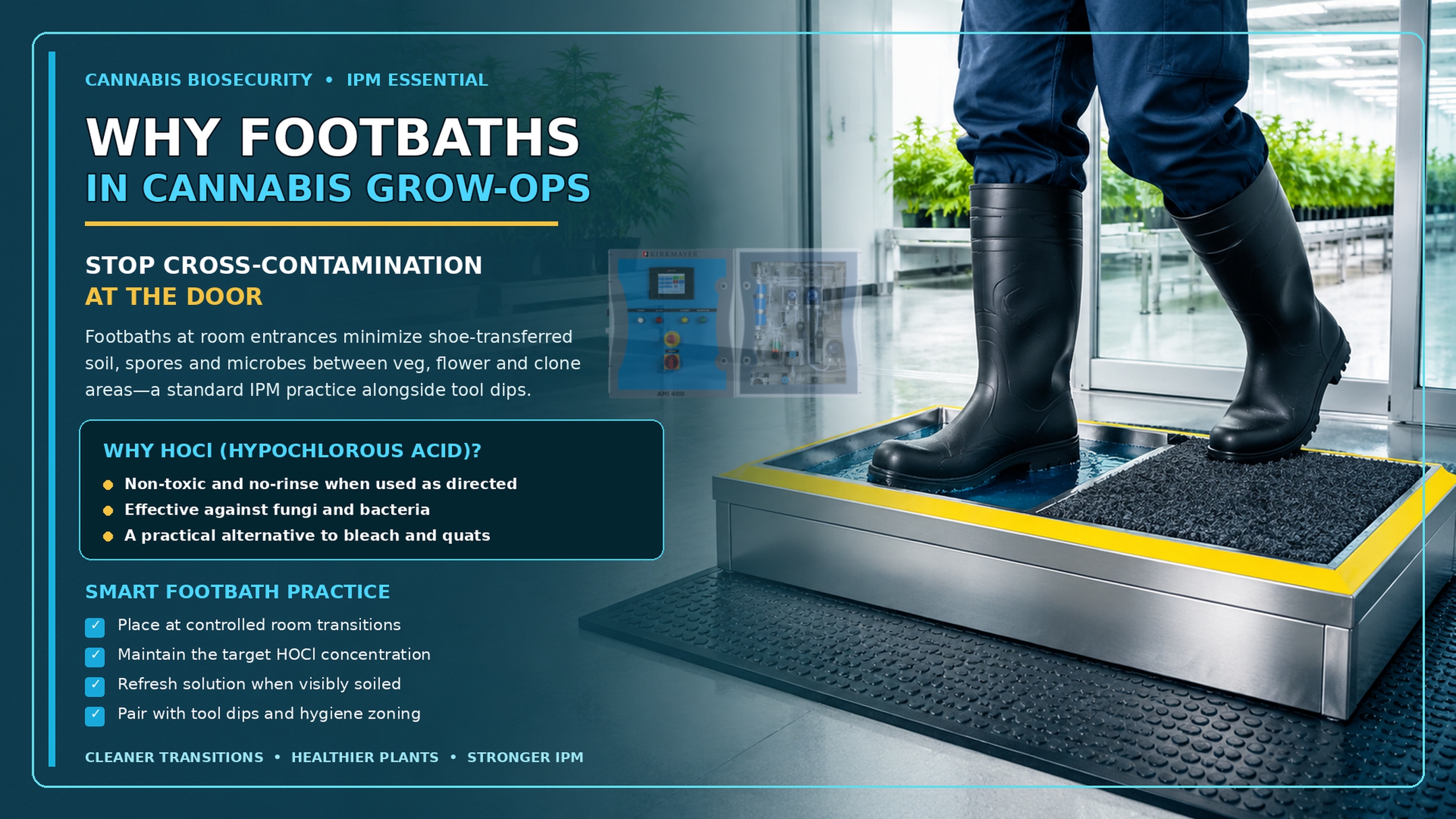
- Concentration: 500 ppm HOCl Hypochlorous acid (pH 6-7) for strong disinfection; change daily or after 50 passes.
- Setup: Shallow plastic trays (2-4″ deep) with boot scrub mat; refresh from Kirkmayer® generator output.
- Benefits: Kills 99.99% pathogens instantly, supports compliance, cheaper long-term via on-site generation.

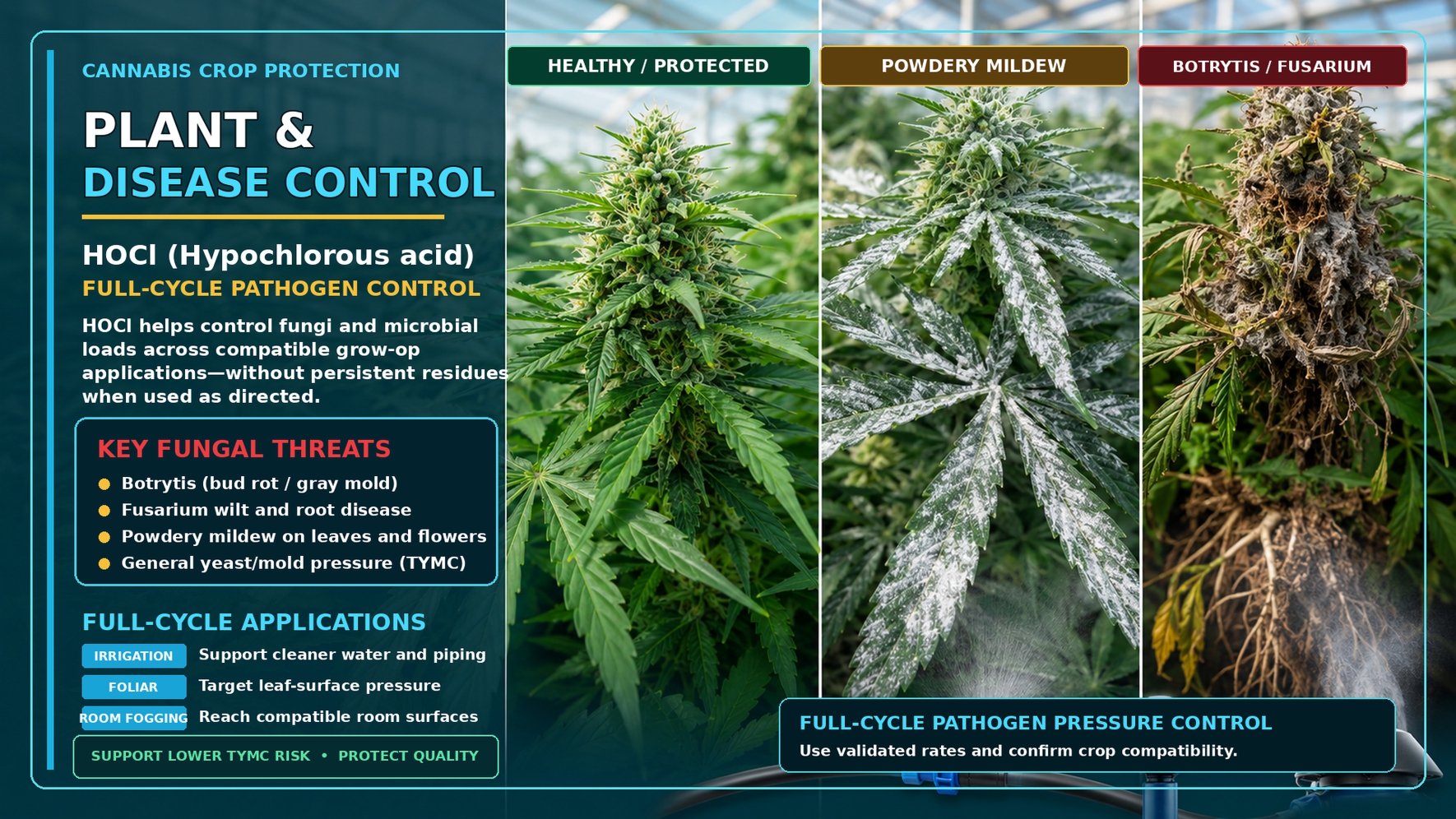
Hop Latent Viroid (HLVd / HLV)
Botrytis (bud rot) / Fusarium Wilt | Powdery Mildew
Plant and Disease Control – Bacteria
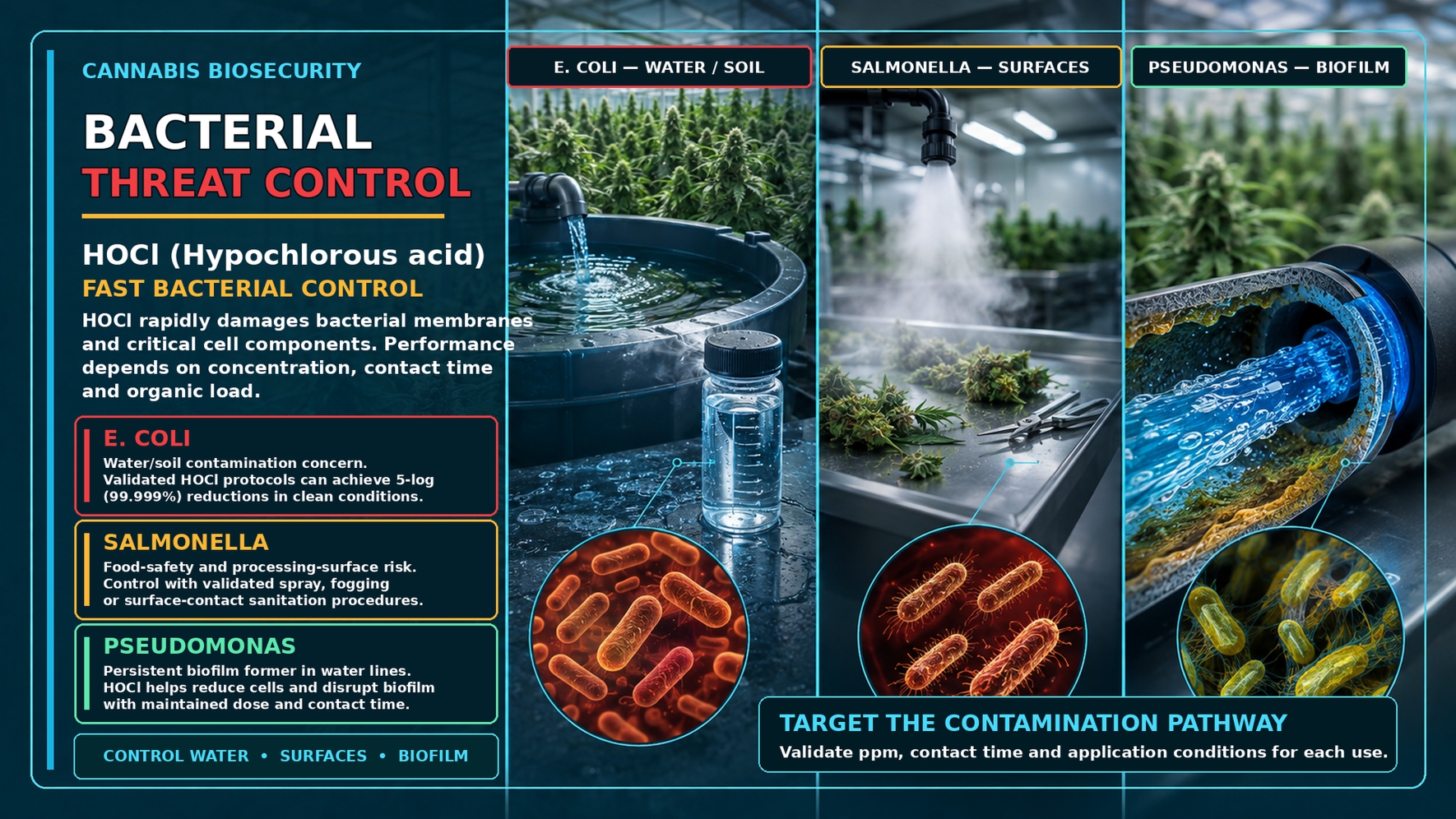
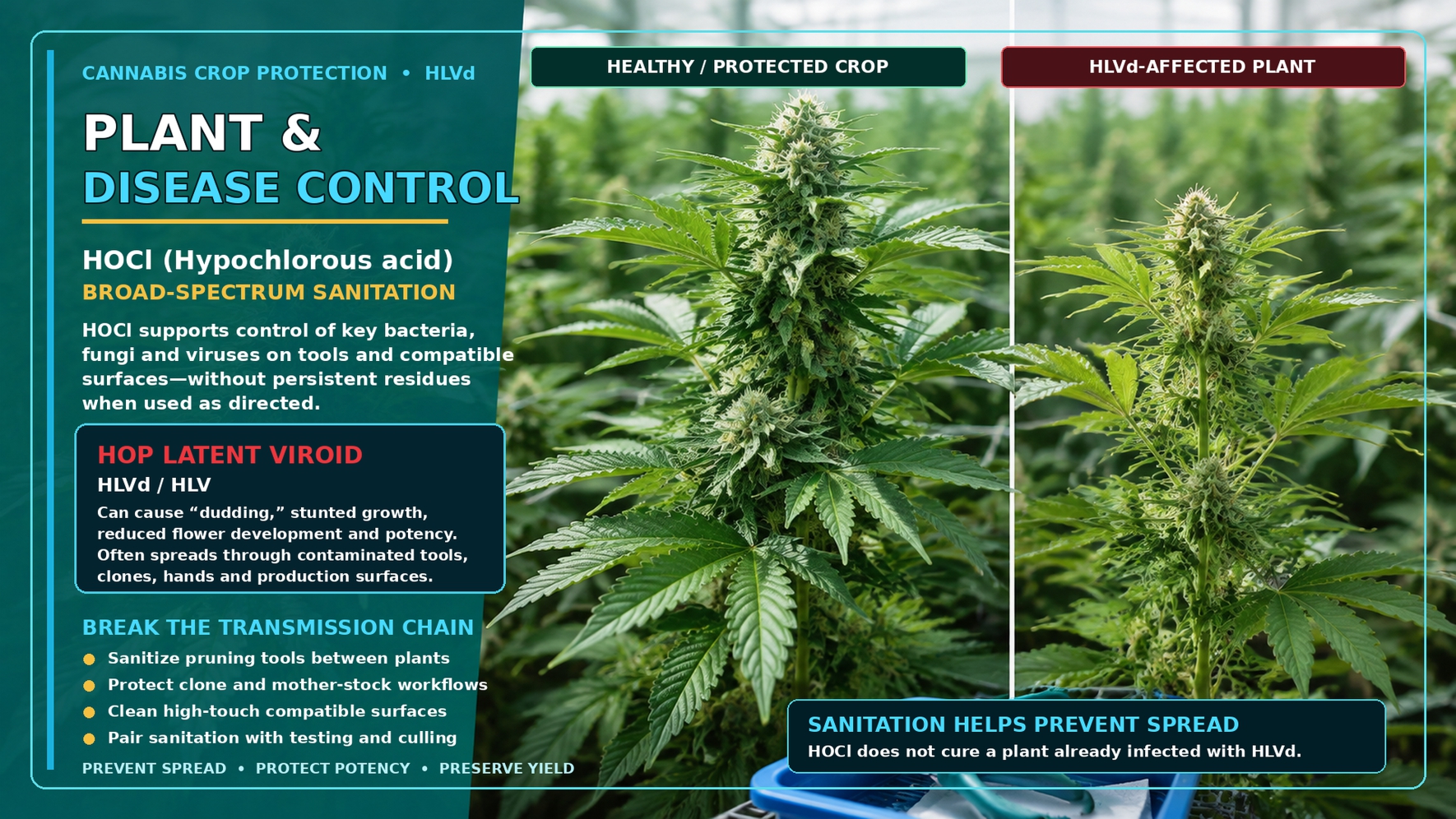
HOCl Hypochlorous acid effectively targets key viruses and bacteria plaguing cannabis grow ops, offering broad-spectrum control without residues or plant harm.
Key Disinfection Areas Where
HOCl Hypochlorous acid is Deployed
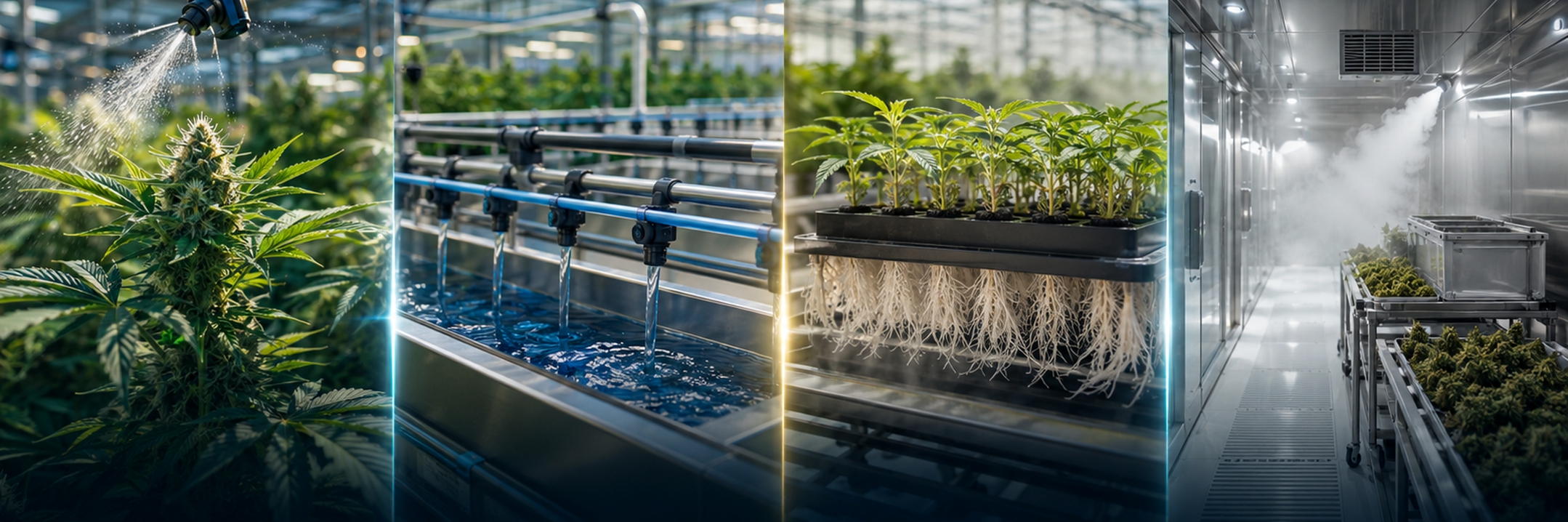
- Irrigation lines, emitters, reservoirs, and tanks: Used to suppress biofilm, algae, and root-zone pathogens in recirculating systems.
- Cloning and propagation areas: Useful for trays, domes, scissors, and cutting stations where viroids and bacterial transfer are a risk.
- Foliar disease control: Applied to leaves to help suppress powdery mildew and other surface pathogens during veg and sometimes flower.
- Room surfaces and equipment: Good for benches, tools, tents, HVAC touchpoints, and carts because it leaves no meaningful residue.
- Drying and curing spaces: Fogging is used to reduce yeast, and mold counts and help batches pass microbial testing.
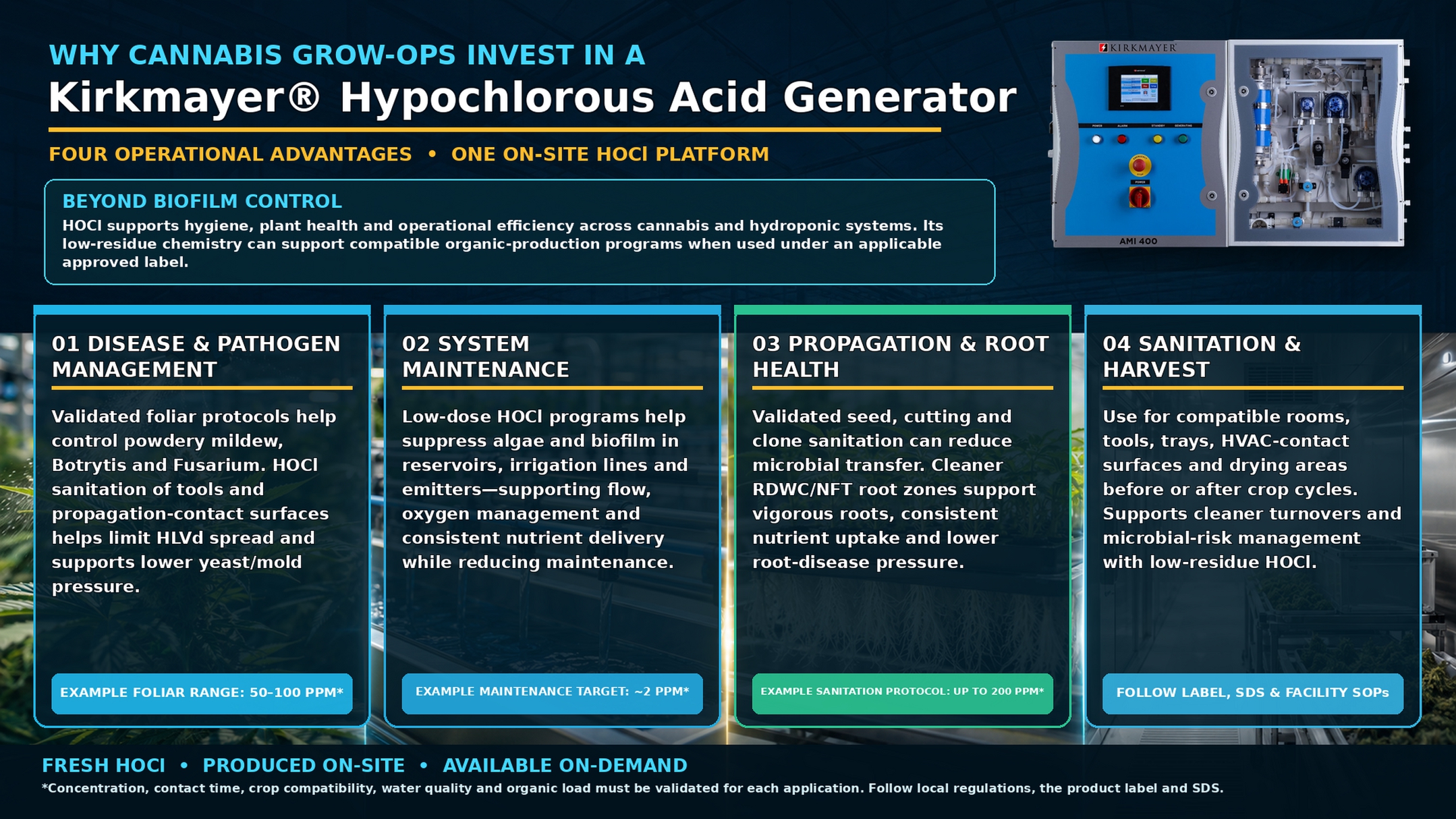
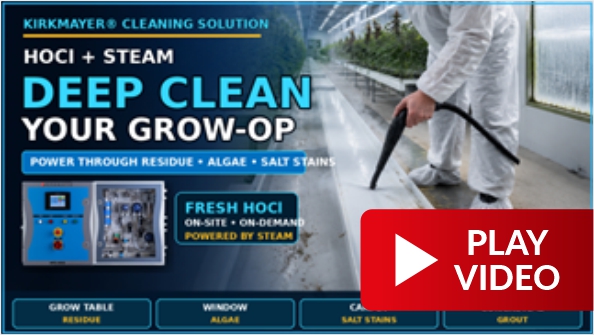

A Kirkmayer® HOCl generator is best installed in a utility or mechanical room inside the cannabis facility, close to clean water, power, and the points where you’ll use the HOCl, such as irrigation injection, sanitation lines, or fogging equipment. It should be kept out of the grow rooms themselves unless you are using a dedicated sanitation skid, because the generator is better protected in a service area with controlled access and easier maintenance.
- CHOOSE THE RIGHT KIRKMAYER® ECA HOCI HYPOCHLOROUS ACID GENERATOR SIZE
- Select a model based on total daily water volume and required active chlorine (FAC) residual. Kirkmayer® gives production‑rate data (liters/hour of anolyte) in its datasheets.
- Confirm the unit can handle your water volume needed, hardness and pH; softened, filtered feed water is usually recommended.
- LOCATION
- Place near water source (RO or soft water preferred, pH 6.5-8) and power (110-240V, 50/60Hz); indoor utility room or grow space edge avoids humidity/vibration exposure. Ensure 2-3 ft clearance for maintenance and ventilation: wall-mount AMI units (e.g., 50-1200 L/hr models) at eye level.
- The unit will require ventilation so it is important to install the unit in an open area which can be accessible to proper ventilation using an exhaust fan to vent to the outside is the ideal ventilation set up.
- WATER TREATMENT
You should test the water (both raw and finished, if possible) before installing our Kirkmayer’s ECA HOCl Generator system. Proper preinstall testing helps ensure the generator works effectively and does not create unintended issues. We recommend using chemically resistant materials (e.g., PTFE, PVDF, or equivalent) for the anolyte‑dosing line from the generator to the injection point. Metal or unsuitable plastics can corrode or degrade.
What you should test for:
Typical useful parameters before installing an anolyte system include:
- pH, alkalinity, hardness, iron, manganese, organic matter (e.g., COD or TOC), and total dissolved solids (TDS), because these affect cell life and HOCl stability
- Microbiological indicators (total coliforms, E. coli) and baseline pathogen load so you can verify the generator’s impact afterward.
Water and Power Setup
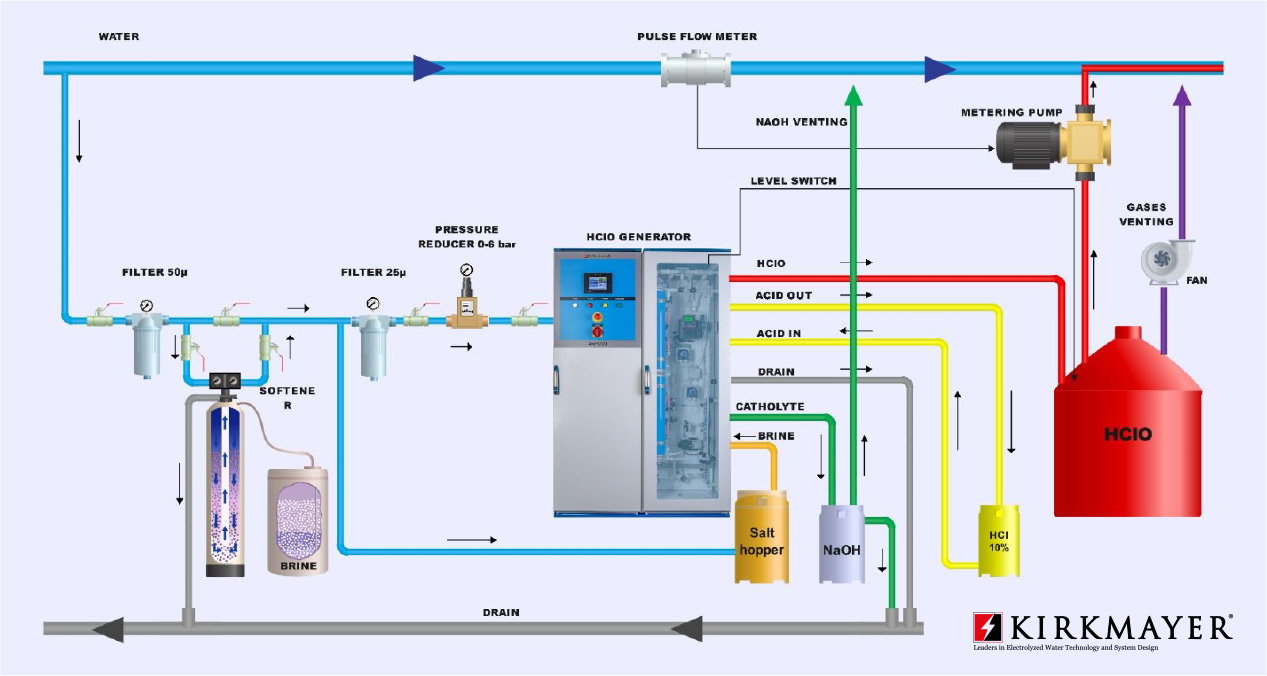
Connect to clean water inlet (1/2-1″ fittings) with pre-filter (5-micron sediment) to protect membranes; add salt tank (non-iodized NaCl, 20g/L auto-dosing). Use grounded GFCI outlet; auto-shutoff prevents dry-run. Output hoses route to irrigation injection, fogger, or holding tanks.
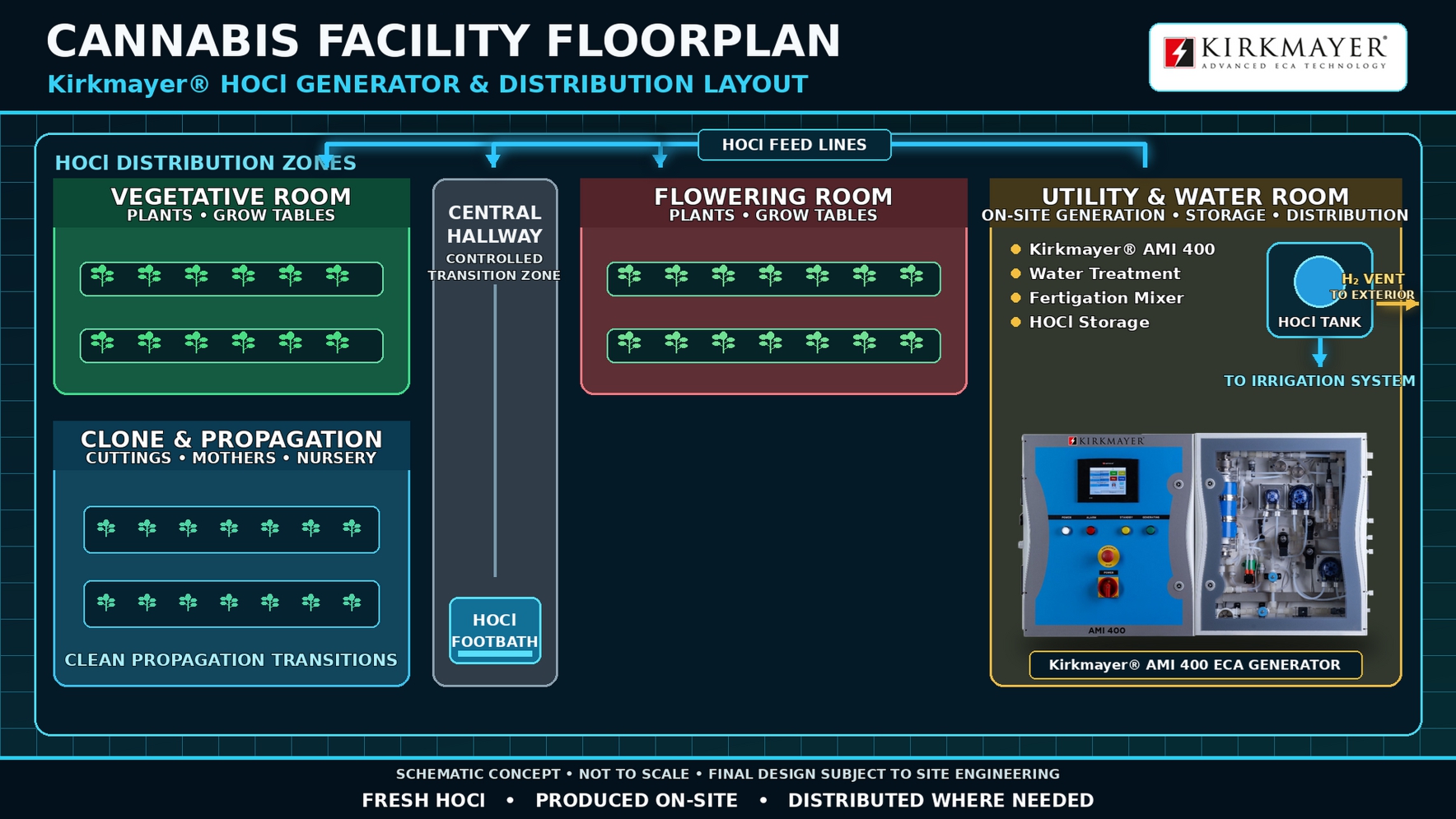
Kirkmayer Generator Floor Plan Layout
Here is a recommended floorplan layout showing the location of the generator, tank, injector, and fogging lines:

At Kirkmayer®, we will partner with you from start to finish. We’ll guide your HOCl (Hypochlorous acid), generator selection, oversee seamless installation, and provide hands-on technical support to ensure everything runs perfectly for your private-label production. No unanswered questions, no loose ends — just reliable assistance and ongoing expertise to help you save costs, control quality, and scale your brand confidently. Contact us today to get started.



Ready to Upgrade Your Disinfection?
SYSTEM GENERATORS
SYSTEM CAPACITIES
SYSTEM DATA SHEETS
BROCHURES
GENERAL INQUIRY
Invest in a Kirkmayer®
Hypochlorous Acid Generator
Produce on-site HOCl with unmatched efficiency, purity, and scalability.
ALWAYS FRESH | ALWAYS AVAILABLE
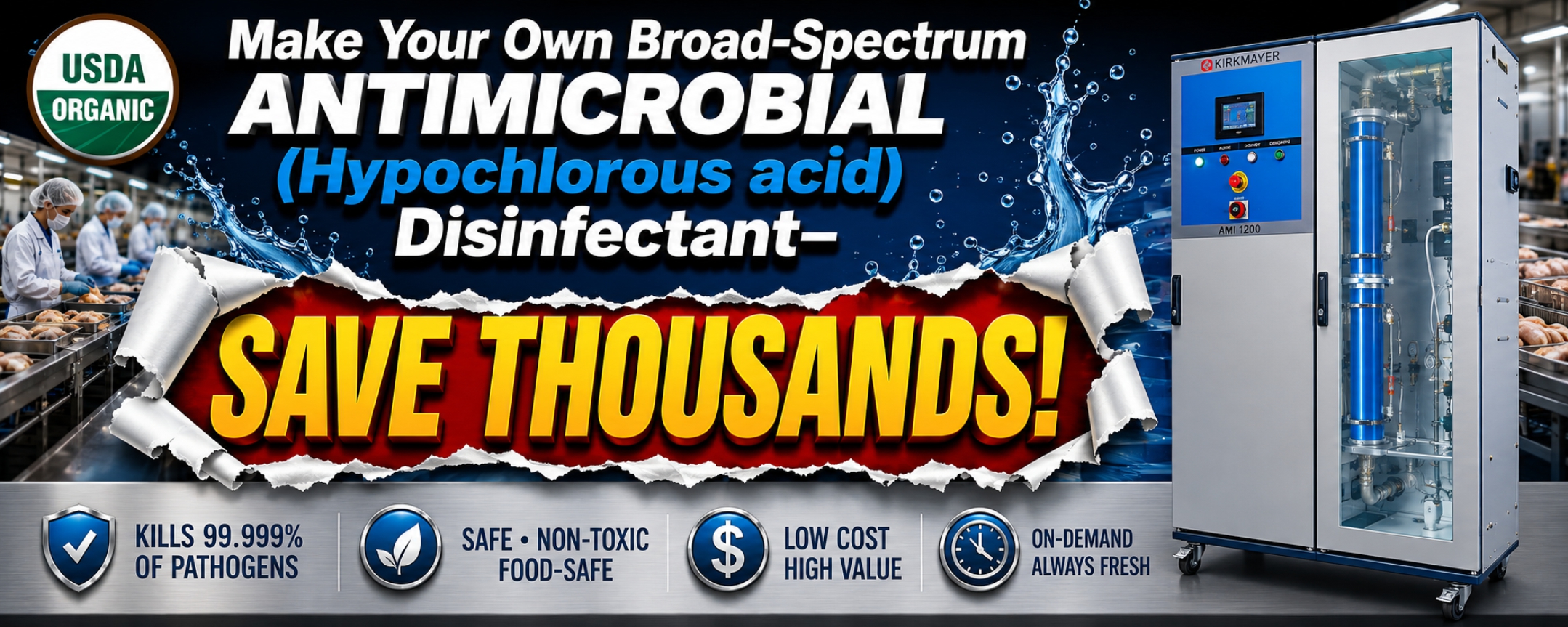

Control Pathogens. Reduce Chemical Dependency.
Simplify Sanitation. Lower Operating Costs.
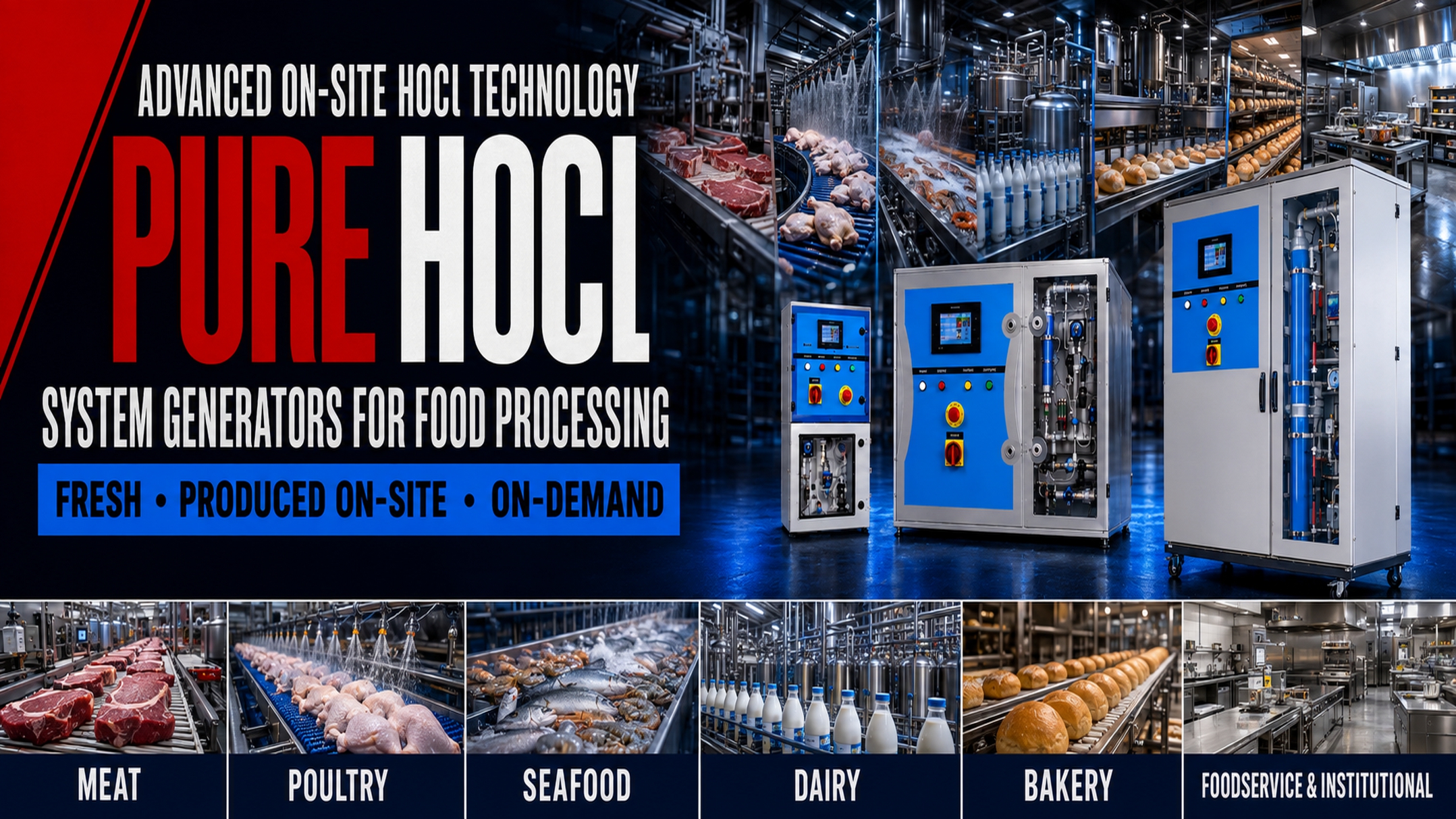
Instead of continually buying, shipping, handling and storing large quantities of ready-to-use disinfectants, food processors can generate fresh Hypochlorous acid (HOCl) directly at their facility.
The Bottom Line
For high-volume food processors, the strongest proposition isn’t simply “Hypochlorous acid (HOCl) is a disinfectant.” It is to: Generate a powerful antimicrobial solution exactly where you use it — and transform sanitation from a continuously purchased chemical expense into an on-site production capability.
Why Produce HOCl On-Site and On-Demand?
The advantages become even more compelling when a food processor generates Hypochlorous acid (HOCl)directly at the facility instead of continually purchasing and transporting ready-to-use disinfectants.
ALWAYS FRESH — Generate Hypochlorous acid (HOCl) when it is required. This helps avoid relying on stored solutions that may gradually lose available chlorine strength over time.
LOWER OPERATING COST POTENTIAL — Make antimicrobial solution from basic inputs on-site. Depending on system economics and chemical usage, facilities with significant sanitation demand may substantially reduce their reliance on purchased disinfectants and associated transportation, storage, handling, and packaging costs.
REDUCED CHEMICAL INVENTORY — Produce what you need, when you need it. On-site generation can reduce the amount of conventional sanitation chemistry that must be purchased, transported and stored.
CONSISTENT, CONTROLLABLE PRODUCTION — Generate Hypochlorous acid (HOCl) to define operating parameters. A properly designed ECA system can provide repeatable production while allowing concentration and application requirements to be matched to validated sanitation procedures.
ONE GENERATION SYSTEM — MULTIPLE SANITATION APPLICATIONS — A centralized on-site system can potentially supply Hypochlorous acid (HOCl) to multiple areas of the processing facility, significantly increasing the value of the investment.

A Kirkmayer® HOCl generator produces hypochlorous acid (HOCl), a powerful, non-toxic disinfectant ideal for food processing strict hygiene needs. It fits well by enabling on-site generation for pathogen control, plant health, and compliance in processing plants.
Great Fit for the Food Processing Industry
Kirkmayer® generators producing on-site and unlimited HOCl generated solution excels in the food processing for cleaning, sanitizing, and biosecurity. In practice, they replace or reduce purchased chemicals by making fresh sanitizer from water, salt, and electricity, which is well suited to food plants because Hypochlorous acid (HOCl) is effective, low-residue, and non-corrosive compared with many legacy sanitizers.

Benefits of HOCl in Meat Processing
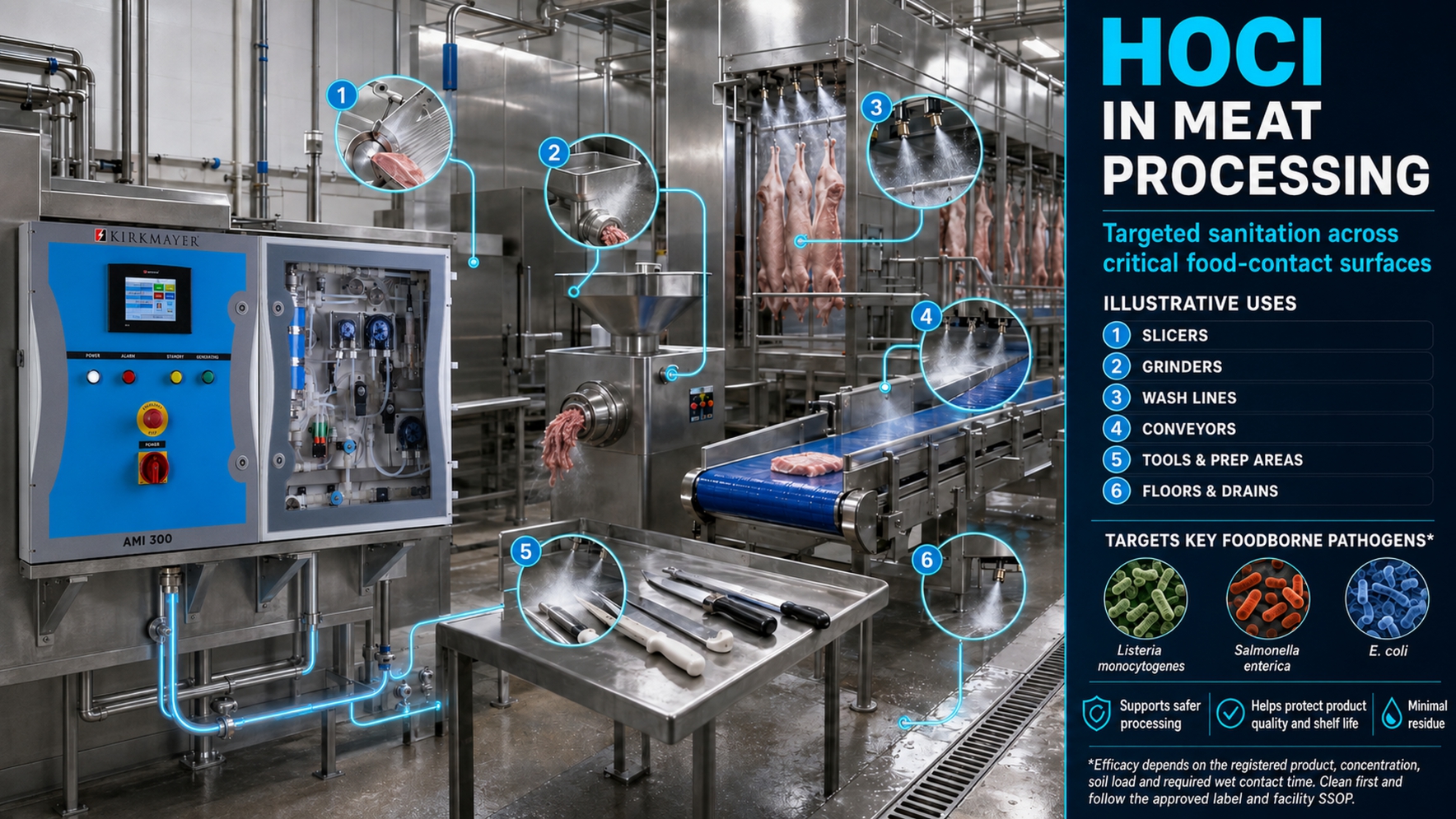
Hypochlorous acid (HOCl) offers meat processors a highly versatile antimicrobial solution for improving sanitation, controlling pathogens, reducing biofilm pressure, and supporting food-safety programs throughout the processing environment.
Broad-Spectrum Pathogen Control
Hypochlorous acid (HOCl) can be effective against a broad range of microorganisms associated with meat-processing environments, including Listeria monocytogenes, Salmonella, E. coli, and other bacteria, viruses, fungi, and yeasts when used at validated concentrations and contact times.
Multiple Applications from One Technology
Hypochlorous acid (HOCl) can potentially be incorporated into numerous sanitation points throughout a meat-processing facility, including slicers, grinders, conveyors, wash lines, tools, preparation areas, floors, drains, equipment, and other appropriate surfaces, subject to applicable regulatory and label requirements.
Biofilm Control
Biofilms can allow microorganisms to persist in difficult-to-clean areas such as equipment joints, piping, drains, conveyor components, and other niches. Hypochlorous acid (HOCl) can form part of a comprehensive sanitation program designed to reduce microbial and biofilm pressure.
Low-Residue Sanitation
Properly produced Hypochlorous acid (HOCl) is attractive for processing environments because it can provide strong antimicrobial activity while leaving minimal chemical residue, depending on the formulation and application.
Supports Product Protection and Shelf-Life Programs
Reducing microbial contamination throughout processing can help support product quality, food safety, and shelf-life objectives, although actual shelf-life improvements should be validated for the specific product and process.
Benefits of HOCl in Poultry Processing
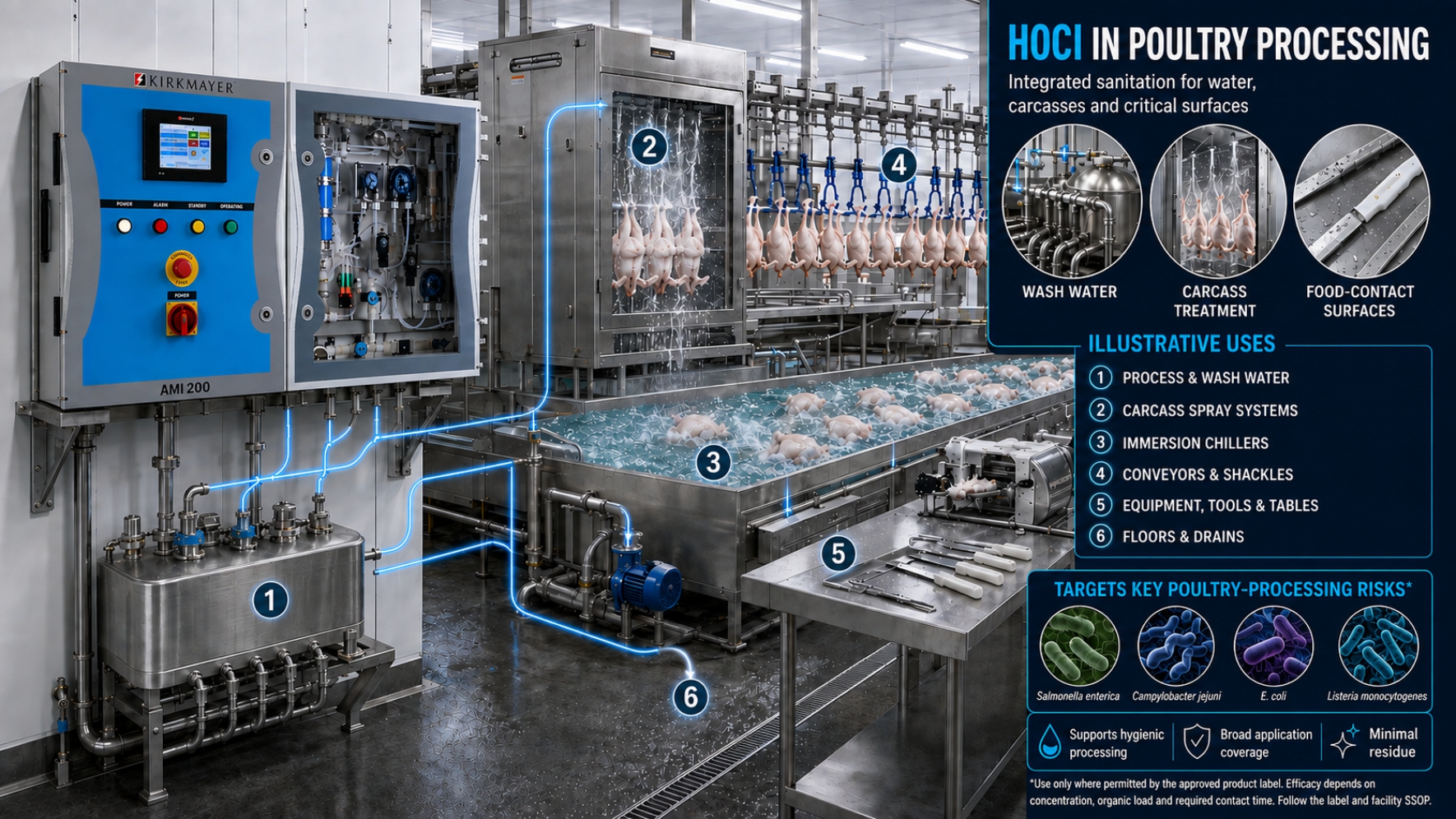
When produced and applied at validated concentrations and contact times, Hypochlorous acid (HOCl) can provide rapid antimicrobial activity against important poultry-processing microorganisms, including Salmonella, Campylobacter, E. coli and Listeria monocytogenes.
Reducing microbial pressure at multiple points throughout processing can strengthen the facility’s overall food-safety and pathogen-control program.
One Solution — Multiple Poultry Processing Applications
Hypochlorous acid (HOCl) can be effective against a broad range of microorganisms associated with meat-processing environments, including Listeria monocytogenes, Salmonella, E. coli, and other bacteria, viruses, fungi, and yeasts when used at validated concentrations and contact times.
Multiple Applications from One Technology
Depending on regulatory approvals and the specific application, Hypochlorous acid (HOCl) can potentially be used throughout the plant for:
- Process and wash water
- Carcass spray systems
- Immersion and chiller water
- Conveyors and shackles
- Food-contact surfaces
- Processing equipment
- Knives, tools and worktables
- Floors and drains
- CIP and associated sanitation systems
- General environmental sanitation
This versatility can help simplify sanitation programs by reducing dependence on numerous application-specific chemicals. Particularly Hypochlorous acid (HOCl) is Valuable for Water-Intensive Processing
Poultry processing uses substantial volumes of water for washing, chilling, cleaning and sanitation. This makes an antimicrobial that can be generated continuously on-site especially attractive.
Rather than treating Hypochlorous acid (HOCl) exclusively as a purchased chemical, processors can integrate its production directly into their water and sanitation infrastructure.
Biofilm and Environmental Pathogen Management
Persistent microorganisms can establish biofilms in difficult areas such as drains, piping, conveyors, equipment joints, shackles and other wet processing environments.
Hypochlorous acid (HOCl) can form part of a comprehensive cleaning and sanitation program designed to reduce microbial and biofilm pressure and help prevent cleaned equipment from becoming rapidly re-contaminated.
Low-Residue Antimicrobial Technology
Hypochlorous acid (HOCl) can provide strong antimicrobial activity while offering a comparatively low-residue sanitation approach when appropriately produced and applied. This can be particularly advantageous in a food-processing environment where food-contact safety, worker exposure, equipment compatibility and residue management are important considerations.
Benefits of HOCl in Seafood Processing
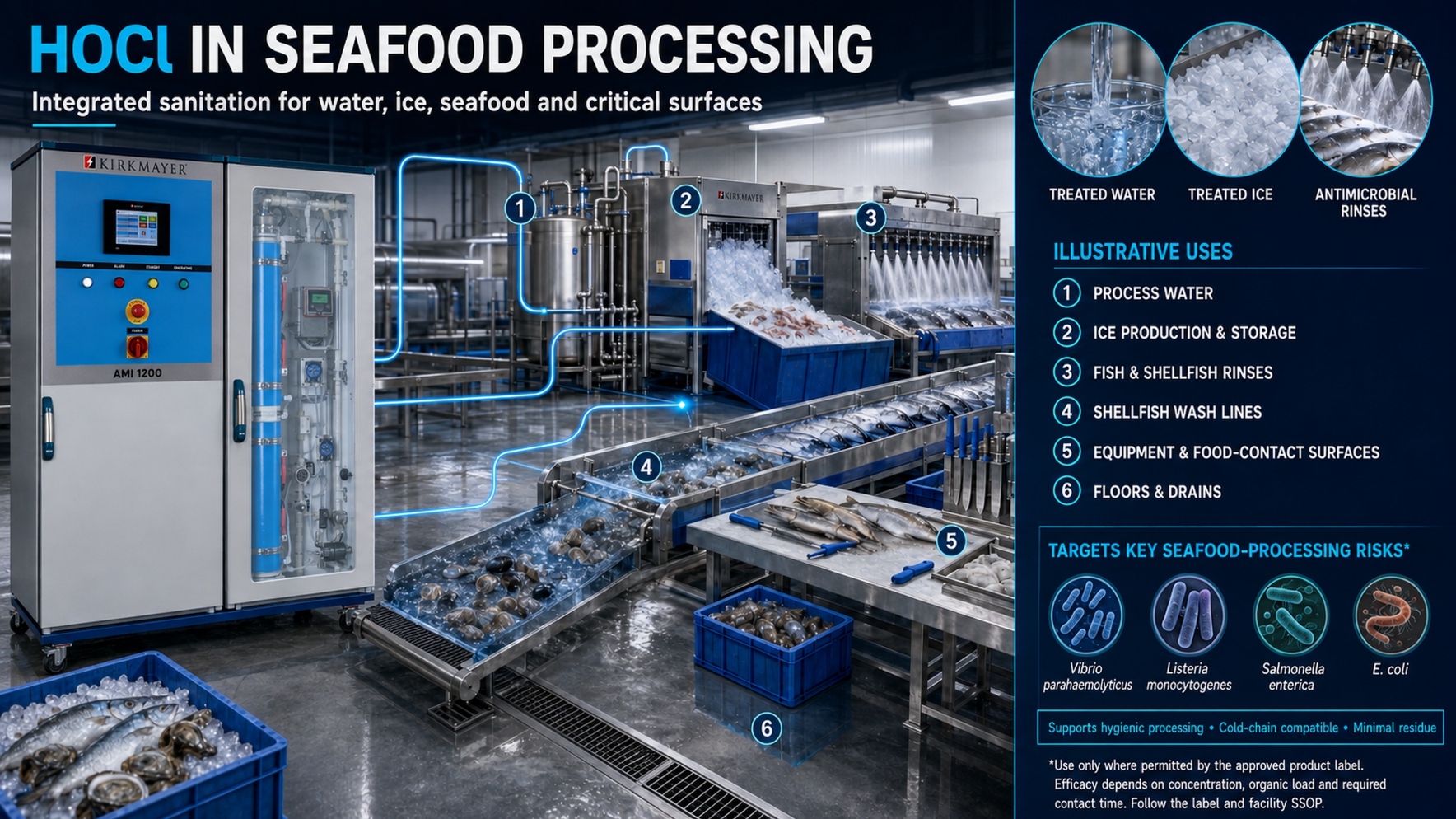
Hypochlorous acid (HOCl) is especially well suited to seafood processing because these facilities depend heavily on water, ice, cold-chain handling, frequent washing and rigorous surface sanitation. When generated and applied correctly, HOCl can provide one antimicrobial platform for multiple points throughout fish and shellfish processing.
Broad-Spectrum Pathogen Control
Hypochlorous acid (HOCl) provides rapid antimicrobial activity against microorganisms of concern in seafood-processing environments when used at validated concentrations and contact times. Depending on the product and application, targets can include:
- Vibrio species
- Listeria monocytogenes
- Salmonella
- E. coli
- Other bacteria, viruses, yeasts and fungi
This makes Hypochlorous acid (HOCl) valuable as part of a comprehensive seafood HACCP, SSOP and environmental sanitation program.
Ideal for Water-Intensive Seafood Processing
Seafood processors use substantial quantities of water throughout production. Hypochlorous acid (HOCl) can potentially be incorporated into appropriate applications such as:
PROCESS WATER • WASH WATER • FISH RINSES • SHELLFISH WASHING • EQUIPMENT SANITATION • FLOORS & DRAINS
Instead of treating water sanitation and surface sanitation as completely separate processes, on-site Hypochlorous acid (HOCl) generation can potentially provide a common antimicrobial source for multiple approved applications.
Hypochlorous acid (HOCl)-Treated Ice
This is a particularly interesting application for seafood. Ice is used extensively to maintain fish and shellfish at low temperatures during processing, storage and transportation. Where permitted, producing ice with appropriately treated water can add another microbial-control measure to the cold chain. It combines two important functions:
TEMPERATURE CONTROL + MICROBIAL CONTROL
Fish & Shellfish Rinses
Where approved for the particular food application, Hypochlorous acid (HOCl) can be incorporated into antimicrobial rinse systems for fish and shellfish.
This can help reduce microbial contamination during processing while fitting into the industry’s existing water-based handling infrastructure.
Food-Contact Surface Sanitation
Hypochlorous acid (HOCl) can potentially be used on appropriate:
CONVEYORS • PROCESSING TABLES • KNIVES • CUTTING EQUIPMENT • BINS • TOTES • CONTAINERS • WASH LINES • FOOD-CONTACT EQUIPMENT
The ability to use the same generation technology across numerous sanitation points can simplify plant sanitation and chemical management.
Biofilm & Environmental Pathogen Control
Seafood-processing plants are cool, wet environments, creating conditions where persistent microbial contamination and biofilms can become difficult sanitation challenges. Drains, piping, conveyor components, equipment joints and other wet niches deserve particular attention.
Hypochlorous acid (HOCl) can be incorporated into a comprehensive cleaning and sanitation program designed to reduce microbial and biofilm pressure throughout these areas.
Benefits of HOCl in Dairy Processing
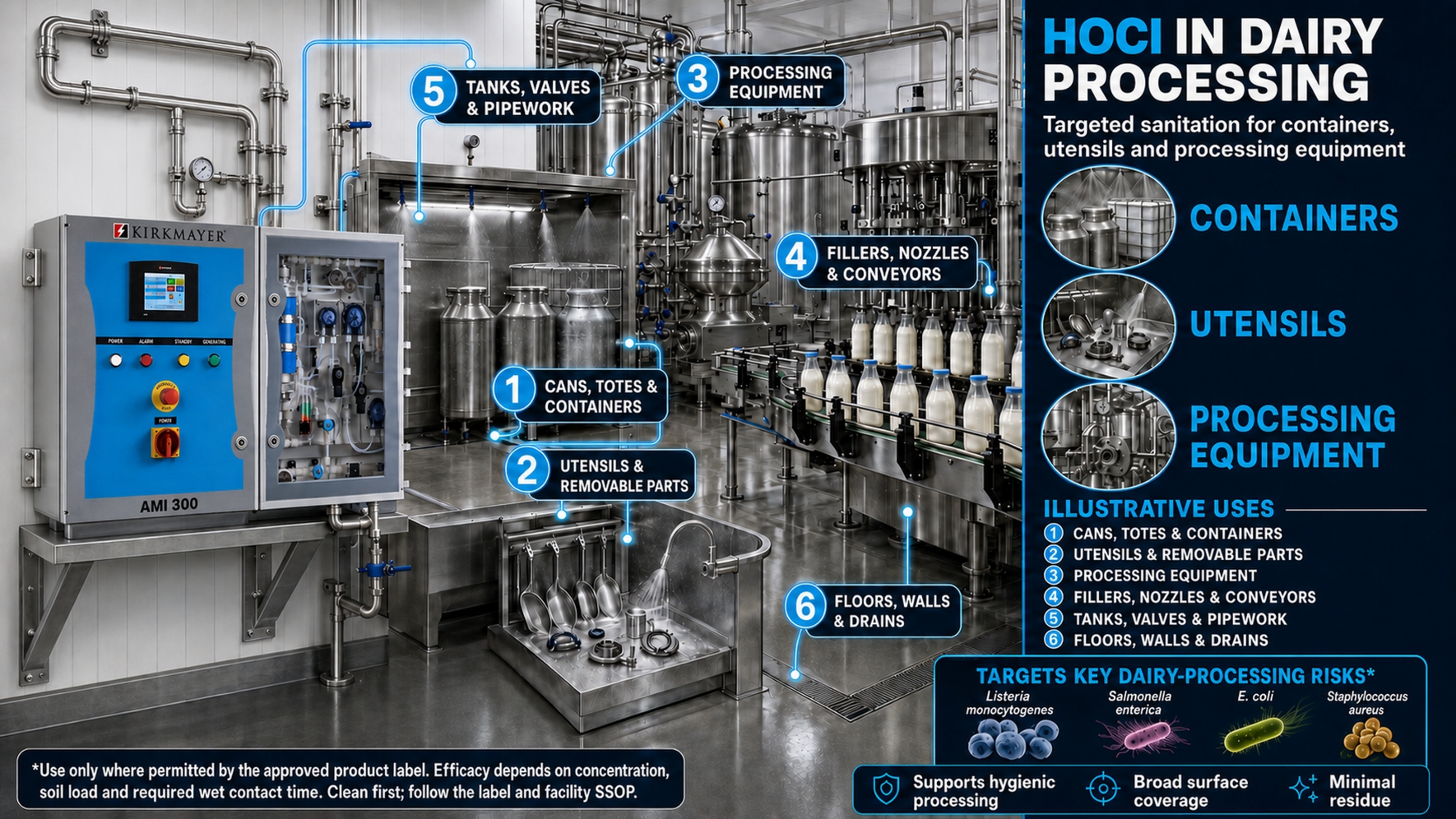
Hypochlorous acid (HOCl) can be an excellent antimicrobial technology for dairy-processing facilities because these operations require exceptionally high sanitation standards across tanks, pipelines, fillers, conveyors, containers, utensils, processing equipment, floors and drains.
Dairy plants also use significant quantities of water and sanitation chemicals every day, making on-site and on-demand HOCl generation particularly attractive from both an operational and economic standpoint.
Broad-Spectrum Microbial Control
When used at validated concentrations and contact times, Hypochlorous acid (HOCl) can provide rapid antimicrobial activity against microorganisms of concern in dairy-processing environments, including:
- Listeria monocytogenes
- Salmonella
- E. coli
- Staphylococcus aureus
- Other susceptible bacteria, viruses, yeasts and fungi
Reducing microbial pressure throughout the facility helps strengthen the plant’s overall food-safety, sanitation and environmental monitoring programs.
One Antimicrobial — Multiple Dairy Applications
One of Hypochlorous acid’s (HOCl) strongest advantages is versatility. Subject to applicable approvals and validated procedures, Hypochlorous acid (HOCl) can potentially be incorporated into sanitation programs involving:
CANS, TOTES & CONTAINERS
Sanitation of milk cans, totes, storage vessels and reusable containers.
UTENSILS & REMOVABLE PARTS
Knives, fittings, gaskets, valves, small components and other removable processing parts.
PROCESSING EQUIPMENT
Mixing, separation, pasteurization and other processing equipment.
FILLERS, NOZZLES & CONVEYORS
High-risk areas where repeated product contact makes effective sanitation particularly important.
TANKS, VALVES & PIPEWORK
HOCl can potentially complement appropriately designed cleaning and sanitation procedures for complex processing infrastructure.
FLOORS, WALLS & DRAINS
Environmental sanitation can help control microbial reservoirs outside direct food-contact areas.
Biofilm Control — An Important Dairy Advantage
Biofilm is a major sanitation challenge in dairy facilities because milk proteins, fats and other organic material can accumulate in difficult-to-clean areas.
Microorganisms can become established in:
PIPES • VALVES • GASKETS • TANKS • FILLERS • NOZZLES • CONVEYORS • DRAINS
HOCl can be incorporated into a properly designed cleaning and sanitation program to help reduce microbial and biofilm pressure, particularly after soils have first been effectively removed.
This is important because simply sanitizing the visible exterior of equipment isn’t enough—the sanitation program needs to address the entire processing environment.
Minimal Residue
Hypochlorous acid (HOCl) can provide antimicrobial action while supporting a comparatively low-residue sanitation approach when properly generated and applied.
That characteristic can be particularly attractive in dairy facilities where sanitation occurs repeatedly around sensitive processing equipment and food-contact environments.
Benefits of HOCl in Baked Goods Processing
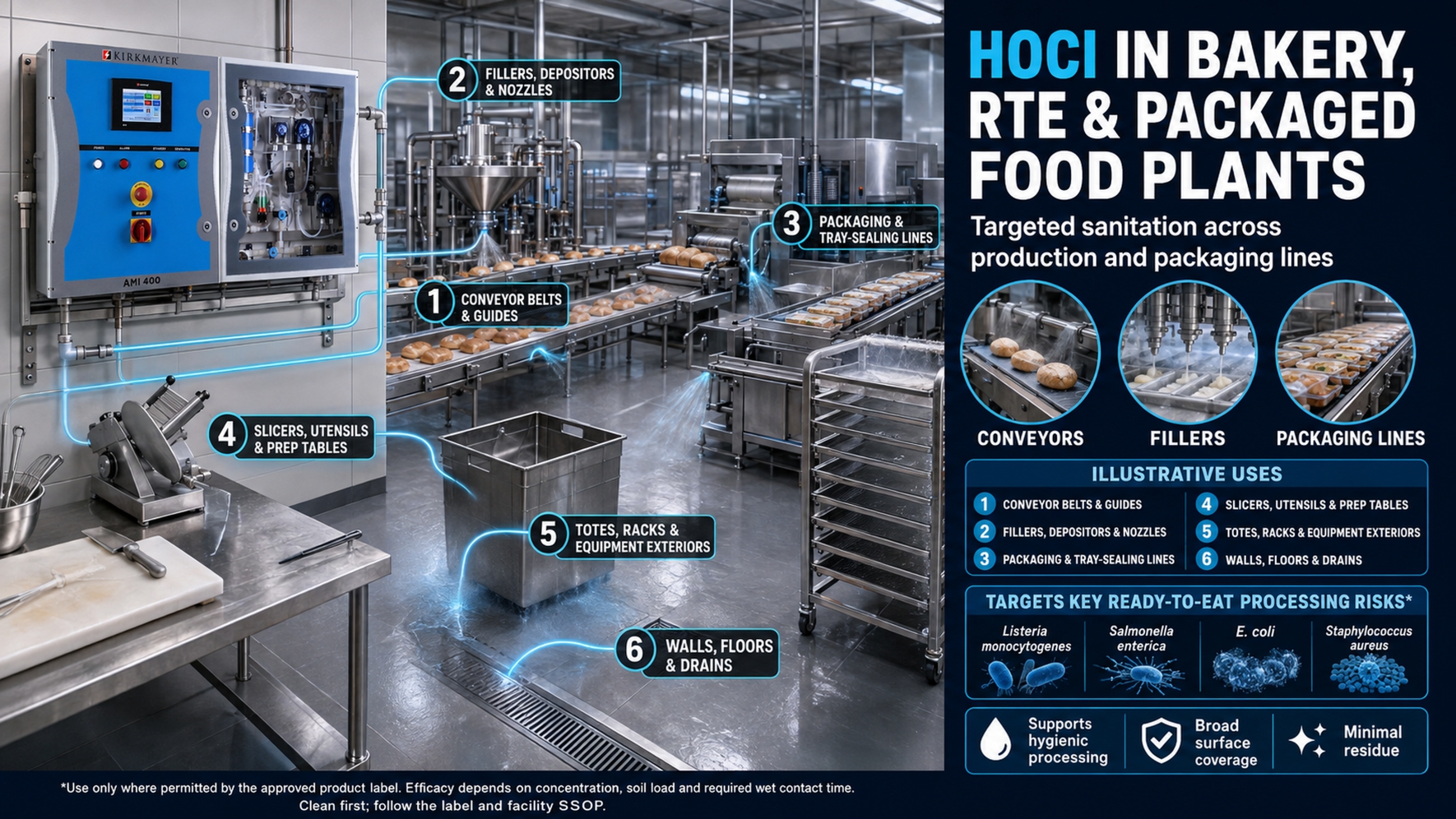
Hypochlorous acid (HOCl) is particularly well suited to bakery, ready-to-eat (RTE), and packaged-food facilities because these operations contain numerous food-contact surfaces, conveyors, fillers, depositors, slicers, packaging lines, utensils and difficult-to-clean equipment niches.
For RTE products in particular, sanitation after the kill or cooking step is critical because there may be no subsequent processing step to eliminate contamination before the product reaches the consumer.
Broad-Spectrum Pathogen Control
When produced and applied at validated concentrations and contact times, Hypochlorous acid (HOCl) can provide antimicrobial activity against microorganisms of concern in bakery and RTE processing environments, including:
- Listeria monocytogenes
- Salmonella
- E. coli
- Staphylococcus aureus
- Other susceptible bacteria, viruses, yeasts and fungi
For RTE operations, Listeria environmental control can be particularly important because contamination of finished product after cooking represents a significant food-safety concern.
One Antimicrobial — Multiple Processing Applications
Subject to applicable regulatory approvals and validated sanitation procedures, Hypochlorous acid (HOCl) can potentially be incorporated throughout a bakery or packaged-food plant.
CONVEYOR BELTS & GUIDES — Continuous production lines create large surface areas that require frequent sanitation.
FILLERS, DEPOSITORS & NOZZLES — Product-contact components can contain small openings, joints and difficult-to-access areas where sanitation is particularly important.
PACKAGING & TRAY-SEALING LINES — Sanitation of the packaging environment can help reduce opportunities for post-process contamination.
SLICERS, UTENSILS & PREP TABLES — High-frequency food-contact surfaces can be incorporated into routine HOCl sanitation programs where approved.
TOTES, RACKS & EQUIPMENT EXTERIORS — Hypochlorous acid (HOCl) can provide a common sanitation technology for mobile equipment and environmental surfaces.
WALLS, FLOORS & DRAINS — Environmental sanitation helps reduce microbial reservoirs surrounding production areas.
Particularly Valuable for RTE Processing
The RTE environment is where Hypochlorous acid (HOCl) can offer an especially compelling food-safety advantage.
After food has been baked, cooked or otherwise processed, subsequent contamination from conveyors, slicers, workers, utensils, fillers, packaging equipment or the processing environment can potentially reintroduce microorganisms.
This makes sanitation downstream from the primary kill step extremely important.
COOKING CONTROLS THE PRODUCT → Hypochlorous acid (HOCl) HELPS CONTROL THE PROCESSING ENVIRONMENT
Used as part of an effective SSOP, Hypochlorous acid (HOCl) can add another antimicrobial tool for controlling contamination throughout post-process areas.
Biofilm Control
Bakery and RTE facilities can develop persistent microbial niches around:
CONVEYOR COMPONENTS • FILLERS • DEPOSITORS • NOZZLES • SLICERS • EQUIPMENT JOINTS • DRAINS • HARD-TO-REACH SURFACES
Organic residues should first be properly removed through cleaning. Hypochlorous acid (HOCl) can then form part of the sanitation program designed to reduce microbial and biofilm pressure.
This cleaning-first principle is important because heavy organic soil can reduce the effectiveness of chlorine-based antimicrobials.
This cleaning-first principle is important because heavy organic soil can reduce the effectiveness of chlorine-based antimicrobials.
Low-Residue Sanitation
Hypochlorous acid (HOCl) can provide antimicrobial activity while supporting a comparatively low-residue sanitation approach when appropriately generated and applied.
For food-processing environments containing large amounts of stainless steel, conveyors and food-contact equipment, this can be an attractive characteristic compared with sanitation approaches that create greater residue-management requirements.
Benefits of HOCl in Foodservice & Institutional Kitchens
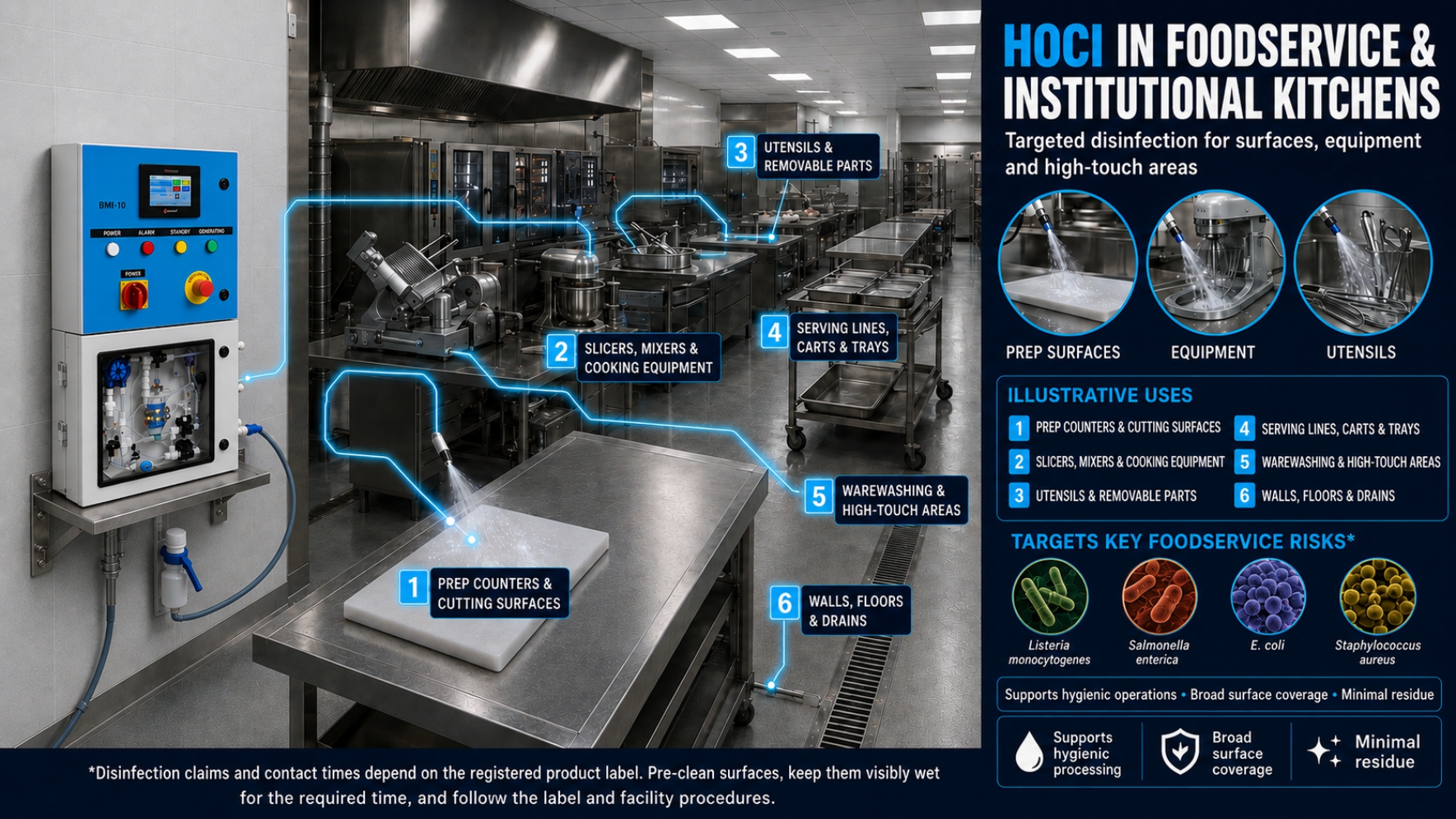
Hypochlorous acid (HOCl) can be particularly valuable in commercial kitchens, hospitals, long-term-care facilities, schools, universities, hotels, restaurants, cafeterias, correctional facilities and other institutional foodservice operations because these environments contain hundreds of food-contact and high-touch surfaces that require frequent cleaning and disinfection.
The advantage becomes even stronger when Hypochlorous acid (HOCl) is generated on-site and on-demand: instead of continually purchasing, transporting and storing ready-to-use disinfectants, the facility can produce fresh Hypochlorous acid (HOCl) where it is needed.
Broad-Spectrum Microbial Control
When used at validated concentrations and contact times, Hypochlorous acid (HOCl) can provide antimicrobial activity against microorganisms of concern in foodservice environments, including:
- Listeria monocytogenes
- Salmonella
- E. coli
- Staphylococcus aureus
- Other susceptible bacteria, viruses, yeasts and fungi
This makes Hypochlorous acid (HOCl) useful as part of a comprehensive food-safety and environmental sanitation program.
One Antimicrobial — Multiple Applications
One of Hypochlorous acid’s (HOCl) greatest advantages is its versatility. Subject to the approved product label and applicable regulations, Hypochlorous acid (HOCl) can potentially be incorporated into sanitation procedures involving:
PREP COUNTERS & CUTTING SURFACES
Cutting boards, stainless-steel preparation tables and other appropriate food-preparation surfaces.
SLICERS, MIXERS & COOKING EQUIPMENT
Frequently used equipment that can contain joints, seams and difficult-to-reach surfaces requiring regular sanitation.
UTENSILS & REMOVABLE PARTS
Knives, utensils, removable equipment components, trays and other appropriate items.
SERVING LINES, CARTS & TRAYS
Especially useful in hospitals, senior-care facilities, schools and cafeterias where large numbers of meals are prepared and distributed daily.
WAREWASHING & HIGH-TOUCH AREAS
Hypochlorous acid (HOCl) can potentially complement approved sanitation programs for appropriate surfaces surrounding dishwashing and foodservice operations.
WALLS, FLOORS & DRAINS
Environmental sanitation helps reduce microbial reservoirs outside direct food-contact areas.
Particularly Valuable for High-Touch Environments
Institutional kitchens have another challenge beyond food-contact surfaces: large numbers of people interact with the same environment every day. Examples include:
DOOR HANDLES • CART HANDLES • EQUIPMENT CONTROLS • REFRIGERATOR HANDLES • SERVING AREAS • WORKSTATIONS • TABLES • TRAYS
An appropriate Hypochlorous acid (HOCl) program can provide facilities with a versatile antimicrobial for both foodservice sanitation and suitable environmental surfaces.
This is particularly attractive in hospitals, long-term-care facilities and senior residences, where maintaining strong hygiene programs is especially important.
Low-Residue Sanitation
Hypochlorous acid (HOCl) can provide antimicrobial activity while supporting a comparatively low-residue approach when properly generated and applied.
This characteristic can be particularly useful in foodservice environments where sanitation occurs repeatedly throughout the day and where food preparation, employees and customers may all occupy the same general environment.
Reduce Microbial & Biofilm Pressure
Foodservice facilities contain numerous wet and difficult-to-clean areas where microorganisms can persist, including:
DRAINS • FLOOR/WALL JUNCTIONS • EQUIPMENT SEAMS • SINKS • WARE WASHING AREAS • UNDER EQUIPMENT • HARD-TO-REACH SURFACES
Proper cleaning remains essential because food soils and organic material should be removed first.
Hypochlorous acid (HOCl) can then form part of the sanitation program designed to reduce remaining microbial and biofilm pressure.

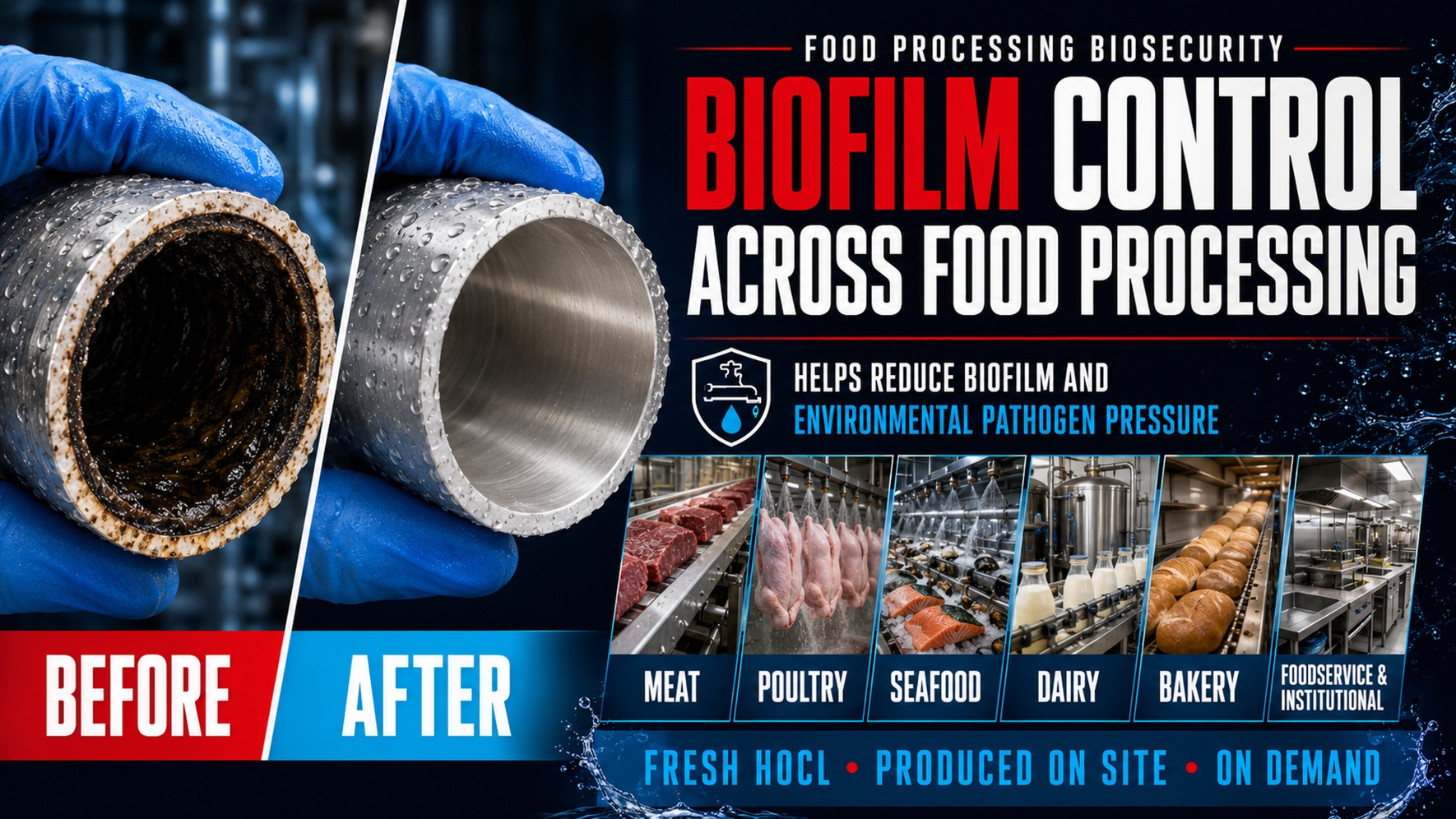
Biofilm is one of the most persistent sanitation challenges in food processing. It develops when microorganisms attach to surfaces and become embedded within a protective extracellular matrix. Once established, biofilms can persist in pipes, drains, conveyors, fillers, tanks, valves, gaskets, nozzles and other difficult-to-clean areas, creating reservoirs from which microorganisms can repeatedly contaminate the processing environment.
Hypochlorous acid (HOCl) can be incorporated into a properly designed cleaning and sanitation program to help reduce microorganisms associated with biofilms and control environmental pathogen pressure. Its value becomes even greater when fresh Hypochlorous acid (HOCl) is generated on-site and on-demand, providing processors with a readily available antimicrobial for routine sanitation and appropriate water-treatment applications.
Why HOCl for Biofilm Management?
Hypochlorous acid (HOCl) provides several advantages for food-processing sanitation:
- Broad-spectrum antimicrobial activity against many bacteria, viruses, yeasts and fungi when used under validated conditions.
- Can reach complex equipment and difficult sanitation areas when delivered through appropriately designed spray, circulation, CIP or other application systems.
- Useful across both food-contact and environmental sanitation applications where permitted.
- Can complement routine cleaning to help prevent microorganisms remaining after soil removal from re-establishing biofilms.
- Offers a comparatively low-residue antimicrobial approach when properly produced and applied.
- Fresh on-site production can provide large volumes of antimicrobial solution without continually purchasing and transporting finished disinfectants.
Importantly, Hypochlorous acid (HOCl) should not be presented as a substitute for cleaning. Heavy fats, proteins, carbohydrates and other organic soils should first be removed. HOCl is most effective as part of a clean → rinse → sanitize/control → verify sanitation strategy.
Biofilm Management in Meat Processing
Meat-processing plants combine protein, fat, moisture and extensive stainless-steel equipment, creating conditions in which microorganisms can persist if sanitation niches develop.
Hypochlorous acid (HOCl) can potentially support sanitation programs involving:
SLICERS • GRINDERS • CONVEYORS • CUTTING TABLES • WASH LINES • TOOLS • PROCESSING EQUIPMENT • FLOORS • DRAINS
Depending on validated conditions and regulatory approvals, Hypochlorous acid (HOCl) can contribute to controlling organisms of concern such as Listeria monocytogenes, Salmonella and E. coli.
Specific Biofilm Benefit — Meat Processing
Meat residues can accumulate inside grinders, slicers, conveyor components, equipment joints, drains and other difficult-to-access areas. These niches can become persistent microbial reservoirs.
After effective removal of fats, proteins and other soils, Hypochlorous acid (HOCl) can be incorporated into sanitation procedures to help reduce residual microorganisms and biofilm pressure, particularly in areas that repeatedly become wet during production.
Meat Processing Biofilm Advantage: Help reduce persistent microbial reservoirs within complex meat-processing equipment and wet environmental niches.
Biofilm Management in Poultry Processing
Poultry plants are particularly water-intensive environments. Processing can involve carcass washing, spray cabinets, immersion chilling, conveyors, shackles, cutting equipment and extensive environmental sanitation.
Hypochlorous acid (HOCl) can potentially be integrated into approved applications involving:
PROCESS WATER • CARCASS SPRAY SYSTEMS • CHILLERS • CONVEYORS • SHACKLES • EQUIPMENT • TOOLS • FLOORS • DRAINS
Important microbial targets can include Salmonella, Campylobacter, E. coli and Listeria, depending on the application and validated conditions.
Specific Biofilm Benefit — Poultry Processing
The combination of high moisture, organic material and complicated processing equipment can create excellent conditions for microbial attachment.
Attention may be required around:
SHACKLES • CONVEYORS • CHILLERS • SPRAY SYSTEMS • PIPES • DRAINS • EQUIPMENT SEAMS
Hypochlorous acid (HOCl) can be used following proper cleaning to help reduce microorganisms remaining within these wet processing environments and help control their opportunity to re-establish persistent biofilms.
Poultry Biofilm Advantage: Particularly valuable for controlling microbial and biofilm pressure throughout continuously wet processing and water-handling systems.
Biofilm Management in Seafood Processing
Seafood processing combines several conditions that make microbial control especially important:
Water + Ice + Organic Material + Cold Processing + Wet Equipment
Hypochlorous acid (HOCl) can potentially support approved applications involving:
PROCESS WATER • ICE PRODUCTION • FISH & SHELLFISH RINSES • WASH LINES • CONVEYORS • EQUIPMENT • FOOD-CONTACT SURFACES • FLOORS • DRAINS
Depending on the seafood operation, organisms of concern may include Vibrio species, Listeria monocytogenes, Salmonella and E. coli.
Specific Biofilm Benefit — Seafood Processing
Seafood plants remain cool and wet for extended periods, and moisture can persist in equipment and drainage systems even when production has stopped.
Biofilm-prone areas can include:
WASH LINES • PIPES • TANKS • CONVEYORS • ICE EQUIPMENT • PROCESSING TABLES • DRAINS
Hypochlorous acid (HOCl) can complement cleaning programs by helping control residual microorganisms in these continuously wet environments.
Seafood Biofilm Advantage: Helps address persistent microbial pressure in the cold, wet environments characteristic of seafood processing, water systems and ice-handling operations.
Biofilm Management in Dairy Processing
Dairy processing requires exceptional sanitation because milk proteins, fats and minerals can accumulate within sophisticated processing equipment.
Hypochlorous acid (HOCl) can potentially be incorporated into approved sanitation programs involving:
TANKS • VALVES • PIPEWORK • CONTAINERS • FILLERS • NOZZLES • CONVEYORS • UTENSILS • PROCESSING EQUIPMENT • FLOORS • DRAINS
Microorganisms of concern can include Listeria monocytogenes, Salmonella, E. coli and Staphylococcus aureus.
Specific Biofilm Benefit — Dairy Processing
Biofilm control is particularly important in dairy because microorganisms can establish themselves in equipment that cannot easily be visually inspected. Potential niches include:
PIPELINES • VALVES • GASKETS • TANK CONNECTIONS • FILLERS • NOZZLES • PUMPS • DRAINS
Following effective removal of milk fats, proteins and mineral deposits, appropriately applied HOCl can form part of a sanitation strategy designed to reduce residual microbial populations.
Dairy Biofilm Advantage: Especially valuable for controlling microbial pressure within tanks, valves, pipelines, fillers and other enclosed dairy-processing equipment after effective soil removal.
Biofilm Management in Bakery, RTE & Packaged Food Processing
Bakery, ready-to-eat and packaged-food facilities contain extensive production and packaging equipment, including:
CONVEYORS • FILLERS • DEPOSITORS • NOZZLES • SLICERS • PACKAGING LINES • TRAY SEALERS • TOTES • RACKS • PREP TABLES
Hypochlorous acid (HOCl) can provide a versatile antimicrobial technology for appropriate food-contact and environmental sanitation applications.
This becomes especially important in RTE processing, where products may receive no additional kill step following packaging-area exposure.
Specific Biofilm Benefit — Bakery & RTE Processing
Bakery soils can include fats, oils, sugars, starches, proteins and flour residues. These soils must first be effectively removed.
Microbial niches can then persist around:
CONVEYOR ROLLERS • BELT GUIDES • DEPOSITORS • FILLER NOZZLES • SLICERS • EQUIPMENT SEAMS • DRAINS
Hypochlorous acid (HOCl) can be incorporated after cleaning to help reduce remaining microbial populations and environmental pathogen pressure.
For RTE environments, preventing persistent sanitation niches can be especially important because those niches can become a source of post-process contamination.
Bakery/RTE Biofilm Advantage: Helps control persistent microbial niches around conveyors, fillers, slicers and packaging equipment where post-process contamination can be particularly consequential.
Biofilm Management in Foodservice & Institutional Kitchens
Commercial and institutional kitchens contain an unusually large variety of surfaces and equipment. Hypochlorous acid (HOCl) can potentially support approved sanitation procedures involving:
PREP COUNTERS • CUTTING BOARDS • SLICERS • MIXERS • COOKING EQUIPMENT • UTENSILS • SERVING LINES • CARTS • TRAYS • WARE WASHING AREAS • FLOORS • DRAINS
This makes it particularly attractive for restaurants, hospitals, long-term-care facilities, schools, universities, hotels, cafeterias and institutional kitchens.
Specific Biofilm Benefit — Foodservice & Institutional
Foodservice biofilm risks differ from large industrial processing plants because contamination can develop around many smaller pieces of equipment and frequently wet areas.
Potential niches include:
SINKS • DRAINS • SLICERS • MIXERS • EQUIPMENT SEAMS • WARE WASHING AREAS • FLOOR/WALL JUNCTIONS • UNDER EQUIPMENT
Hypochlorous acid (HOCl) can complement frequent cleaning by providing an antimicrobial step designed to reduce microorganisms remaining after food soils have been removed.
Foodservice Biofilm Advantage: Provides a versatile antimicrobial option for controlling microbial pressure across numerous small equipment niches, wet areas and high-frequency sanitation points.

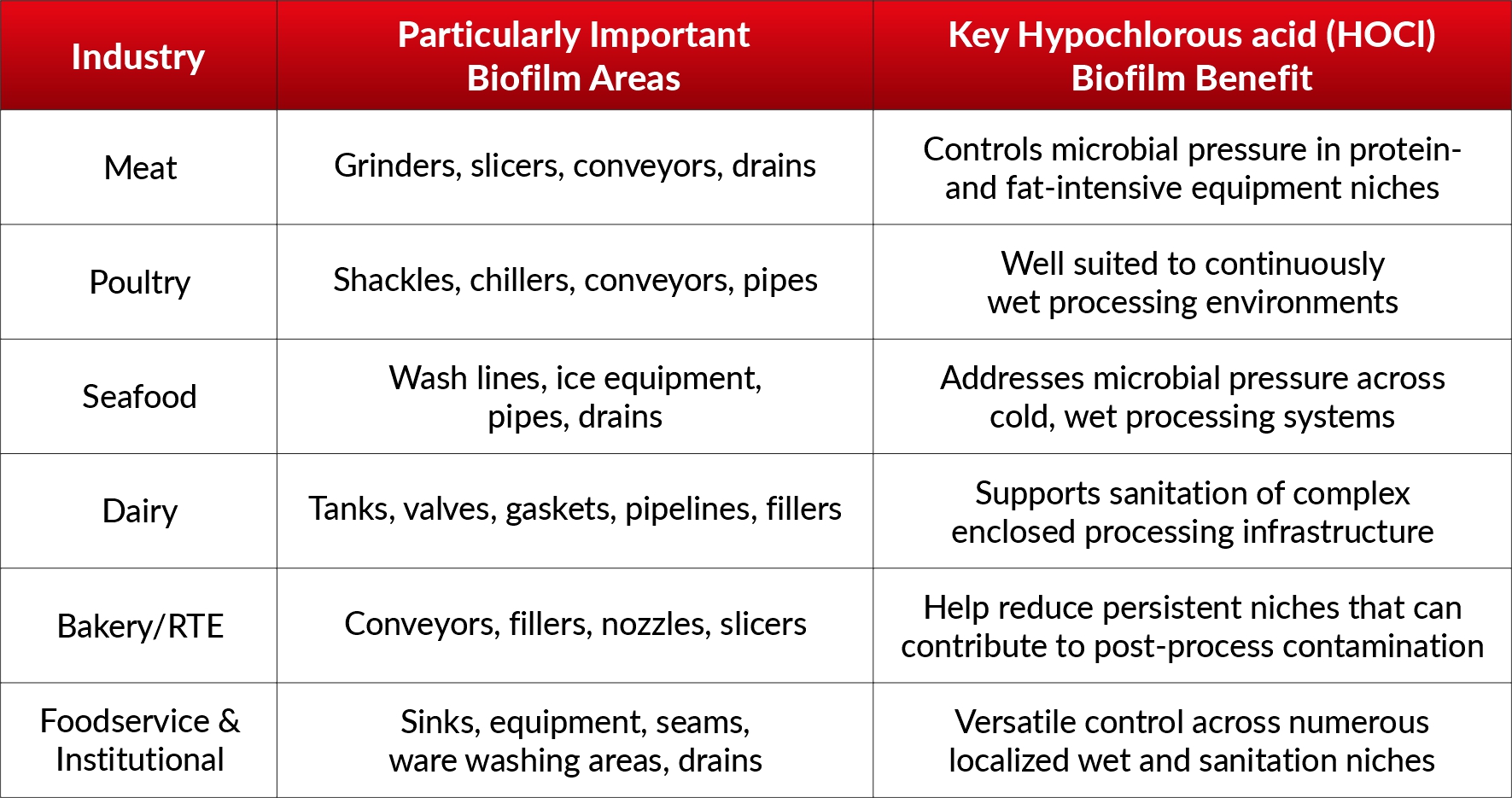
The On-Site Hypochlorous acid (HOCl) Advantage
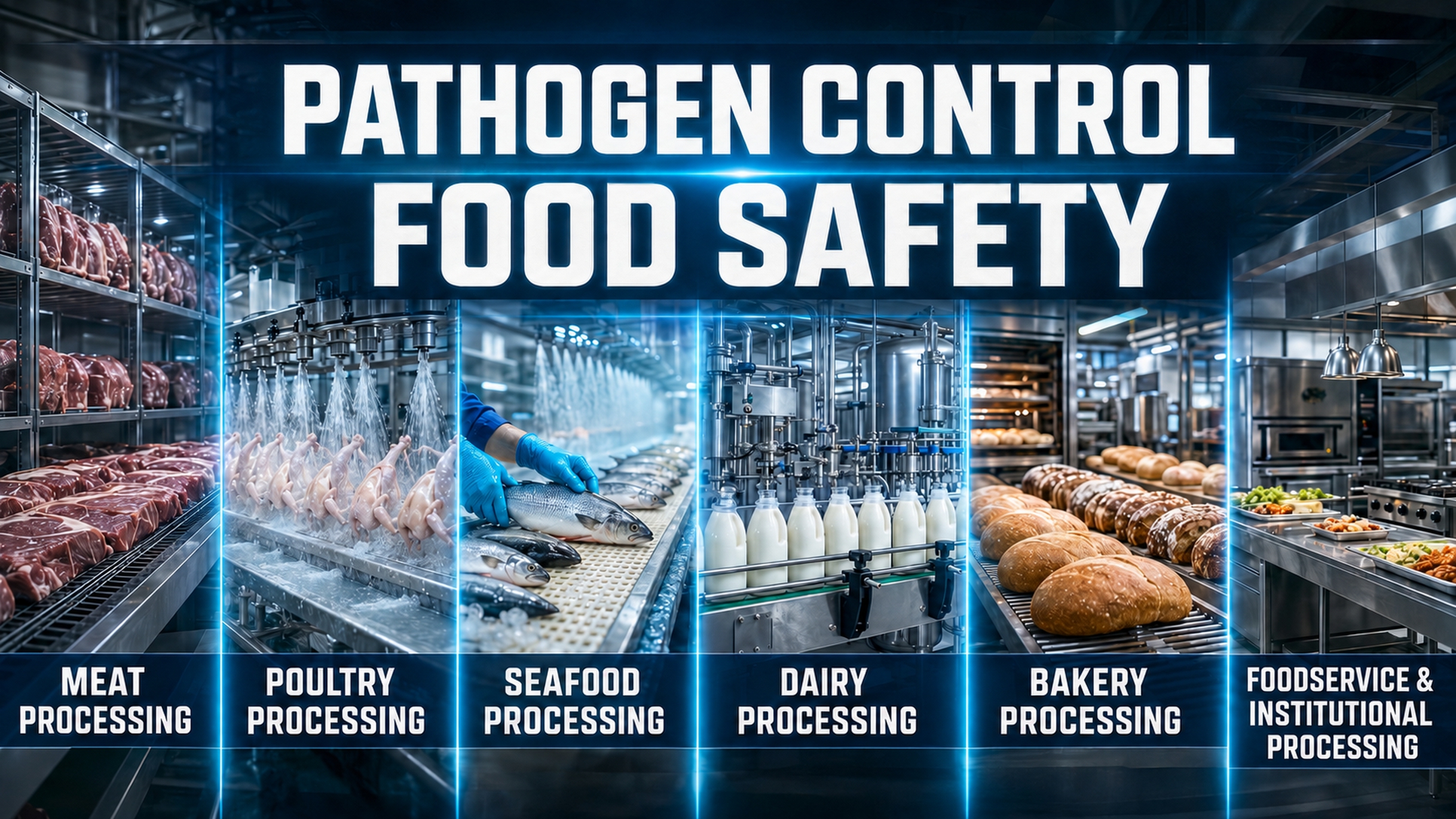
The six industries have very different processing environments, but they share one important challenge:
BIOFILM DOESN’T STAY IN ONE PLACE
Effective control requires an antimicrobial that can be made available across multiple sanitation points and potentially in significant volumes.
This is where on-site ECA generation becomes particularly valuable.
Fresh Hypochlorous acid (HOCl)
Produced On-site | Produced On-demand
Rather than continually purchasing, shipping and storing large quantities of ready-to-use disinfectant, processors can generate fresh HOCl at the facility and distribute it to appropriate points of use.
That creates the potential for a facility-wide antimicrobial and biofilm-management platform, rather than treating each sanitation challenge as an isolated chemical application.
Clean the Soil. Attack the Biofilm. Reduce Pathogen Pressure.
Help Prevent Re-establishment
For meat, poultry, seafood, dairy, bakery/RTE and institutional foodservice, that combination of broad antimicrobial activity, multiple potential applications and fresh on-site production is what makes Hypochlorous acid (HOCl) particularly compelling for modern food-processing biosecurity.
NOTICE: Biofilm removal and antimicrobial efficacy depend on organism, biofilm maturity, surface, concentration, contact time, temperature, organic load and cleaning method. Hypochlorous acid (HOCl) should be used as part of a validated sanitation program and only for applications permitted by the applicable regulatory authorization/product label and facility SSOP/HACCP program.
Why Processors Use a Kirkmayer® Hypochlorous Acid Generator
- It is generated on-site, so plants avoid storing and transporting drums of sanitizer.
- It is described as non-toxic, degradable, and effective against bacteria, spores, viruses, molds, yeasts, fungi, and biofilms.
- In food and beverage settings, Hypochlorous acid (HOCl) has been presented as capable of inactivating common pathogens quickly, with contact times often under 60 seconds in published material.
- Kirkmayer’s ECA on-site generator systems are marketed as producing a disinfectant whose active ingredient is hypochlorous acid, aimed at bacteria such as E. coli, Listeria, and Salmonella.

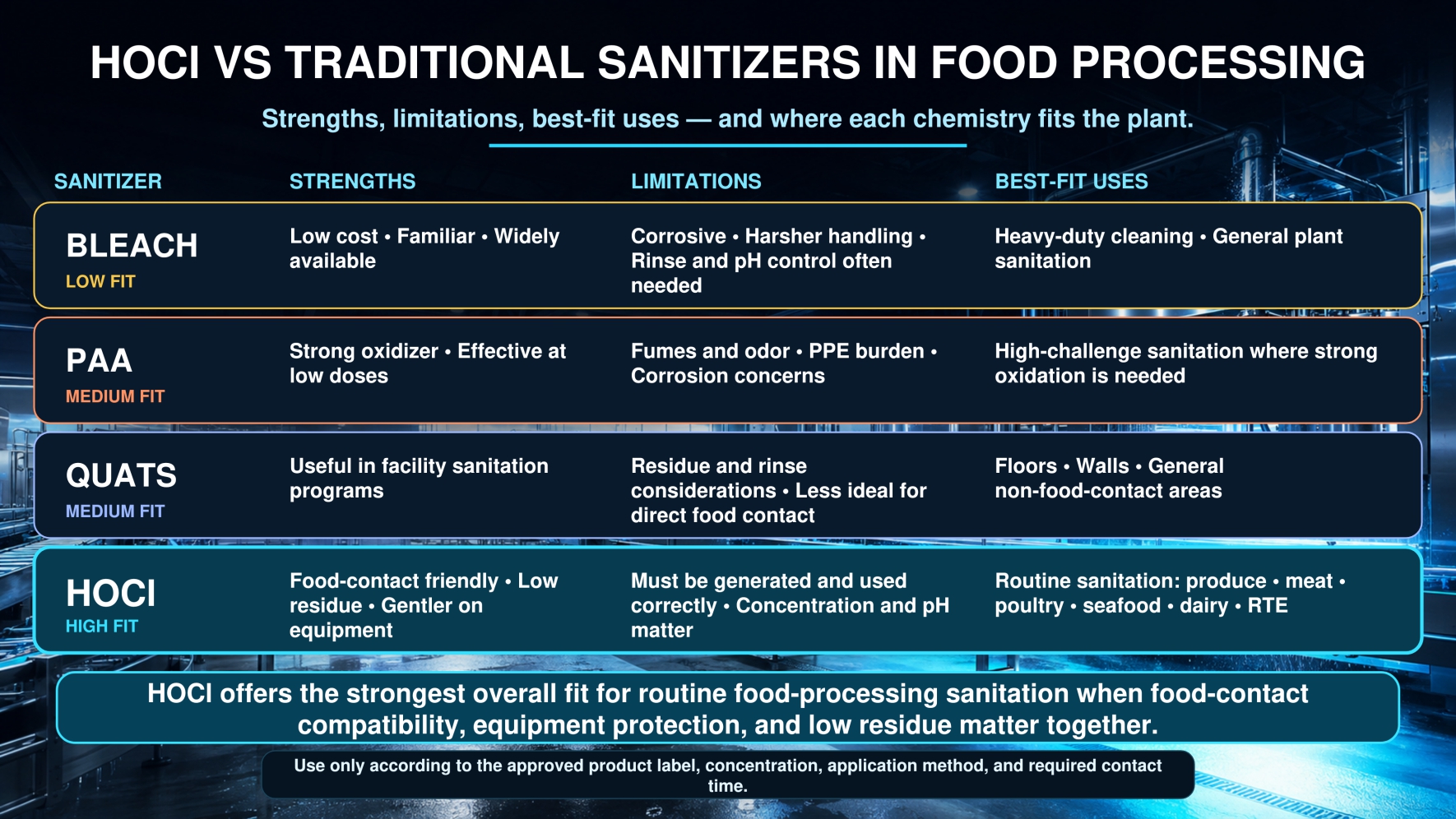

Superior Pathogen Control: Kirkmayer® ECA generators deliver on-site hypochlorous acid (HOCl) sanitation, transforming food plant hygiene with proven ROI.
- Massive Chemical Cost Savings – Eliminate 50-70% of purchased sanitizers; generate unlimited Hypochlorous acid (HOCl) from water + salt for pennies per liter.
- Superior Biofilm Control – Penetrates and prevents regrowth in pipes/CIP lines (Listeria, Salmonella undetectable for 15+ months).
- FDA-Compliant Sanitation – 60 ppm process water, 200 ppm surfaces; no-rinse approved for meat, beverage, dairy.
- Extended Shelf Life – Lower microbial load on product-contact surfaces boosts freshness, cuts returns/waste.
- Worker Safety Upgrade NON WHMIS REGULATED – No chemical drums, spills, or PPE; non-toxic Hypochlorous acid (HOCl) is safer to handle and deploy.
- Non-Corrosive Equipment Protection – Unlike bleach/peracetic acid, Hypochlorous acid (HOCl) extends pipe/filler life without residue.
- Effortless Installation – Water + salt + power → operational in days; integrates with existing CIP/BMS.
- Environmental Leadership – Zero toxic byproducts, reduced water/chemical waste; supports sustainability goals.
- Audit-Ready Compliance – EPA/FDA approved; consistent zero-count verification passes inspections easily.
- Proven Scalability – Coca-Cola/Enterprise Foods case studies show dramatic savings + microbial control at scale

1. CHOOSE THE RIGHT KIRKMAYER® ECA HOCI HYPOCHLOROUS ACID GENERATOR SIZE
- Select a model based on total daily water volume and required active chlorine (FAC) residual. Kirkmayer® gives production‑rate data (liters/hour of anolyte) in its datasheets.
- Confirm the unit can handle your water volume needed, hardness and pH; softened, filtered feed water is usually recommended.
2. LOCATION
- Place near water source (RO or soft water preferred, pH 6.5-8) and power (110-240V, 50/60Hz); indoor utility room or grow space edge avoids humidity/vibration exposure. Ensure 2-3 ft clearance for maintenance and ventilation: wall-mount AMI units (e.g., 50-1200 L/hr. models) at eye level.
- The unit will require ventilation so it is important to install the unit in an open area which can be accessible to proper ventilation using an exhaust fan to vent to the outside is the ideal ventilation set up.
3. WATER TREATMENT
You should test the water (both raw and finished, if possible) before installing our Kirkmayer’s® ECA HOCl Generator system. Proper preinstall testing helps ensure the generator works effectively and does not create unintended issues. We recommend using chemically resistant materials (e.g., PTFE, PVDF, or equivalent) for the anolyte‑dosing line from the generator to the injection point. Metal or unsuitable plastics can corrode or degrade.
What you should test for: Typical useful parameters before installing an anolyte system include:
- pH, alkalinity, hardness, iron, manganese, organic matter (e.g., COD or TOC), and total dissolved solids (TDS), because these affect cell life and HOCl stability
- Microbiological indicators (total coliforms, E. coli) and baseline pathogen load so you can verify the generator’s impact afterward.
Water and Power Setup
Connect to clean water inlet (1/2-1″ fittings) with pre-filter (5-micron sediment) to protect membranes; add salt tank (non-iodized NaCl, 20g/L auto-dosing). Use grounded GFCI outlet; auto-shutoff prevents dry-run. Output hoses route to irrigation injection, fogger, or holding tanks.
Integration Points
- Irrigation/fertigation: Inline injector (2-12 ppm) post-reservoir for biofilm/root protection.
- Fogging/sanitation: 100 ppm line to room foggers or sprayers for mildew/tools.
- Propagation: Dedicated 50-200 ppm outlet for cloning dips

At Kirkmayer®, we will partner with you from start to finish. We’ll guide your HOCl (Hypochlorous acid), generator selection, oversee seamless installation, and provide hands-on technical support to ensure everything runs perfectly for your HOCI hypochlorous acid production. No unanswered questions, no loose ends — just reliable assistance and ongoing expertise to help you save costs, control quality, and scale your brand confidently. Contact us today to get started.